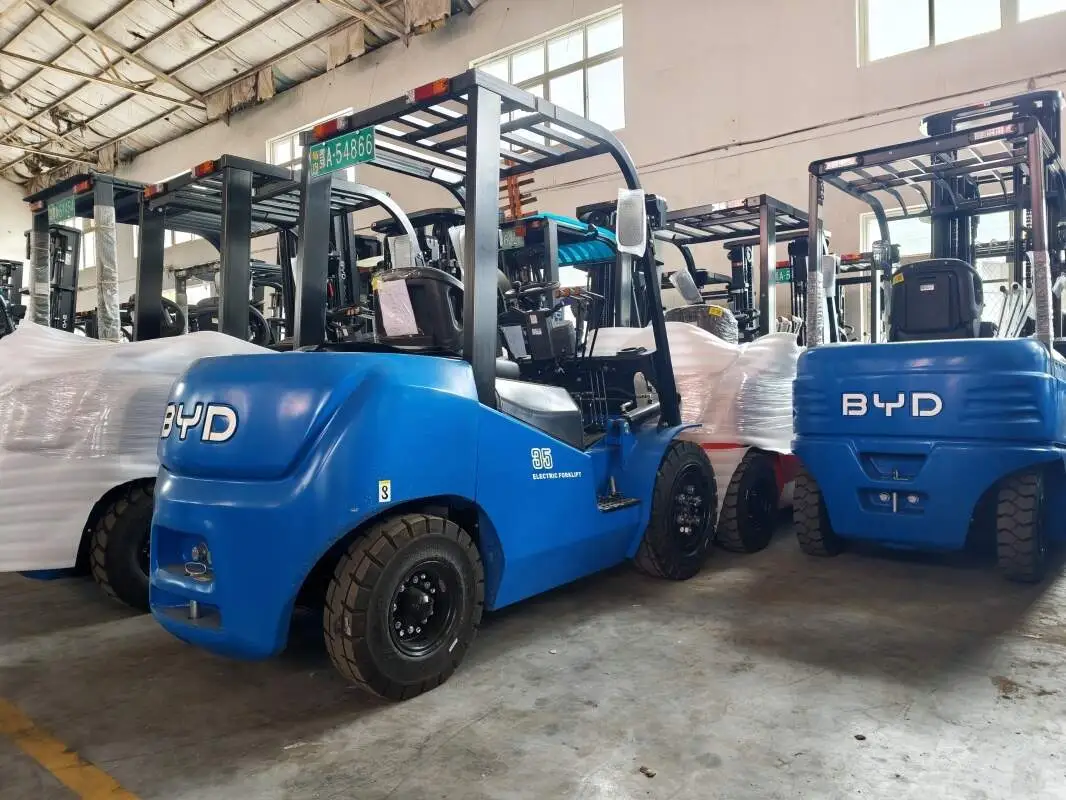
For operators of warehouses, logistics hubs and manufacturing sites, selecting the proper power solution for electric forklifts directly affects daily operation efficiency and long-term use cost. This objective comparison between lithium-ion and lead-acid forklift batteries covers actual performance dimensions without biased evaluation, to help users make decisions matching their own operation demands.
First, from the perspective of charging and discharging efficiency: Li-ion forklift batteries feature shorter full charging time, and maintain relatively stable voltage output under high-load continuous operation, which will not cause gradual drop of forklift running speed and lifting power with the decrease of remaining power. Lead-acid batteries need longer charging time, and require regular distilled water supplement, dust cleaning and other daily maintenance work during the whole service period, which will take extra labor and management cost.
On the side of cycle life and scenario adaptability: Under standard use condition, Li-ion batteries can support more cycle charging times, and is more suitable for multi-shift continuous operation scenarios such as large distribution centers. Lead-acid batteries can meet the use demand of low-frequency, single-shift small operation scenarios with lower initial purchase cost.
We are Jianshu New Energy, specializing in BYD electric forklift supply. If you have relevant selection and consultation demands, you can send email to 17399989919@163.com for targeted support.