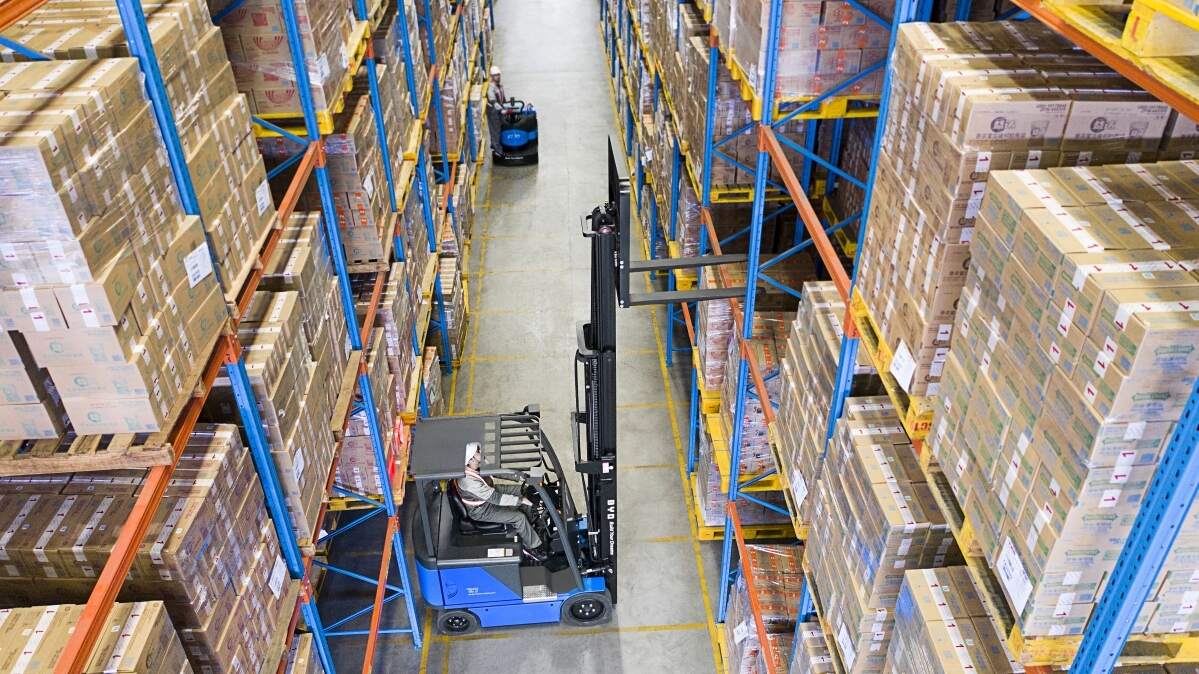
Understanding forklift weight ratings is a fundamental skill for every warehouse operator, as improper loading practices are a leading cause of workplace accidents, equipment damage, and operational downtime. To operate safely and efficiently, it’s critical to move beyond viewing these ratings as a static number and grasp the context that defines safe lifting limits.
At its core, a forklift’s weight rating refers to the maximum weight it can safely lift under specific, standardized conditions. These conditions are outlined on the forklift’s data plate, a mandatory label that provides key details for safe operation. One of the most influential factors tied to weight ratings is the load center—the distance from the face of the forks to the center of gravity of the load. Most forklifts are rated with a standard 24-inch load center; if your load’s center of gravity falls beyond this point, the forklift’s effective lifting capacity decreases significantly. For example, a forklift rated for 5,000 pounds at a 24-inch load center may only safely lift 3,500 pounds if the load center shifts to 36 inches, as the extended distance reduces the machine’s stability.
Beyond load center, several other variables impact a forklift’s safe weight rating. Attachments like side shifters, pallet clamps, or rotators add extra weight to the forklift and alter the load center, which means you must subtract the attachment’s weight from the rated capacity and adjust for the shifted center of gravity. Ground conditions also play a role: uneven floors, slippery surfaces, or sloped terrain reduce the forklift’s stability, requiring operators to lower their lifting weight to avoid tip-overs. Additionally, lifting height affects capacity—the higher you raise a load, the more it shifts the forklift’s center of gravity, reducing the safe weight you can handle at maximum lift height.
To apply this knowledge in daily operations, start by always checking the forklift’s data plate before use, as it lists rated capacity for different load centers, attachments, and lift heights. Take time to assess your load: measure its center of gravity, account for any attached tools, and inspect the work area for uneven ground or obstacles. Never attempt to lift a load that exceeds the adjusted rated capacity, even if it appears manageable. Remember, even small overweights can compromise the forklift’s balance, leading to dangerous tip-overs.
Regular refreshers on weight rating interpretation are essential for all warehouse operators. By understanding how load center, attachments, and environmental factors impact safe lifting limits, you can reduce accident risks, protect equipment, and maintain smooth warehouse operations. Prioritizing this knowledge isn’t just a best practice—it’s a critical responsibility for every operator working with forklifts.