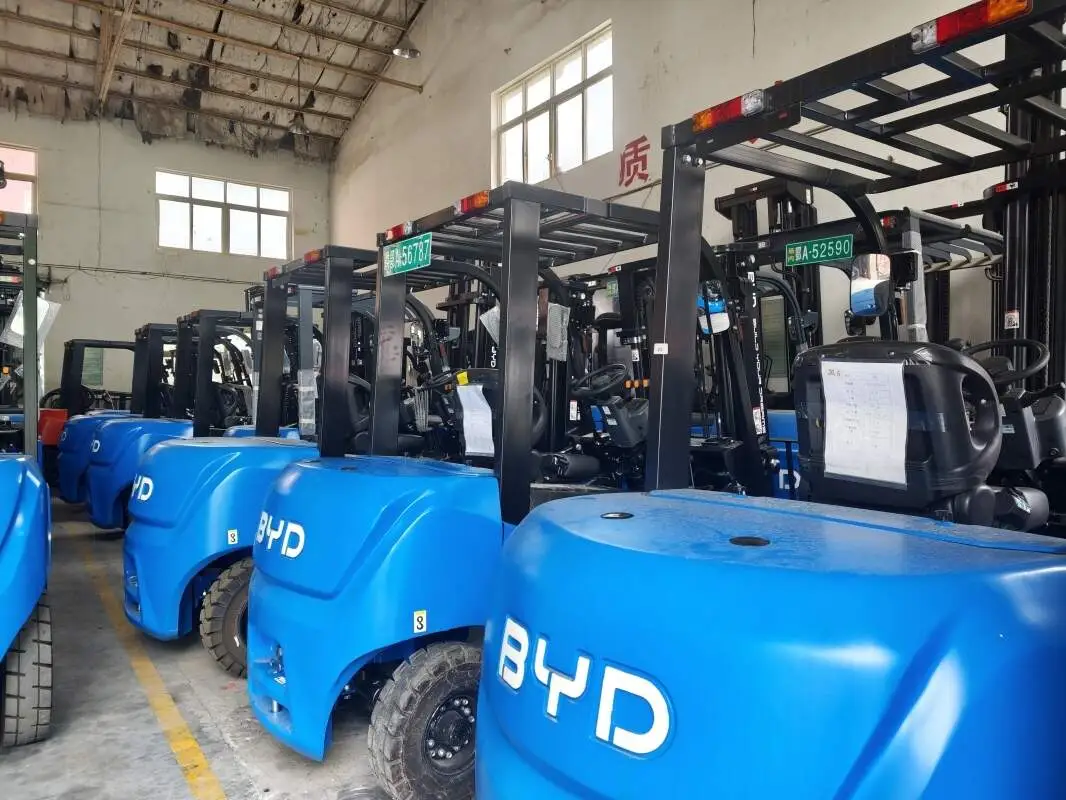
Unlike standard two-tines forklifts, four-tines forklifts are engineered to address unique material handling challenges that demand enhanced stability, load distribution, and precision. Their additional set of tines expands the range of tasks they can perform, making them a valuable asset in industries where conventional equipment falls short.
One of the primary application scenarios for four-tines forklifts is handling long and bulky loads. In construction, lumber yards, and steel processing facilities, materials like timber beams, steel pipes, and metal profiles often stretch several meters in length. Using a two-tines forklift can lead to uneven weight distribution, causing the load to bend or shift during transport, which poses safety risks. Four-tines forklifts, however, spread the load across four points, minimizing stress on the material and reducing the likelihood of instability. This allows operators to transport long loads more safely and efficiently, even over uneven terrain within job sites.
Heavy-duty stacking operations represent another key use case. In warehouses, distribution centers, and manufacturing plants that store heavy pallets or dense bulk goods, four-tines forklifts offer superior support. The extra tines increase the contact area with the load, providing a more stable base for lifting and stacking. This stability enables operators to stack loads to greater heights without compromising safety, maximizing vertical storage space. For facilities dealing with heavy components like automotive parts or industrial machinery, this capability directly translates to improved storage density and reduced operational costs.
Four-tines forklifts also excel at handling irregularly shaped cargo. Many industries, such as heavy equipment repair and aerospace manufacturing, work with components that lack a uniform structure. These items may have odd dimensions or uneven weight distribution, making them difficult to secure with standard tines. Four-tines forklifts, especially models with adjustable tine spacing, can be configured to match the cargo’s shape, ensuring a secure grip. This reduces the risk of damage to valuable components during lifting and transport, protecting inventory and minimizing downtime.
Additionally, four-tines forklifts are well-suited for high-density storage environments with narrow aisles. Their design allows for more precise placement of loads, even in tight spaces. Operators can maneuver the forklift to position goods accurately within racking systems, reducing wasted space and improving overall warehouse efficiency. This is particularly beneficial for e-commerce fulfillment centers and third-party logistics providers, where maximizing storage capacity and order picking speed is critical.
In conclusion, four-tines forklifts are not just a variation of standard forklifts—they are specialized tools tailored to meet the demands of complex material handling tasks. By addressing the limitations of conventional equipment in long load transport, heavy stacking, irregular cargo handling, and high-density storage, they enhance operational efficiency and safety across multiple industries. When evaluating material handling solutions, businesses should consider the unique benefits of four-tines forklifts to optimize their specific workflow needs.