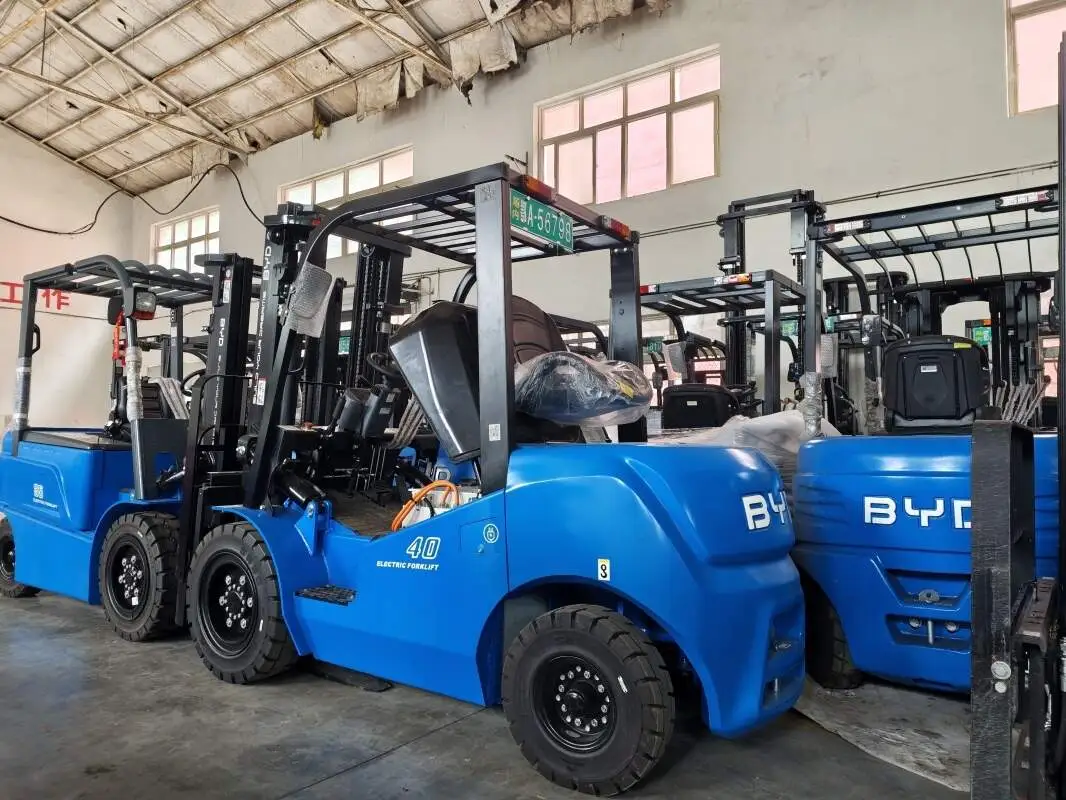
As businesses increasingly prioritize sustainability and cost efficiency, switching to electric forklifts has become a strategic investment choice. However, before making the transition, it’s crucial to accurately calculate the return on investment (ROI) to ensure the decision aligns with your financial goals.
First, calculate the initial investment costs associated with the switch. This includes the purchase price of electric forklifts, installation of necessary charging infrastructure such as charging stations and electrical system upgrades, and employee training for safe operation and basic maintenance. While electric models may require more upfront investment in charging setups compared to traditional forklifts, these costs are often offset by long-term operational savings.
Next, estimate annual operational savings to gauge ongoing financial benefits. Start with fuel cost reductions: electric forklifts run on electricity, which is typically cheaper per hour of operation than diesel or gasoline. Calculate this by comparing the hourly energy consumption of an electric forklift (in kWh) multiplied by your local electricity rate, versus the hourly fuel consumption of your current internal combustion engine (ICE) forklifts multiplied by fuel prices.
Maintenance costs represent another significant area of savings. Electric forklifts have far fewer moving parts than ICE models, eliminating the need for routine engine oil changes, fuel filter replacements, and fuel system maintenance. This not only cuts down on regular service expenses but also reduces the risk of unexpected breakdowns, minimizing operational downtime and associated costs.
Don’t overlook long-term benefits that contribute to ROI. Many regions enforce strict emissions regulations, and electric forklifts help you avoid potential fines for high-emission equipment. Additionally, electric forklifts tend to have a longer lifespan due to their simpler mechanical structure, extending the period of return on your investment. Residual value is also important: electric forklifts often retain higher value at the end of their usable life compared to ICE models, thanks to lower wear and tear.
Once you’ve gathered all these figures, apply the standard ROI formula: [(Total Annual Savings × Number of Years of Use - Initial Investment) / Initial Investment] × 100%. For instance, if your initial investment is $50,000, annual savings are $15,000, and you plan to use the forklift for 5 years, the ROI would be [(15,000×5 - 50,000)/50,000]×100% = 50%, meaning you’ll recoup your investment and earn a 50% return over 5 years.
If you’re considering switching to electric forklifts and need tailored guidance, Jianshu New Energy specializes in BYD electric forklifts. Our team can help you assess your specific operational needs, calculate potential ROI, and select the right solution for your business. Reach out to us at 17399989919@163.com for more information.