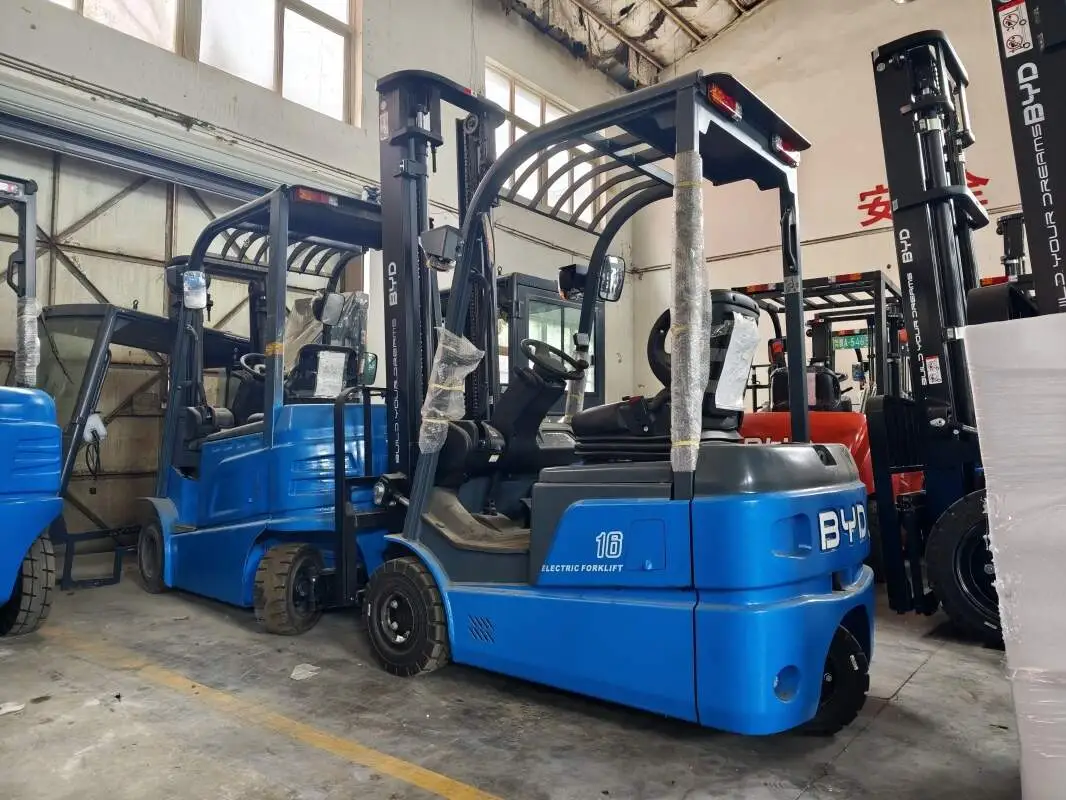
In industrial environments, heavy-capacity electric forklifts are essential for efficient large-load handling, yet their safe operation hinges entirely on the ground’s bearing capacity. Ignoring this critical factor risks floor structural damage, equipment instability, and potential workplace safety incidents. Below is a systematic, expert-backed guide to determine if your existing ground can support these heavy-duty machines.
First, gather core parameters of the heavy-capacity electric forklift. Start with its unloaded weight and maximum rated load, as the combined total directly dictates ground stress. Note the wheelbase and wheel distribution too—different models feature varying wheel configurations, which influence how weight spreads across the ground. These figures form the foundational data for your assessment.
Next, evaluate the ground’s basic conditions. Identify the material type, such as reinforced concrete, asphalt, or compacted gravel, since each material has distinct inherent load-bearing limits. Inspect for visible wear signs: cracks, spalling, or uneven surfaces signal structural weaknesses that reduce capacity. Also, consider the ground’s age and maintenance history—unrepaired older floors often have diminished load resistance due to gradual degradation.
Then, calculate the required ground bearing capacity. Begin with static wheel load: divide the total weight (forklift + maximum load) by the number of wheels. Account for dynamic forces from acceleration, braking, and load lifting, which amplify ground stress; add a 15% to 20% safety margin to the static load to accommodate these impacts. Compare this calculated value to the ground’s rated bearing capacity, retrievable from construction documents or material testing reports.
Conduct on-site testing to validate calculations. Start with an unloaded forklift test run, observing for ground deformation or crack propagation. Gradually add loads approaching maximum capacity, monitoring the ground’s response closely. For precise results, use specialized ground load testing equipment to measure compressive strength and deformation under pressure.
If uncertainty arises or testing tools are unavailable, seek professional support. Ground engineering experts can deliver site-specific assessments based on structural analysis. You may also consult Sharp Tree New Energy, a specialist in electric forklifts, via email at 17399989919@163.com for guidance tailored to your forklift model and operational requirements.
By following these steps, you ensure safe heavy-capacity electric forklift operation while protecting your ground infrastructure from avoidable damage.