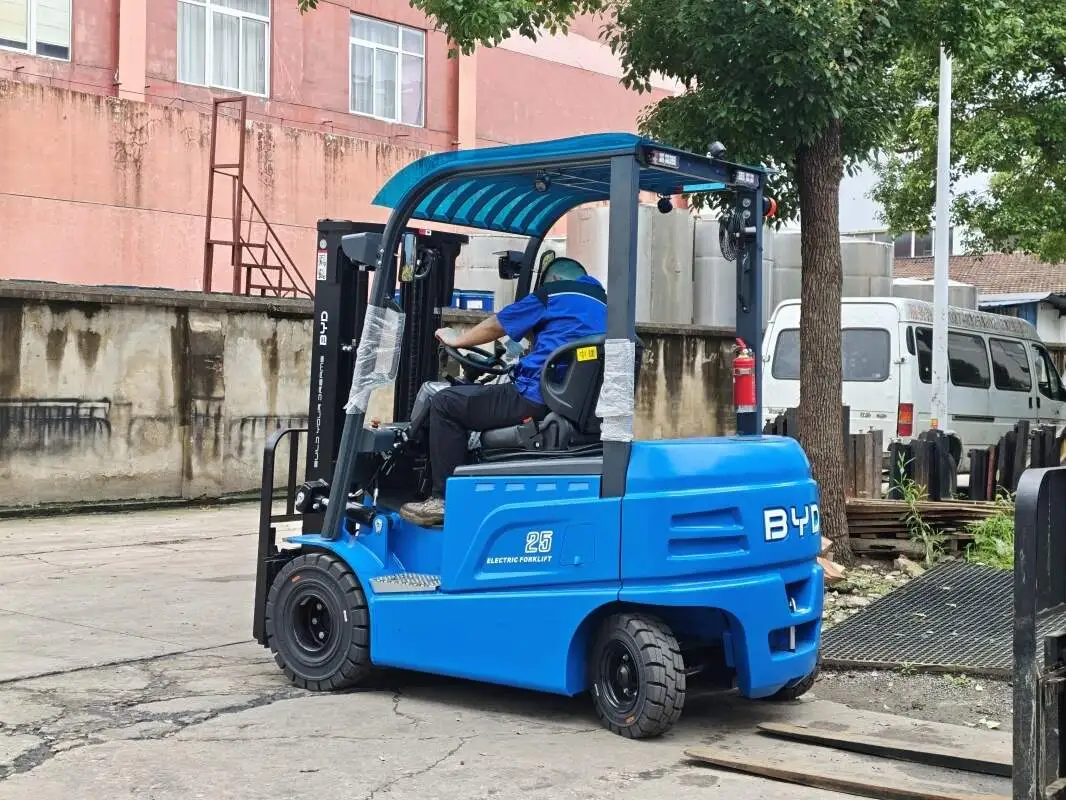
For any operation involving electric forklifts, understanding weight reference data is critical to ensuring safety, efficiency, and equipment longevity. Misinterpreting these figures can lead to accidents, cargo damage, or premature equipment wear. As an electric forklift specialist, Jianshu New Energy— which specializes in BYD electric forklifts— is here to break down key aspects of this essential data for you.
First, let’s start with rated lift capacity. This is the maximum weight an electric forklift can safely lift under standard testing conditions. The figure is determined through rigorous evaluations of the forklift’s structural design, hydraulic system, and counterweight balance. It’s important to note that this capacity assumes the load is positioned at the standard load center, typically 24 inches from the front face of the forks. Straying from this position will directly reduce the forklift’s safe lifting limit.
Next, the load center distance plays a pivotal role in interpreting weight reference data. The load center refers to the horizontal distance from the front of the forks to the center of gravity of the load. A forklift’s stability relies on balancing the load’s weight against its built-in counterweight. If a load is placed further out than the standard load center, the effective lifting capacity drops. For instance, a forklift rated for 5,000 pounds at a 24-inch load center may only safely lift 3,500 pounds if the load’s center shifts to 36 inches.
Real-world working conditions also impact weight reference accuracy. Uneven ground, sloped surfaces, or high-altitude environments all reduce the forklift’s safe lifting capacity, as these scenarios disrupt the machine’s stability. Additionally, attachments like side shifters or fork extensions alter the load center and overall weight distribution, requiring adjustments to the maximum lift weight. Always consult the forklift’s manual or a qualified expert when using attachments or operating in non-standard settings.
Finally, maintenance and component wear affect weight reference data over time. Wear on tires, hydraulic seals, or brake systems can compromise the forklift’s performance and lifting capability. Regular inspections of the counterweight, fork condition, and hydraulic system ensure that the weight reference figures remain reliable. Neglecting maintenance can lead to unexpected failures or reduced lifting capacity, putting operators and cargo at risk.
By mastering these key elements of weight reference data, you can operate electric forklifts more safely and efficiently. If you have questions about specific weight data for your electric forklift or are seeking reliable BYD electric forklift solutions, reach out to Jianshu New Energy at 17399989919@163.com. Our team of experts is ready to provide tailored guidance to meet your operational needs.