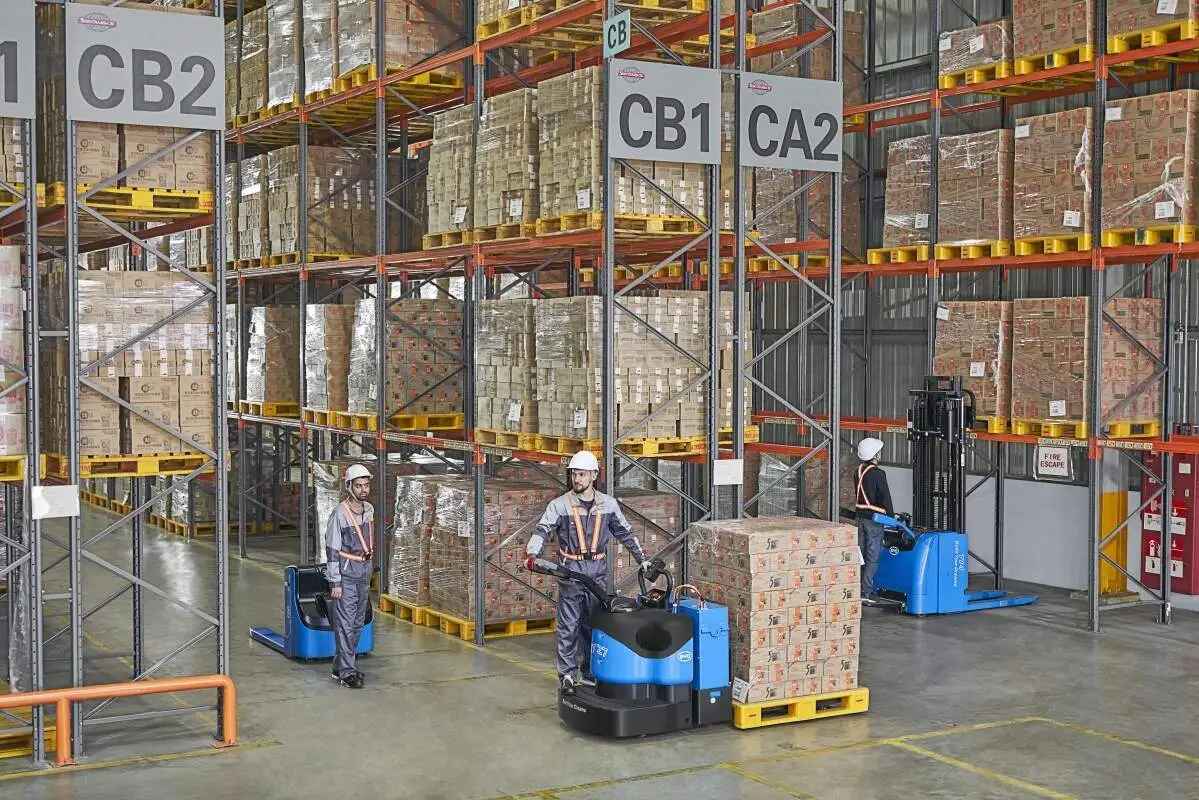
Operating electric counterbalance forklifts indoors—such as in warehouses, distribution centers, or manufacturing facilities—poses unique safety risks due to confined spaces, frequent pedestrian traffic, and varied floor conditions. Adhering to structured safety guidelines is critical to prevent accidents, protect personnel, and safeguard equipment and inventory. As Jianshu New Energy, we specialize in BYD electric forklifts and are committed to promoting compliant, safe operation practices for all users. For further inquiries about forklift safety or our products, you can reach us at 17399989919@163.com.
Before starting any task, conduct a comprehensive pre-operation inspection to ensure the forklift is fit for use. Begin with the battery: check for proper charge levels, secure connections, and no signs of leaks or corrosion. Test the braking system to confirm it responds smoothly, and verify steering functionality to avoid unexpected control issues. Inspect lifting mechanisms for wear or damage, and ensure tires are properly inflated with no excessive tread wear, as indoor floors may be slippery or uneven. Finally, confirm all safety features—including horns, headlights, backup alarms, and seat belts—are in working order. Never operate a forklift with known defects; report issues immediately to a supervisor for repairs.
All operators must wear appropriate personal protective equipment (PPE) at all times. This includes a hard hat to shield against falling objects, safety glasses to protect eyes from debris or dust, and steel-toe boots to prevent foot injuries from dropped loads or equipment movement. In high-noise indoor areas, hearing protection such as earplugs or earmuffs is essential to prevent long-term hearing damage. Ensure PPE fits properly and is maintained in good condition to deliver maximum protection during operation.
During operation, prioritize visibility and controlled movement. Keep a clear line of sight to the path ahead; if a load blocks your view, travel in reverse with caution, using mirrors and audible signals to alert others. Avoid sudden starts, stops, or sharp turns, as these actions can destabilize the forklift and lead to tip-overs or load shifts. Maintain a safe distance from walls, storage racks, and other obstacles, and never carry passengers on the forklift—only designated operators are allowed in the driver’s seat. When navigating ramps, travel slowly and keep the load tilted backward to maintain stability and prevent it from sliding off the forks.
Proper load management is a cornerstone of indoor forklift safety. Before lifting, ensure the load is stable, evenly distributed, and secured to prevent shifting. Never exceed the forklift’s rated load capacity, as overloading increases the risk of tip-overs, especially in confined spaces. Adjust the forks to match the width of the load, and lift it only high enough to clear obstacles during transport. Keep loads as low as possible when moving to maintain the forklift’s center of gravity, and avoid lifting loads while traveling unless absolutely necessary.
Stay vigilant of your indoor environment to avoid hazards. Watch for pedestrians crossing aisles or working near forklift routes, and yield to them immediately to prevent collisions. Be mindful of overhead obstacles such as pipes, lighting fixtures, or ceiling beams, especially when lifting loads to higher storage racks. Avoid operating the forklift on wet or oily floors; if such conditions exist, reduce speed and increase your following distance to maintain control. Ensure aisles are clear of clutter, properly marked with safety signs, and wide enough to accommodate forklift movement without obstruction.
Familiarize yourself with emergency procedures before operating the forklift. In the event of a fire, use the appropriate fire extinguisher for electrical or class B fires, and alert all personnel in the area immediately. If the forklift tips over, remain in the driver’s seat and hold on tightly—never attempt to jump out, as this can lead to serious injury. If you encounter a mechanical failure, stop the forklift in a safe, open area, turn off the power, and report the issue to a supervisor. Know the location of emergency exits and first-aid kits in case of an injury, and ensure you are trained to administer basic first aid if needed.
Following these safety guidelines is essential for creating a secure work environment and ensuring efficient indoor forklift operation. Regular refresher training and consistent adherence to these practices can significantly reduce accident risks and protect both personnel and assets. As a trusted provider of BYD electric forklifts, Jianshu New Energy is dedicated to supporting operators with the knowledge and resources they need to operate safely. If you have questions about forklift safety protocols or our range of electric forklifts, don’t hesitate to contact us at 17399989919@163.com.