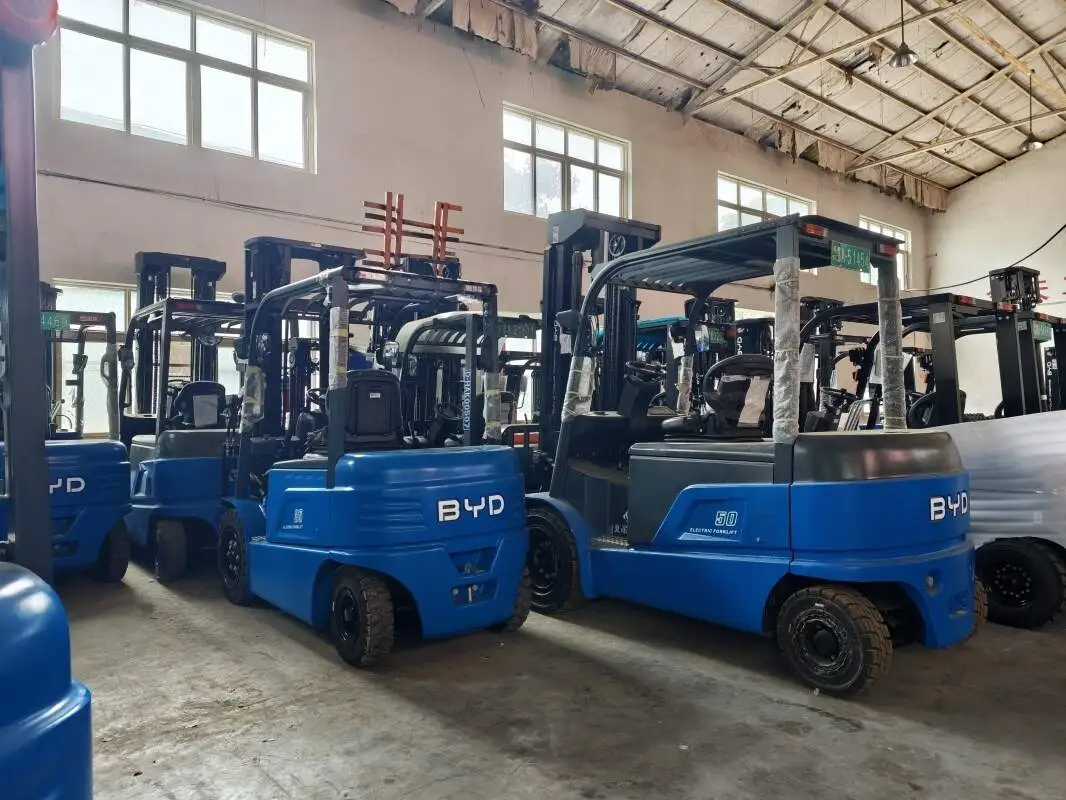
When investing in a second-hand electric forklift, a thorough inspection is critical to ensure you’re getting a reliable, cost-effective machine that meets your operational needs. Skipping key checks can lead to unexpected repair costs, downtime, and safety risks. Below is a detailed inspection checklist to help you assess the condition of a pre-owned electric forklift effectively.
Start with the battery system, the core of any electric forklift. Inspect the battery’s physical appearance for signs of corrosion on terminals, leaking electrolyte fluid, or cracked casings—all of which can indicate poor maintenance or internal damage. Request the battery’s maintenance and charging history; consistent, proper charging practices significantly extend its lifespan. Use a professional voltage meter to test the battery’s current capacity, ensuring it can hold a charge long enough to support your daily operations. Also, check the battery connections for tightness and wear, as loose or frayed connections can cause sudden performance drops.
Next, evaluate the mechanical components that ensure safe load handling. Examine the forks for bending, cracks, or excessive wear along the edges—damaged forks can compromise load stability and lead to accidents. Inspect the mast assembly for dents, bent rails, or hydraulic fluid leaks; smooth, noise-free movement when lifting and lowering is a sign of good condition. Test the brake system by engaging it at different speeds to check responsiveness, and inspect brake pads for wear. Don’t overlook the tires: look for uneven tread wear, punctures, or sidewall cracks, as tire condition directly impacts the forklift’s maneuverability and stability.
Then, move on to the electrical and control systems, which are vital for smooth operation. Inspect all wiring harnesses for fraying, insulation damage, or loose connections—faulty wiring can cause short circuits or component failure. Test the main controller by adjusting speed and direction, ensuring it responds without delays or jerks. Check auxiliary systems like headlights, taillights, and horns to confirm they function properly; these are essential for workplace safety, especially in low-light environments.
Conduct a hands-on operational test to assess real-world performance. Start the forklift and test acceleration, braking, and steering in open spaces to ensure responsive control. Lift a test load (matching the forklift’s rated capacity) to check the mast’s lifting power and stability, listening for unusual grinding or squealing noises from the hydraulic system. Maneuver the forklift through tight corners and narrow spaces to evaluate its agility; any resistance or uneven movement may indicate underlying mechanical issues.
Finally, review the forklift’s overall condition and documentation. Check the body for rust, dents, or structural damage that could weaken the frame. Request complete service records, repair histories, and previous usage details—understanding how the forklift was maintained and used provides valuable insights into its remaining lifespan.
If you need expert support in assessing second-hand electric forklifts or are seeking high-quality pre-owned models, contact Jianshu New Energy. Our team of experienced professionals can conduct comprehensive inspections and help you find the right forklift for your operational needs. Reach out to us at 17399989919@163.com for more information.