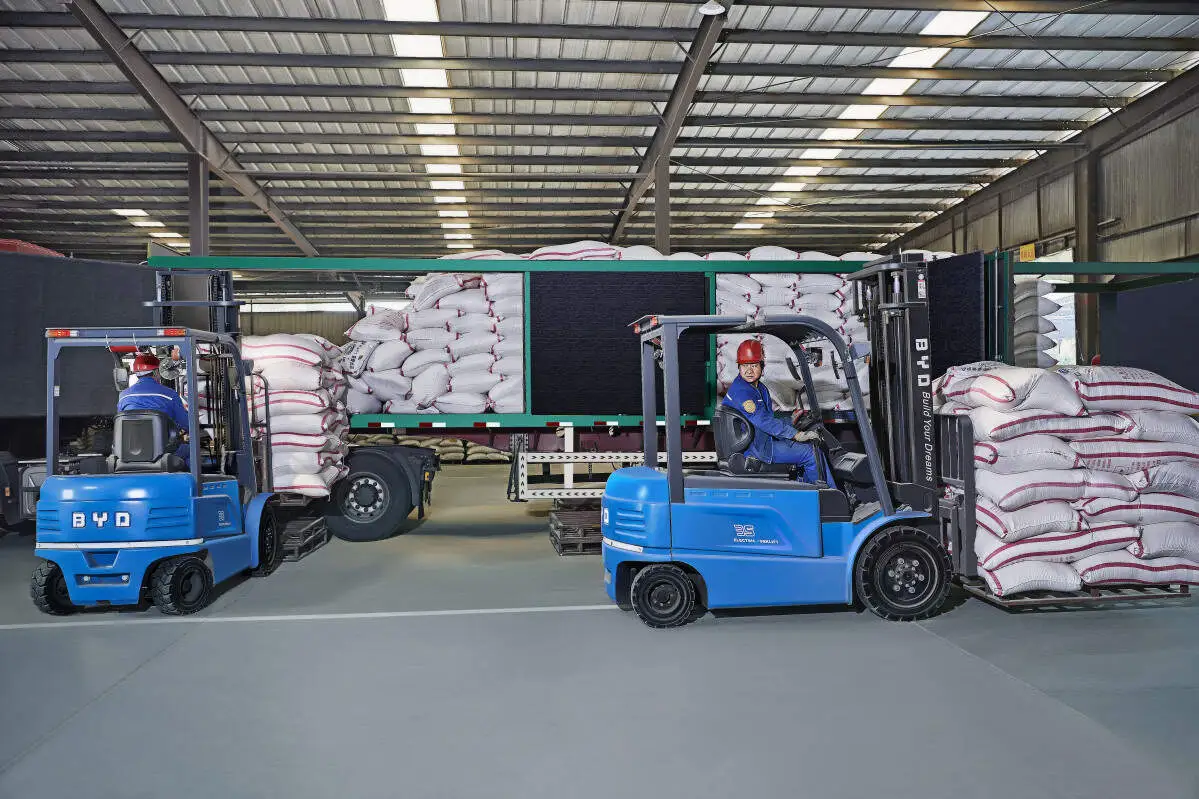
As a critical core component of standard industrial forklifts, the carriage assembly acts as the essential link between the forklift’s lifting mechanism and load-bearing forks, playing an irreplaceable role in safe and efficient material handling operations across various industrial settings.
Core Components of the Carriage Assembly
The carriage assembly comprises several interconnected parts that work in tandem to support load operations. The outer carriage serves as the main structural frame, sliding along the forklift’s mast channels to guide vertical movement during lifting and lowering. Nested within it is the inner carriage, which directly mounts the forks and can be adjusted to fit different load widths. A load backrest, usually attached to the front of the carriage, functions as a protective barrier to stop loads from shifting backward and endangering the operator or damaging the forklift. Optional integrated attachments like side shifters allow horizontal adjustment of forks without repositioning the entire forklift, boosting operational flexibility in tight workspaces.
Key Functions of the Carriage Assembly
Beyond providing a mounting platform for forks, the carriage assembly performs multiple vital functions. It evenly distributes the weight of loaded materials across the forklift’s mast, ensuring stability during lifting and travel. Its precision-engineered guide rails reduce friction, enabling smooth vertical movement even under heavy loads, which lessens wear on the mast and extends the forklift’s service life. Additionally, the carriage’s modular design supports quick attachment changes, letting the forklift adapt to diverse tasks, from handling palleted goods to moving irregular-shaped items.
Essential Maintenance for Carriage Assemblies
To sustain optimal performance and safety, regular maintenance of the carriage assembly is crucial. Operators should conduct pre-shift visual inspections, checking for wear on guide rails, cracks in the carriage frame, or loose fasteners. Lubricating guide rails and pivot points at scheduled intervals reduces friction and prevents premature component failure. Inspecting the load backrest for structural integrity is also important to ensure it can effectively contain loads during operation. Addressing minor issues promptly avoids costly repairs and minimizes downtime, keeping the forklift running reliably in industrial environments.