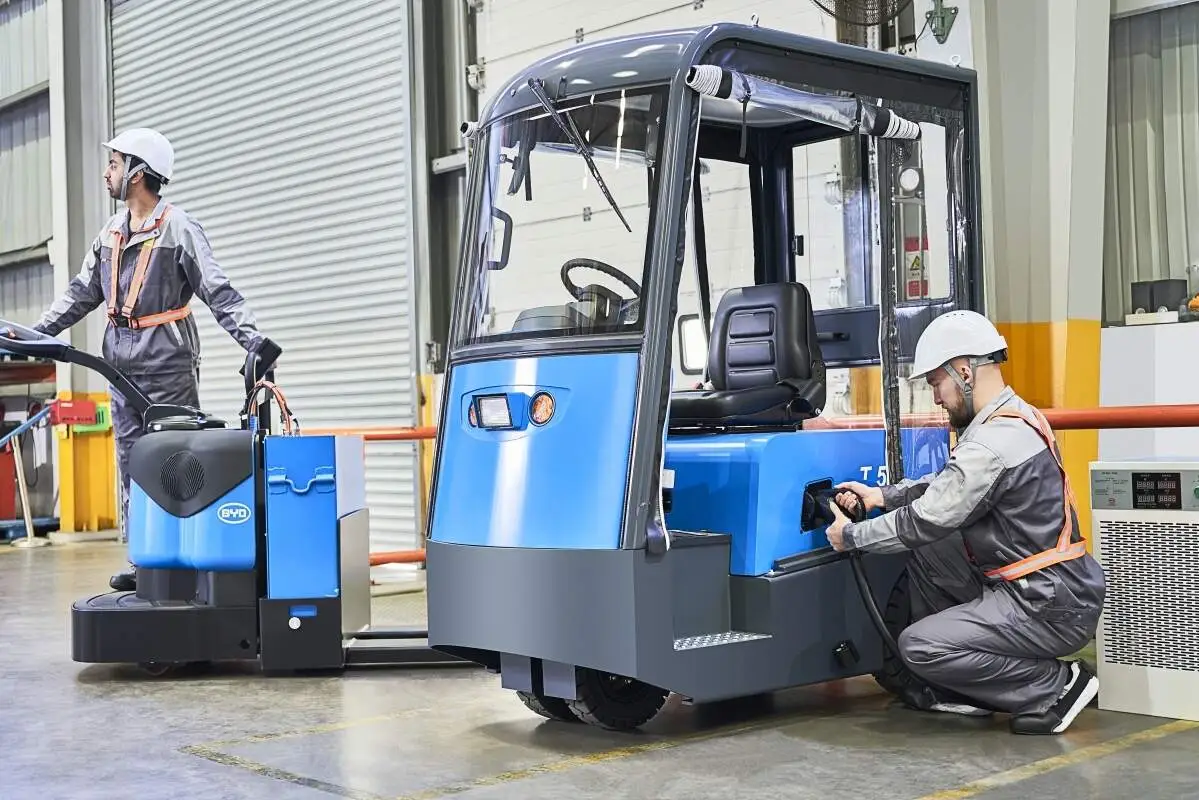
electric forklifts are indispensable tools in modern material handling, powering efficient operations in warehouses, distribution centers, and manufacturing facilities. To understand their reliable performance, it’s essential to explore each core component and its unique role.
The frame serves as the foundational structure of an electric forklift, supporting all other components including the power system, mast, and operator cabin. Built from high-strength steel, it withstands heavy loads, impacts, and daily wear, ensuring stability during lifting, maneuvering, and transportation tasks. Its robust design also helps distribute weight evenly, preventing tipping and enhancing overall operational safety.
The mast assembly is the vertical lifting mechanism that enables the forklift to raise and lower loads. Composed of inner and outer mast sections, hydraulic cylinders, and chain systems, it extends to varying heights to reach storage racks or load trucks. The tilt function, controlled by hydraulic cylinders, allows operators to adjust the load angle, securing goods during transport and facilitating easier loading and unloading on uneven surfaces.
Connected to the mast, the fork carriage and forks are directly responsible for carrying and positioning loads. The carriage acts as a link between the mast and forks, transferring lifting force smoothly. Forks, made of durable steel, can be adjusted to different widths to accommodate various pallet sizes, ensuring versatility across different material handling tasks. Proper alignment and maintenance of forks are crucial to prevent load slippage and equipment damage.
The power system is the heart of an electric forklift, consisting of a rechargeable battery pack, electric motor, and power controller. The battery provides clean, zero-emission energy, making electric forklifts ideal for indoor use where air quality is a concern. The motor converts electrical energy into mechanical power to drive the wheels and operate the mast, while the controller regulates power flow, ensuring efficient performance and extending battery life.
The control system enables precise operation of the forklift, including steering, lifting, tilting, and braking. Key elements include the steering wheel, joysticks for mast control, brake and accelerator pedals, and an instrument panel displaying battery level, load capacity, and operational status. Ergonomically designed controls reduce operator fatigue, allowing for long hours of safe, accurate operation.
Wheels and suspension systems play a vital role in maneuverability and stability. Drive wheels provide traction for moving the forklift, while steering wheels enable tight turns in narrow spaces. Suspension components absorb shocks from uneven floors, ensuring a smooth ride and protecting both the forklift and the loads it carries.
Finally, safety components are integrated throughout the forklift to protect operators, bystanders, and goods. These include seat belts, overhead guard rails, warning lights, reverse alarms, and overload protection systems that prevent lifting loads beyond the forklift’s rated capacity. Regular inspection of these safety features is essential to maintain a secure working environment.
Each component of an electric forklift works in harmony to deliver efficient, safe material handling. Understanding their functions not only helps operators use the equipment correctly but also supports proactive maintenance, extending the forklift’s lifespan and reducing operational downtime.