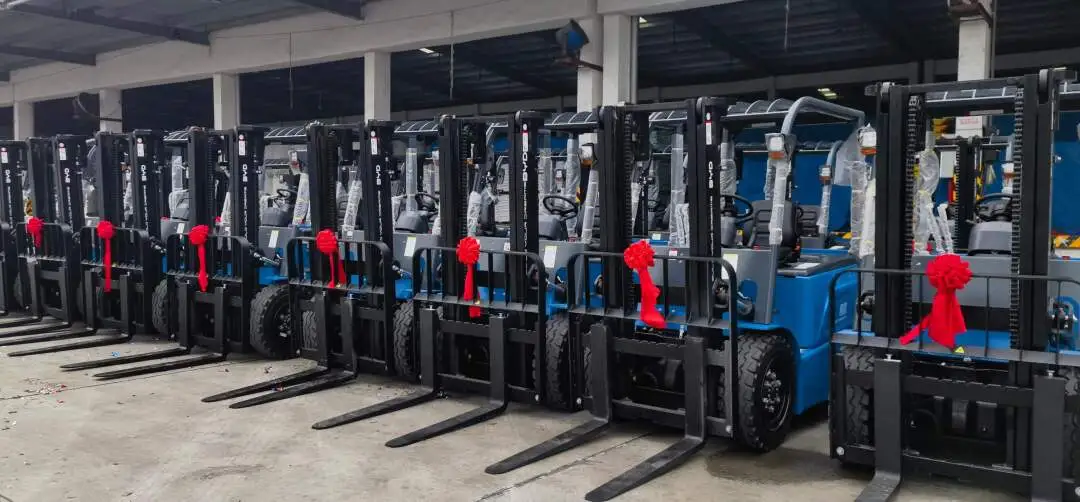
The forklift carriage is a core component that connects the lift mechanism and forks, directly influencing material handling efficiency, adaptability, and operational safety. Different carriage types are tailored to meet diverse workplace demands, each with unique functional traits that cater to specific tasks.
The standard forklift carriage is the most basic and widely used type. Boasting a sturdy, simplified structural design, it provides stable support for forks during vertical lifting operations. Ideal for general material handling scenarios like palletized cargo transport in warehouses or distribution centers, it offers reliable load-bearing capacity and cost-effectiveness. Its straightforward construction also simplifies routine maintenance, ensuring consistent performance in daily working environments.
The side shift forklift carriage adds a lateral adjustment function, enabling forks to shift left or right within a limited range. This trait significantly enhances positioning accuracy when aligning with pallets or narrow storage spaces. Operators can fine-tune the fork position without repositioning the entire forklift, reducing the risk of collision with goods or storage racks. It is particularly suitable for narrow-aisle operations and tasks requiring precise cargo placement, effectively boosting overall handling efficiency.
Adjustable fork carriages allow operators to modify the distance between the two forks according to cargo or pallet dimensions. This eliminates the need to replace forks for different load sizes, adding great flexibility to material handling processes. Whether dealing with small pallets or wide cargo units, the adjustable carriage can quickly adapt, cutting down on operational downtime and improving versatility. It is a preferred choice for facilities with diverse cargo types and frequent load size changes.
Rotating forklift carriages are equipped with a rotating mechanism that lets forks rotate up to 360 degrees (or at specific fixed angles). This function is essential for handling irregularly shaped goods, such as cylindrical materials or items that need flipping during transport. It also simplifies tasks like stacking goods in unconventional orientations, expanding the forklift’s application scope to specialized industries like construction or manufacturing.
Selecting the appropriate forklift carriage type depends on specific operational requirements, cargo characteristics, and working environment. Understanding the functional traits of each type helps businesses optimize material handling workflows, improve operational efficiency, and ensure safe, smooth daily operations.