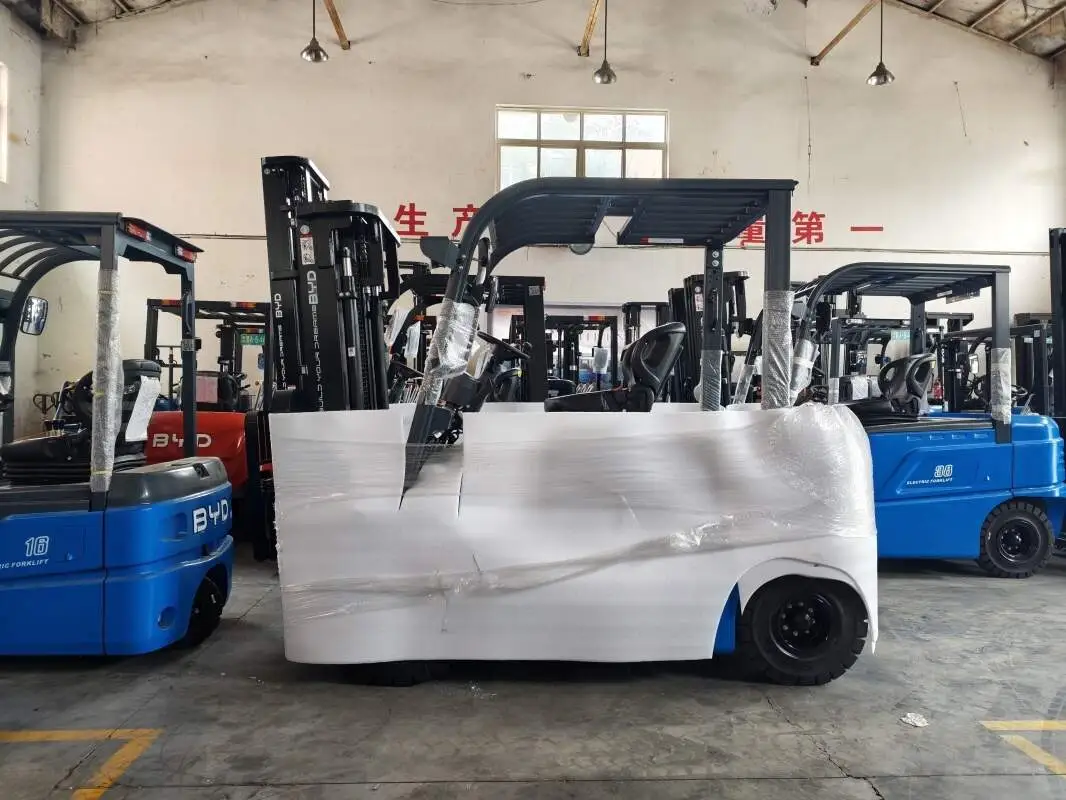
Handling oversized and heavy loads in industrial environments presents unique challenges that demand specialized equipment. Large-capacity forklifts are engineered to address these needs, but selecting the right model requires careful consideration of multiple factors to ensure safety, efficiency, and long-term operational value.
The first and most critical factor is aligning the forklift’s rated load capacity with the specific requirements of your oversized loads. It’s essential to account not just for the weight of the load, but also its dimensions and center of gravity. A load that is wider or taller than standard can shift dynamically during movement, increasing effective weight and risking instability. Always opt for a forklift with a rated capacity that exceeds your maximum anticipated load by a reasonable margin to accommodate these variables, rather than relying on the exact weight alone.
Stability features are another non-negotiable aspect of large-capacity forklift selection for oversized loads. Look for models with enhanced counterweight systems, wide wheelbases, and low center-of-gravity designs to minimize the risk of tipping, especially when navigating uneven terrain or making turns. Additional features like load-sensing hydraulic systems can adjust lift operations based on load characteristics, maintaining stability throughout the lifting and transport process. Some models also offer advanced stability control technologies that monitor operational parameters and alert operators to potential hazards, adding an extra layer of safety.
Choosing the right power source depends on your operational environment. Electric large-capacity forklifts are ideal for indoor settings where emissions and noise must be controlled, offering smooth operation and lower maintenance requirements. For outdoor use, especially on rough or unpaved surfaces, internal combustion forklifts powered by diesel or propane may be more suitable, providing higher torque and better performance in challenging conditions. Evaluate factors like fuel availability, charging infrastructure, and environmental regulations when selecting the power type that best fits your needs.
Operational ease and operator comfort should not be overlooked, as they directly impact efficiency and safety. Large-capacity forklifts designed for oversized loads should feature ergonomic controls, clear visibility from the operator’s cabin, and intuitive interfaces to reduce operator fatigue during long shifts. Adjustable seating, climate control, and vibration-dampening systems can enhance comfort, allowing operators to focus on precise load handling. Additionally, consider the forklift’s maneuverability—models with tight turning radii are better suited for confined spaces, while those with extended lift heights are necessary for stacking oversized loads in high-bay warehouses.
Finally, assess the long-term maintenance requirements and total cost of ownership. Regular maintenance is crucial to keep large-capacity forklifts operating reliably, so look for models with easily accessible components and available service support. Consider factors like replacement part availability, service intervals, and energy efficiency to minimize operational costs over time. Investing in a forklift with a robust build quality and durable components can reduce downtime and extend the equipment’s lifespan, providing better value in the long run.
By carefully evaluating these key factors—load capacity alignment, stability features, power source, operational ease, and maintenance needs—you can select a large-capacity forklift that meets your oversized load handling requirements effectively. Taking the time to choose the right equipment ensures that your material handling operations are safe, efficient, and cost-effective, supporting the smooth flow of goods in your industrial facility.