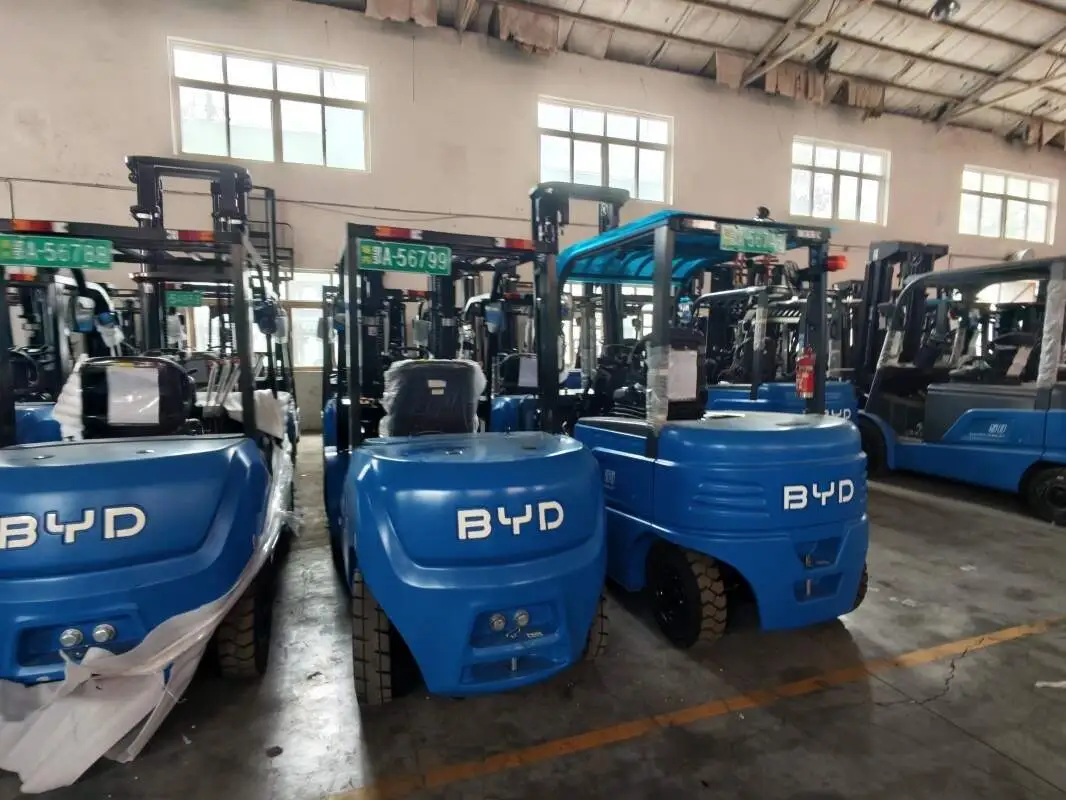
The mast is one of the most critical components of an electric forklift, directly determining the vehicle’s lifting capacity and operational safety. For repair technicians and forklift operators, mastering its structural knowledge is essential to diagnose faults quickly and perform effective repairs, especially for BYD electric forklifts offered by Jianshu New Energy.
Core Components of the Electric Forklift Mast
1. Telescopic Mast Sections: Most electric forklift masts consist of inner and outer telescopic sections. These sections are constructed with high-strength steel to withstand heavy loads during lifting. The outer mast is fixed to the forklift frame, while the inner mast moves vertically along guide rollers. Any deformation or crack in these sections can lead to unstable lifting operations.
2. Hydraulic Lift Cylinders: Hydraulic cylinders provide the power to lift the mast. Typically, one or two cylinders are installed depending on the forklift’s load capacity. The seals within these cylinders are critical—wear or damage can cause hydraulic fluid leaks, reducing lifting efficiency or causing the mast to drop unexpectedly.
3. Load Chain System: Load chains connect the carriage (fork holder) to the top of the mast. These chains bear the full weight of the lifted load, so regular inspection for wear, stretching, or broken links is necessary. Proper chain tension is also important; overly loose chains can slip, while overly tight chains increase stress on the mast components.
4. Carriage and Fork Carriers: The carriage is the component that holds the fork carriers and forks. It slides along the mast rails via rollers, ensuring smooth movement during lifting and lowering. Worn rollers or damaged rails can cause jitter or resistance, affecting the forklift’s performance.
Key Inspection Points for Repair
When conducting mast repairs, start with a comprehensive visual inspection: check for bent sections, cracked welds, or rust accumulation on the mast steel. Next, inspect the hydraulic system for leaks around the cylinder seals and connections. Test the mast’s lifting and lowering speed to identify any irregularities that may indicate hydraulic issues.
For the chain system, measure the chain’s wear using a chain wear gauge—if wear exceeds the standard recommended limit, replacement is necessary. Additionally, check the roller and rail surfaces for signs of excessive wear or damage; replacing worn rollers can restore smooth movement and prevent further strain on the mast.
Maintenance Best Practices to Extend Mast Lifespan
Regular lubrication of rollers, chain links, and rail surfaces is crucial to reduce friction and prevent premature wear. Avoid overloading the forklift beyond its rated capacity, as this puts excessive stress on the mast components. After each use, clean the mast to remove debris and dust that can accelerate wear or block moving parts.
For users of BYD electric forklifts, Jianshu New Energy provides professional repair and maintenance guidance. If you encounter any mast-related issues or need technical support, feel free to contact us at 17399989919@163.com for reliable assistance.