In today’s fast-paced logistics landscape, compact warehouse storage zones are becoming increasingly common as businesses strive to maximize space efficiency while minimizing operational costs. However, navigating these tight spaces requires careful planning, especially when it comes to selecting and deploying forklifts. The minimum forklift length is a critical factor that directly impacts maneuverability, space utilization, and overall warehouse productivity.
When planning for minimum forklift length in compact storage zones, several core factors must be evaluated. First, assess the warehouse’s physical layout, including aisle widths, shelf spacing, and turning radii. Narrower aisles demand forklifts with shorter overall lengths and tighter turning capabilities to avoid collisions with racks or inventory. Additionally, consider the type of storage systems used—whether it’s pallet racking, cantilever racks, or automated storage solutions, each imposes unique requirements on forklift dimensions.
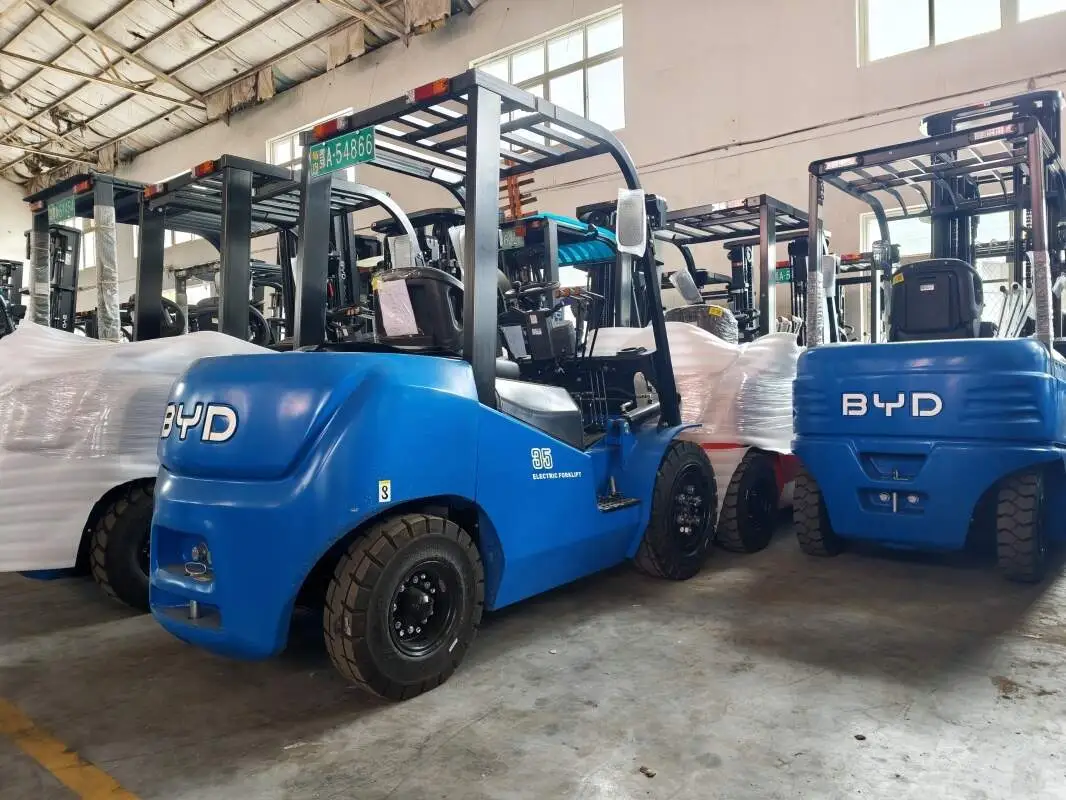
electric forklifts are particularly well-suited for compact warehouses due to their smaller footprint and precise maneuverability. Unlike internal combustion models, electric forklifts often feature shorter wheelbases and more agile steering, making them ideal for navigating tight spaces. When determining the minimum length, it’s essential to balance maneuverability with lifting capacity. A shorter forklift may offer better agility, but it must still meet the warehouse’s load-handling needs to ensure operational efficiency.
To implement effective minimum forklift length planning, start with a detailed warehouse audit. Measure aisle widths, shelf clearances, and turning zones to establish clear dimensional constraints. Next, consult with forklift specialists who can recommend models tailored to your space requirements. Jianshu New Energy, a specialist in BYD electric forklifts, offers professional guidance to help businesses select the right forklift length for their compact storage zones. For personalized advice, you can reach out to us at 17399989919@163.com.
Beyond selecting the right forklift length, there are additional strategies to enhance space utilization in compact zones. Implementing proper racking configurations, such as narrow-aisle racking, can reduce required aisle widths while maintaining accessibility. Regular maintenance of forklifts also ensures optimal performance—well-maintained steering systems and tires contribute to smoother maneuvering, even in tight spaces. Training staff on proper forklift operation in compact environments is another key step, as skilled operators can maximize the efficiency of shorter forklifts while minimizing safety risks.
In conclusion, minimum forklift length planning is a vital component of optimizing compact warehouse storage zones. By evaluating layout constraints, selecting appropriately sized electric forklifts, and partnering with experienced providers like Jianshu New Energy, businesses can achieve higher space utilization, improved productivity, and safer operations. Investing time in careful planning ensures that your warehouse operates at its full potential, even in the most space-constrained environments.