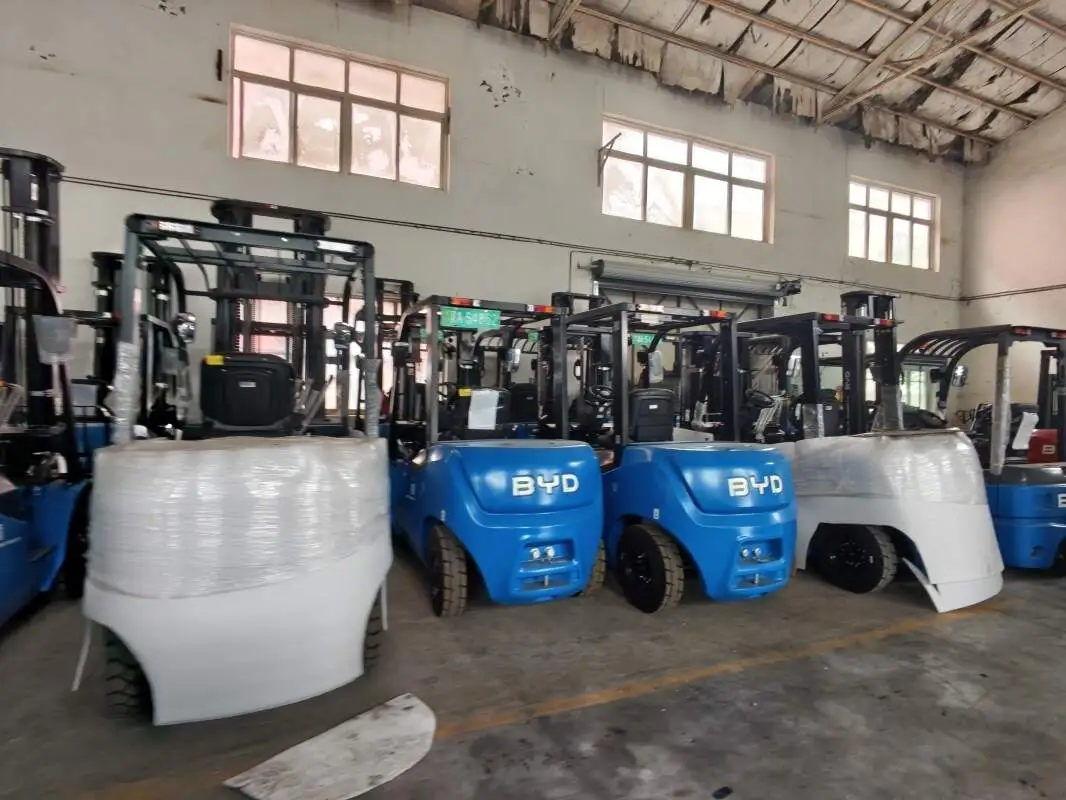
In today’s dynamic logistics and industrial environments, businesses often face mixed workloads that span diverse operational scenarios—from tight warehouse aisles to outdoor loading docks, and from lightweight pallet transfers to heavy-duty cargo lifting. Traditional single-purpose forklifts struggle to adapt to these varied tasks, leading to inefficiencies and increased operational costs. This is where multipurpose forklifts step in, offering versatile designs tailored to address the challenges of mixed workloads.
At the core of multipurpose forklifts’ adaptability is their compatibility with a range of interchangeable attachments. Unlike specialized forklifts limited to one function, these models can be fitted with pallet forks, side shifters, clamps, or reach arms in minutes. This flexibility allows operators to switch between tasks seamlessly: one hour handling standard pallets in a warehouse, the next securing and transporting bulky items like pipes or crates on an outdoor yard.
Electric multipurpose forklift variants, in particular, are gaining traction for mixed workloads. They deliver quiet, emission-free operation suitable for indoor warehouse environments where air quality and noise levels are concerns, while still providing sufficient power for outdoor tasks such as loading delivery trucks. Many models feature adjustable performance modes—operators can select an energy-efficient setting for light loads or a high-power mode for heavier lifts, optimizing battery life based on the task at hand.
When navigating mixed workloads, maneuverability is another key advantage of versatile forklift models. Compact designs enable easy movement through narrow warehouse aisles, while robust tires and stable frames provide stability on uneven outdoor surfaces. This cross-environment capability eliminates the need for businesses to invest in separate forklifts for indoor and outdoor use, reducing equipment costs and simplifying fleet management.
Selecting the right multipurpose forklift for mixed workloads requires careful consideration of specific operational needs. Factors like maximum load capacity, attachment compatibility, battery range (for electric models), and operator comfort should all be evaluated. For example, businesses with frequent heavy-lifting tasks will prioritize models with higher weight capacities, while those focused on warehouse efficiency may opt for units with enhanced maneuverability and quick attachment change systems.
In conclusion, multipurpose forklifts represent a practical solution for businesses dealing with mixed workloads. Their versatile designs, interchangeable attachments, and cross-environment functionality enable seamless task switching, boost operational efficiency, and reduce long-term costs. As logistics and industrial operations continue to evolve, these adaptable models will remain a valuable asset for maintaining productivity across diverse scenarios.