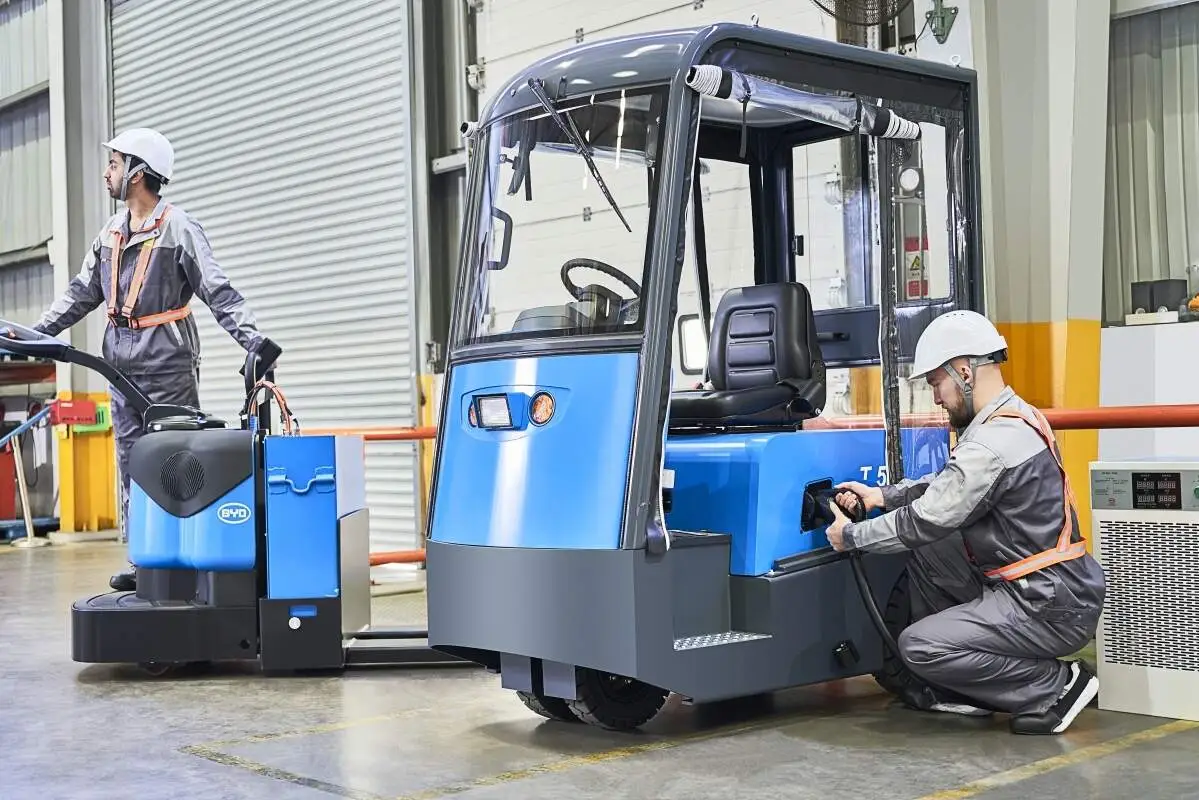
In industrial workplaces where forklifts are commonly used, steel toe boots are a staple of personal protective equipment (PPE), designed to shield feet from heavy impacts and compression. A common concern among workers and safety managers is whether a forklift can damage these boots, prompting objective testing to provide clear, evidence-based answers.
To address this question, standardized tests are conducted to simulate real-world scenarios involving forklifts and steel toe boots. The first critical test is static compression, which mimics a forklift’s fork resting on a boot. During this test, calibrated hydraulic equipment applies pressure comparable to the static weight of a typical forklift load to the steel toe section of the boot. Qualified steel toe boots, manufactured to meet international safety standards, are engineered to withstand static pressures ranging from thousands of pounds. Test results show that when exposed to standard static loads, the steel toe retains its structural integrity, with no significant deformation that would compromise foot protection. The boot’s upper material may show minor scuffing but remains functional.
Next, dynamic rolling resistance testing replicates a forklift’s tire rolling over a steel toe boot. This test uses a weighted roller moving at a speed similar to a forklift’s typical operating pace to pass over the boot. The goal is to assess how the boot withstands repeated or one-time rolling impacts. In controlled trials, properly certified steel toe boots resist tearing or structural failure under standard rolling conditions. The steel toe absorbs and distributes the roller’s weight, preventing direct force from reaching the foot. While the outsole or upper may sustain superficial damage, the protective steel core remains intact.
Another key test focuses on accidental impact, such as a forklift’s fork striking the steel toe boot at a low speed. This scenario simulates common workplace mishaps where a forklift operator misjudges distance. Test data indicates that compliant steel toe boots can absorb the impact force without the steel toe cracking or the boot splitting. The impact energy is dissipated through the boot’s reinforced construction, reducing the risk of foot injury.
It’s important to note that test results depend on several variables. Steel toe boots that do not meet safety standards may fail under even minimal forklift-related stress. Additionally, extreme conditions, such as a fully loaded forklift resting on a boot for an extended period or a high-speed impact from a forklift’s fork, can cause damage even to certified boots. Regular inspection of steel toe boots is recommended to check for wear and tear that may reduce their protective capabilities over time.
In conclusion, objective testing confirms that properly certified steel toe boots can withstand typical forklift-related pressures, impacts, and rolling forces without sustaining critical damage. However, their performance depends on meeting safety standards and avoiding extreme, non-standard conditions. Workers should prioritize using compliant PPE and follow maintenance guidelines to ensure ongoing foot protection in forklift-intensive environments.