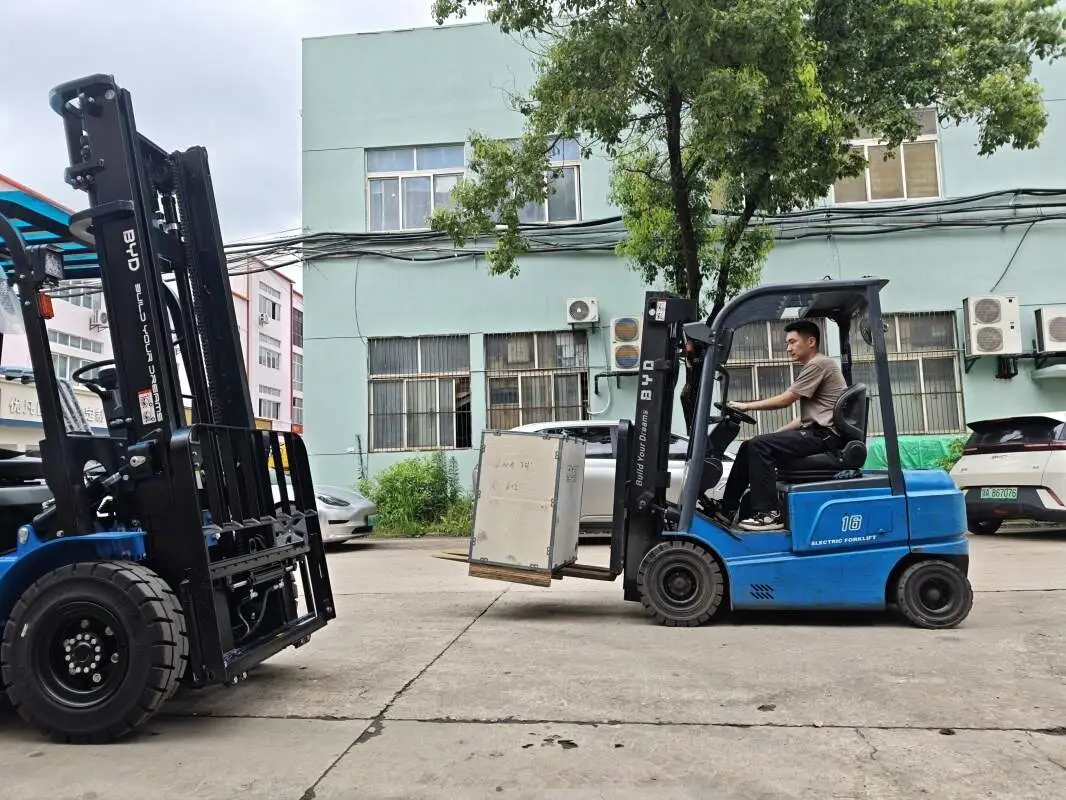
In today’s competitive logistics and warehousing sector, maximizing storage capacity while maintaining smooth operations is a constant challenge. Narrow-aisle storage systems have emerged as a practical way to expand inventory holding without increasing warehouse floor space, but traditional forklifts struggle to navigate these tight environments effectively. Omnidirectional forklifts, engineered with specialized mobility features, address these gaps and deliver distinct functional advantages for narrow-aisle material handling.
The most standout advantage of omnidirectional forklifts is their unparalleled maneuverability. Unlike standard forklifts that depend on front-wheel steering and require wide turning radii, omnidirectional models are equipped with independently controlled wheels capable of rotating 360 degrees. This allows the forklift to move forward, backward, sideways, or spin in place without needing extra clearance for turns. In narrow aisles where every inch of space is critical, this agility lets operators navigate tight corners, access pallet racks from multiple angles, and reposition loads with precision, eliminating the wasted space required for traditional forklift turning zones.
Enhanced space utilization is another key benefit. With omnidirectional forklifts, warehouse managers can reduce aisle widths by up to 50% compared to the space needed for conventional forklifts. This reduction directly translates to additional storage racks being installed, increasing overall inventory capacity significantly. By optimizing both vertical and horizontal space, businesses can store more goods without expanding their facility, cutting down on rental costs and improving inventory turnover rates.
Operational efficiency also gets a substantial boost with omnidirectional forklifts. The ability to move in any direction eliminates the need for repeated repositioning to access pallets or navigate between racks, reducing task cycle times. Operators can load and unload goods more quickly, and intuitive control systems simplify operation, minimizing the learning curve for new staff and lowering the risk of workflow delays. This increased efficiency translates to higher daily throughput, helping businesses meet tight delivery deadlines and handle peak demand periods more effectively.
Safety is a critical priority in material handling, and omnidirectional forklifts excel in this area too. Their precise maneuverability reduces the risk of collisions with racks, walls, or other equipment, protecting both the forklift and valuable inventory. Many models feature advanced visibility tools, such as wide-angle cameras and proximity sensors, that help operators navigate blind spots in narrow aisles. Additionally, their stable design ensures secure handling of heavy loads even in confined spaces, reducing the likelihood of accidents and workplace injuries.
In summary, omnidirectional forklifts offer a holistic solution to the unique challenges of narrow-aisle material handling. Their superior mobility, space-saving design, improved efficiency, and enhanced safety make them a valuable investment for businesses aiming to optimize warehouse operations and stay competitive in the fast-paced logistics industry.