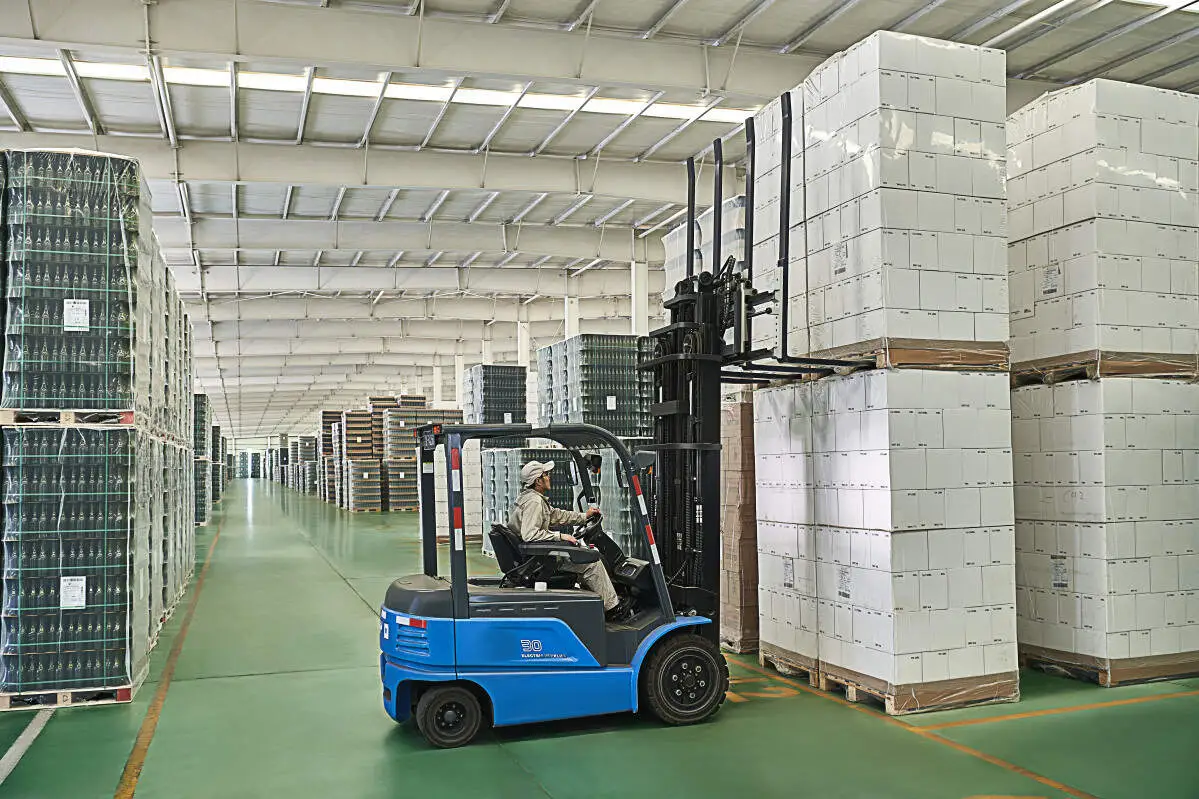
Before starting any operation with a stand-up electric warehouse forklift, a thorough pre-operation inspection is critical to ensure safety and functionality. Begin by checking the battery’s charge level; a low battery can lead to unexpected shutdowns mid-operation, increasing accident risks. Inspect the brake system to confirm smooth response, test the steering mechanism for stiffness or delays, and verify all lights—including headlights and warning signals—work properly for visibility in dim warehouse spaces. Examine forks for cracks, bends or excessive wear, ensure the load backrest extension is intact, and wear appropriate personal protective equipment like steel-toe boots and high-visibility vests.
When handling loads, adhere to proper techniques to prevent tip-overs and goods damage. Confirm the load weight does not exceed the forklift’s rated capacity, marked clearly on the vehicle. Position forks evenly under the load, ensuring they reach fully beneath the pallet for stable support. Lift loads just 4 to 6 inches off the ground when traveling to maintain balance. Avoid carrying loads that block forward view; if visibility is obstructed, travel in reverse using mirrors to navigate. When stacking or retrieving loads from racks, move slowly and align forks precisely with rack openings to avoid collisions.
Maneuvering in narrow warehouse aisles requires extra care. Reduce speed significantly to react to obstacles or pedestrians. Use mirrors to monitor blind spots, sound the horn before entering intersections or low-visibility areas, and avoid sharp turns that risk tipping, especially with loads. Maintain a 3-foot safe distance when passing other equipment or workers. If an aisle is too narrow to turn around, use a three-point turn to reposition safely, ensuring clear space at each step.
Daily maintenance extends the forklift’s lifespan and ensures consistent performance. After each shift, clean the vehicle to remove dirt and debris that interfere with moving parts. Check tire pressure and inspect for cuts or punctures, as damaged tires affect stability. Inspect hydraulic hoses for leaks, and report unusual sounds or performance issues to maintenance promptly. Follow manufacturer guidelines when charging the battery to avoid overcharging, and store the forklift in a designated area away from high-traffic zones and hazardous materials when not in use.
Always prioritize safety by following warehouse rules. Never operate the forklift under the influence of alcohol or drugs, and avoid distractions like mobile phones while driving. Yield to pedestrians, who have the right of way, and complete certified training if new to operating this equipment. By following these techniques, you minimize accident risks, improve efficiency, and ensure safe, effective use of stand-up electric warehouse forklifts.