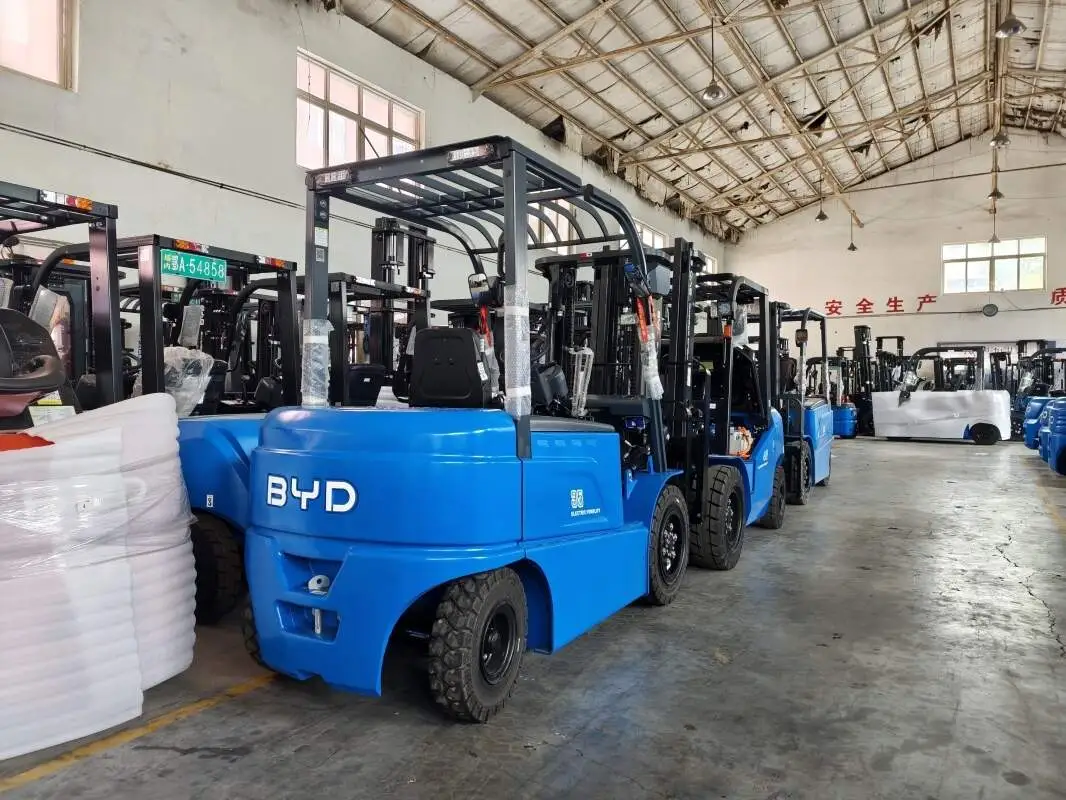
Forearm series industrial forklifts are indispensable workhorses in warehouses, manufacturing plants, and logistics centers, tasked with lifting, transporting, and stacking heavy loads efficiently. To ensure safe, reliable operation and extend the equipment’s service life, following a structured operation manual reference is essential. This guide outlines key guidelines for pre-use inspections, safe operation, routine maintenance, and basic troubleshooting.
Pre-Use Inspection Protocols
Before starting any shift, a thorough pre-use inspection must be completed to identify potential hazards or equipment defects. Begin with a visual walk-around: inspect the forklift’s tires for wear, cracks, or proper inflation, ensuring no debris is trapped in treads. Check the forearm forks for bending, cracks, or misalignment, and verify that the fork pins are secure. Examine hydraulic lines and connections for leaks, as fluid loss can compromise lifting capabilities.
Enter the operator’s cabin and test essential controls: confirm the seatbelt fastens securely, check the responsiveness of steering, acceleration, and brake pedals, and verify that the horn, warning lights, and backup alarms function correctly. Ensure the overhead guard is intact and that the operator’s seat provides clear visibility of the load and surrounding area.
Safe Operational Guidelines
When operating the forearm series forklift, prioritize load safety and stability at all times. Never exceed the forklift’s rated load capacity, which is clearly marked on the equipment. When lifting loads, position the forks evenly under the load, tilt the mast slightly backward to keep the load stable, and avoid lifting loads higher than necessary for transportation.
During travel, adjust speed to match the environment: reduce speed in narrow aisles, crowded areas, or on wet/slippery surfaces. Maintain a safe distance from pedestrians, other vehicles, and fixed structures, and always use the horn when turning, approaching blind corners, or entering busy zones. Avoid sudden starts, stops, or sharp turns, as these can cause the load to shift or the forklift to tip over.
Routine Maintenance Practices
Consistent routine maintenance is critical to preventing unexpected breakdowns and ensuring optimal performance. Daily maintenance tasks include cleaning the forklift to remove dirt, debris, and spilled materials, and checking fluid levels—engine oil, hydraulic fluid, and coolant (for internal combustion models)—to ensure they meet standard specifications.
Weekly inspections should focus on critical components: check the condition of lift chains for wear or damage, inspect battery terminals (for electric models) for corrosion and secure connections, and test brake pads for sufficient thickness. Monthly maintenance includes lubricating moving parts such as mast hinges and fork pins, and verifying tire pressure to ensure stable operation.
Basic Troubleshooting Tips
If you encounter minor issues during operation, follow these basic troubleshooting steps. If the forklift’s lifting speed slows down, check hydraulic fluid levels first—low fluid can cause reduced performance. If the brakes feel unresponsive, immediately stop operation and inspect brake pads for wear or air in the brake lines (for hydraulic brakes). Warning lights on the dashboard indicate potential issues; refer to the manual’s code guide to identify the problem, then report it to a qualified maintenance technician. Never attempt to repair complex issues without proper training.