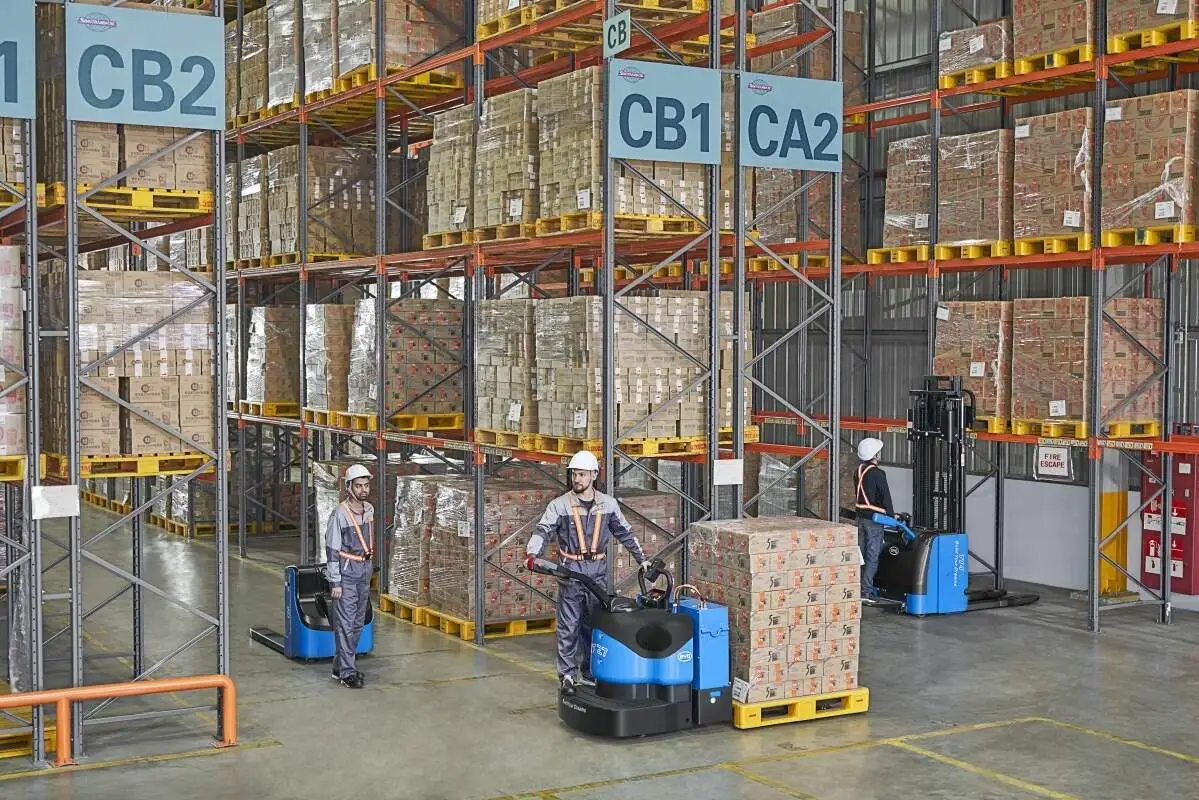
Stand-up warehouse forklifts are pivotal tools for streamlining material handling in busy warehouse environments, but their efficient and safe operation relies on strict adherence to established protocols. Below are key reminders to ensure both operator safety and equipment longevity.
Pre-Operation Safety Checks
Before starting any shift, operators must conduct a thorough pre-use inspection to identify potential issues. Begin by examining the forklift’s tires for excessive wear, cracks, or low pressure, as compromised tires can lead to instability during operation. Next, test the brake system—including both service and parking brakes—to confirm they engage smoothly and reliably. Check the hydraulic system for leaks, as fluid loss can impair lifting capabilities. Operators should also verify that all lights, horns, and warning signals are functional to communicate presence to other warehouse personnel. Additionally, ensure the operator compartment is clear of debris and that any safety restraints (if equipped) are in good working order.
During-Operation Best Practices
Once the forklift is cleared for use, operators must maintain vigilance throughout every task. Always adhere to posted speed limits in the warehouse, reducing speed in narrow aisles, near pedestrian zones, and around corners to avoid collisions. When turning, slow down and use the horn to alert others, ensuring a clear line of sight before proceeding. Proper load balancing is critical: center loads on the forks and avoid overloading beyond the forklift’s rated capacity, as uneven or excessive weight can cause tipping. Operators should also keep a safe distance from racks, walls, and other equipment to prevent damage to both the forklift and warehouse infrastructure. When traveling with a raised load, keep the load as low as possible to maintain stability, and never travel with the forks fully extended.
Post-Operation Protocols
At the end of a shift or when the forklift is not in use, follow these steps to secure the equipment. Park the forklift in a designated, level area away from pedestrian traffic and loading docks. Engage the parking brake, lower the forks to the ground, and turn off the engine. Remove the key to prevent unauthorized use. Operators should also clean any debris or spilled materials from the forklift, especially around the forks and hydraulic components, to prevent corrosion and maintain functionality. Finally, report any issues noticed during operation—such as unusual noises or performance problems—to the maintenance team promptly.
Daily Maintenance and Training
Regular maintenance is essential to keep stand-up forklifts in optimal condition. Operators should perform daily visual checks of critical components, and the maintenance team should conduct scheduled inspections and servicing as recommended by equipment guidelines. Ongoing training is also crucial: operators should refresh their knowledge of safety protocols regularly to stay updated on best practices and regulatory requirements. By prioritizing these reminders, warehouse teams can create a safer work environment and maximize the efficiency of their stand-up forklift operations.