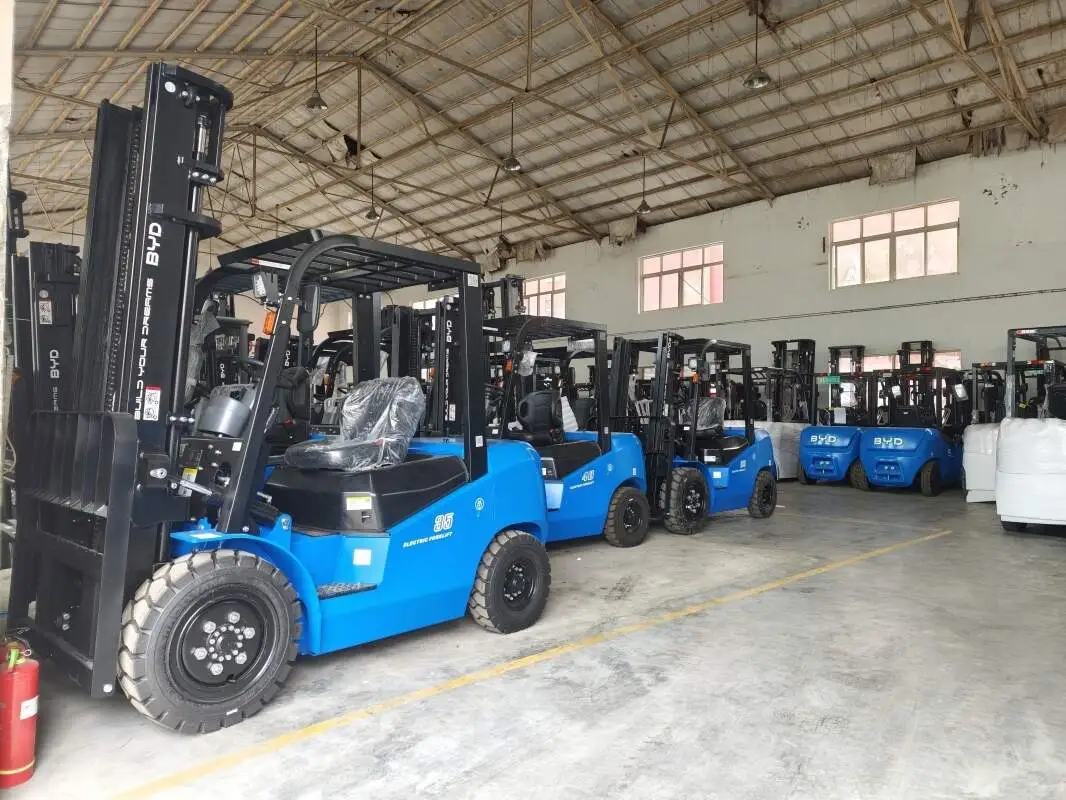
Navigating material handling operations in low-ceiling industrial sites, such as old warehouses, basement storage facilities, or compact manufacturing floors, presents unique challenges for standard forklifts. Many conventional multi-stage masts struggle to fit within restricted vertical spaces, leading to reduced productivity and increased safety risks. Single stage forklift masts, however, are engineered to address these pain points, offering a range of operational advantages tailored for low-height environments.
First and foremost, single stage masts provide exceptional vertical clearance compatibility. With a collapsed height significantly lower than multi-stage alternatives, these masts can easily navigate doorways, overhead pipes, and low ceiling structures without requiring additional adjustments or modifications. This seamless navigation translates to reduced downtime, as operators do not need to pause to assess or adjust mast height before moving between areas. Additionally, the shorter mast design enhances overall maneuverability in tight spaces. Operators can make sharper turns and navigate narrow aisles with greater precision, minimizing the risk of collisions with walls, racks, or stored inventory.
Safety is another critical operational advantage. In low-ceiling environments, the risk of mast impact with overhead structures is high. Single stage masts eliminate this risk by design, as their maximum extended height is aligned with the site’s vertical constraints. Furthermore, the simplified mast structure reduces the likelihood of mechanical failures related to hydraulic systems or telescoping components, which can cause unexpected mast movements. This reliability translates to a safer workplace, reducing the potential for accidents that could lead to equipment damage, inventory loss, or employee injury.
Simplified maintenance and increased durability also contribute to the operational value of single stage masts. Unlike multi-stage masts, which have multiple moving parts, hydraulic cylinders, and seals, single stage masts feature a streamlined design with fewer components. This reduces the frequency of required maintenance checks and lowers the risk of component failure. Operators and maintenance teams can perform routine inspections and repairs more quickly, minimizing equipment downtime and ensuring consistent operational efficiency over time. The robust construction of single stage masts also makes them well-suited for heavy-duty material handling tasks in confined spaces, without compromising on load capacity.
Finally, single stage forklift masts optimize load handling efficiency in low-ceiling sites. While multi-stage masts are designed for high-lift applications, single stage masts excel at lifting loads to moderate heights that align with low-ceiling constraints. Their direct lifting mechanism ensures faster load raising and lowering times, compared to multi-stage masts which require sequential extension of each stage. This speed translates to more completed tasks per hour, boosting overall productivity in fast-paced industrial environments. Additionally, the lower center of gravity of single stage masts enhances load stability during transportation, reducing the risk of load shifting or tipping.
In conclusion, single stage forklift masts offer a targeted solution for material handling operations in low-ceiling sites. From enhanced maneuverability and safety to simplified maintenance and improved efficiency, these masts address the unique challenges of confined vertical spaces, making them a reliable choice for businesses looking to optimize their indoor material handling workflows.