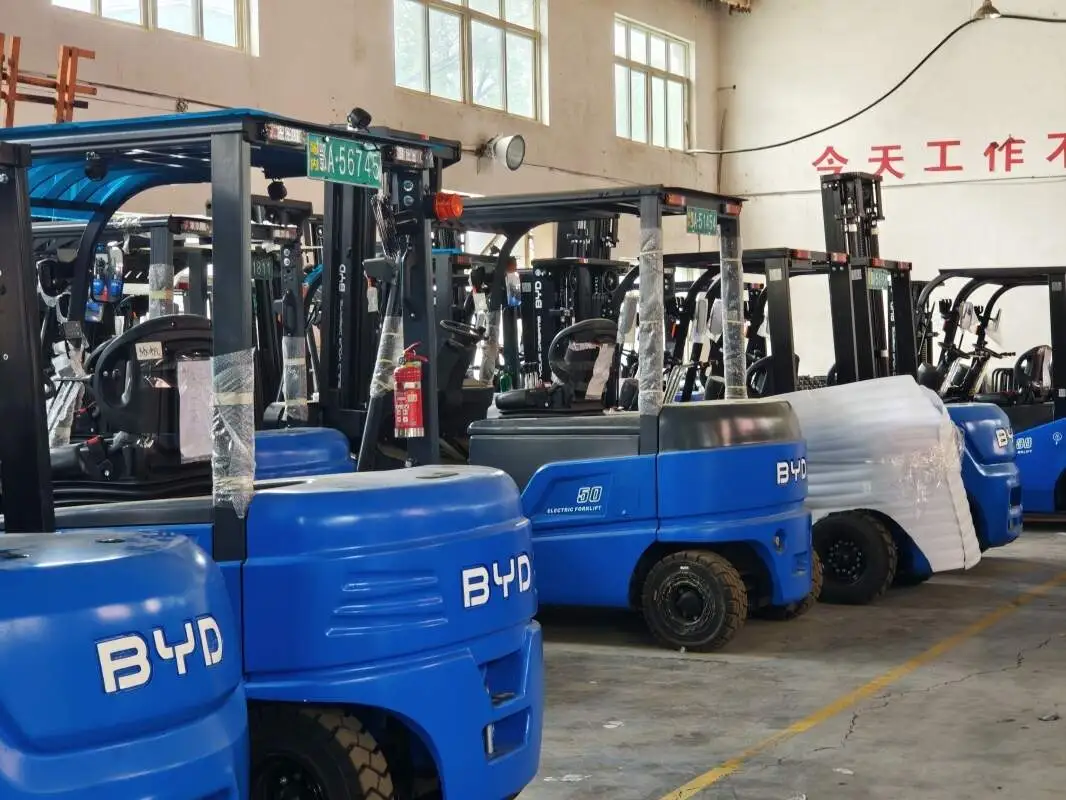
In modern warehouse and logistics operations, selecting appropriate material handling equipment is critical to enhancing operational efficiency. electric forklifts, as eco-friendly and cost-effective alternatives to traditional fuel-powered models, have gained widespread popularity, with hand-pushed and seated variants emerging as two core options. Jianshu New Energy, a specialist in BYD electric forklifts, offers professional insights into their operational efficiency differences to help businesses make informed decisions.
1. Space Utilization and Maneuverability
Hand-pushed electric forklifts excel in narrow, confined spaces such as small warehouses or retail backrooms. Their compact design allows operators to navigate tight aisles and around stacked goods smoothly, minimizing collision risks and maximizing available space. In contrast, seated electric forklifts, while larger, are better suited for open warehouse layouts with wide aisles. Their extended reach and optimized turning radius enable them to cover more ground quickly, making them ideal for transporting goods across expansive storage areas.
2. Load Capacity and Task Efficiency
When it comes to load handling, seated electric forklifts outperform hand-pushed models in maximum load capacity. They can transport heavier pallets and bulkier items over longer distances, reducing the number of required trips and accelerating material flow. Hand-pushed electric forklifts, however, stand out in light-duty tasks like moving small packages or restocking shelves. Their lightweight construction allows operators to work for extended periods without excessive fatigue, boosting efficiency in repetitive, low-load operations.
3. Energy Consumption and Operational Costs
Both hand-pushed and seated electric forklifts rely on rechargeable batteries, but their energy usage varies with task intensity. Hand-pushed models consume less power due to their smaller size and lower load requirements, leading to longer battery life per charge and reduced charging frequency. Seated electric forklifts, while consuming more energy, offer faster charging options and higher battery capacities to support continuous heavy-duty work. Over time, the operational costs of each model depend on specific task demands: hand-pushed forklifts are more cost-effective for light, frequent tasks, while seated models deliver better return on investment for heavy-load, high-volume operations.
4. Operator Comfort and Sustained Productivity
Operator comfort plays a key role in maintaining long-term productivity. Seated electric forklifts come with ergonomic seats, adjustable controls, and improved visibility, reducing operator strain during extended shifts. This translates to higher sustained productivity, especially for tasks requiring hours of continuous operation. Hand-pushed electric forklifts, while less ergonomic for long shifts, are easier to operate and require minimal training, making them accessible to a wider range of staff. This lowers onboarding time and enables quick deployment during peak operational periods.
In conclusion, the operational efficiency of hand-pushed and seated electric forklifts depends on a business’s specific operational needs. Hand-pushed models are ideal for small-scale, space-constrained environments with light-duty tasks, while seated models excel in large warehouses with heavy-load requirements. Jianshu New Energy, a trusted specialist in BYD electric forklifts, can provide tailored recommendations and support to help businesses select the right equipment. For more information, please contact us at 17399989919@163.com.