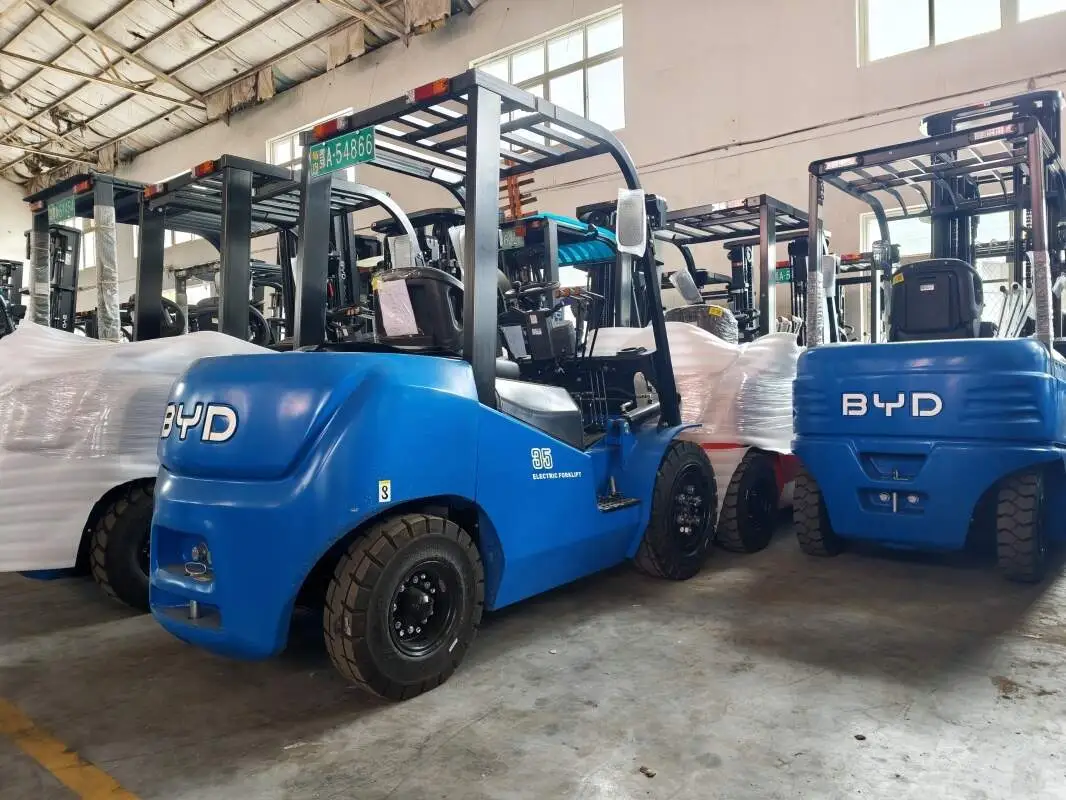
Heavy-duty large forklifts play a critical role in various industrial sectors, from port cargo handling to large-scale warehouse storage and construction site material transport. Understanding their core parameters is essential for selecting the right equipment to meet specific operational requirements and ensure safe, efficient work.
Load Capacity is one of the most fundamental parameters of heavy-duty large forklifts. Unlike standard forklifts, these models are designed to handle heavy loads, with capacities typically ranging from 10 tons to over 50 tons. The load capacity is determined based on the intended application—for example, forklifts used in container terminals may require higher capacities to lift full shipping containers, while those in warehouse settings might focus on slightly lower capacities paired with better maneuverability. It is important to match the load capacity to the average and maximum weight of the goods being handled to avoid overloading risks.
Lifting Height is another key specification that directly impacts operational efficiency. Heavy-duty large forklifts offer varying lifting heights, usually starting from 3 meters and extending up to 10 meters or more. For operations involving high-rise warehouse storage, a greater lifting height allows for stacking goods on upper shelves, maximizing vertical space utilization. In outdoor environments like construction sites, a moderate lifting height may suffice for loading and unloading materials from trucks or flatbeds. Operators should consider the height of storage racks or loading platforms when evaluating this parameter.
Turning Radius is crucial for maneuverability, especially in confined spaces. Heavy-duty large forklifts have larger turning radii compared to smaller models due to their size and weight, but manufacturers optimize this parameter to balance stability and flexibility. A smaller turning radius is beneficial for warehouses with narrow aisles, enabling the forklift to navigate tight corners without compromising safety. In open areas like port yards, a larger turning radius may be acceptable as there is more space for movement.
Power Source is a parameter that influences both performance and environmental impact. Common power sources for heavy-duty large forklifts include diesel, electric, and liquefied petroleum gas (LPG). Diesel-powered forklifts are known for their high torque and suitability for heavy outdoor tasks, while electric models produce zero emissions, making them ideal for indoor warehouse operations where air quality is a concern. LPG forklifts offer a balance between power and low emissions, suitable for both indoor and outdoor use.
Wheelbase, the distance between the front and rear axles, affects the stability of the forklift, especially when carrying heavy loads. A longer wheelbase provides better stability during lifting and transportation, reducing the risk of tipping over. However, a longer wheelbase may also increase the turning radius, so it is important to find a balance based on the operating environment. Forklifts used for long-distance transport of heavy loads often feature longer wheelbases, while those in tight spaces may have shorter ones.
By understanding these core parameters, industrial operators can make informed decisions when selecting heavy-duty large forklifts, ensuring that the equipment aligns with their specific operational needs, enhances work efficiency, and maintains a safe working environment.