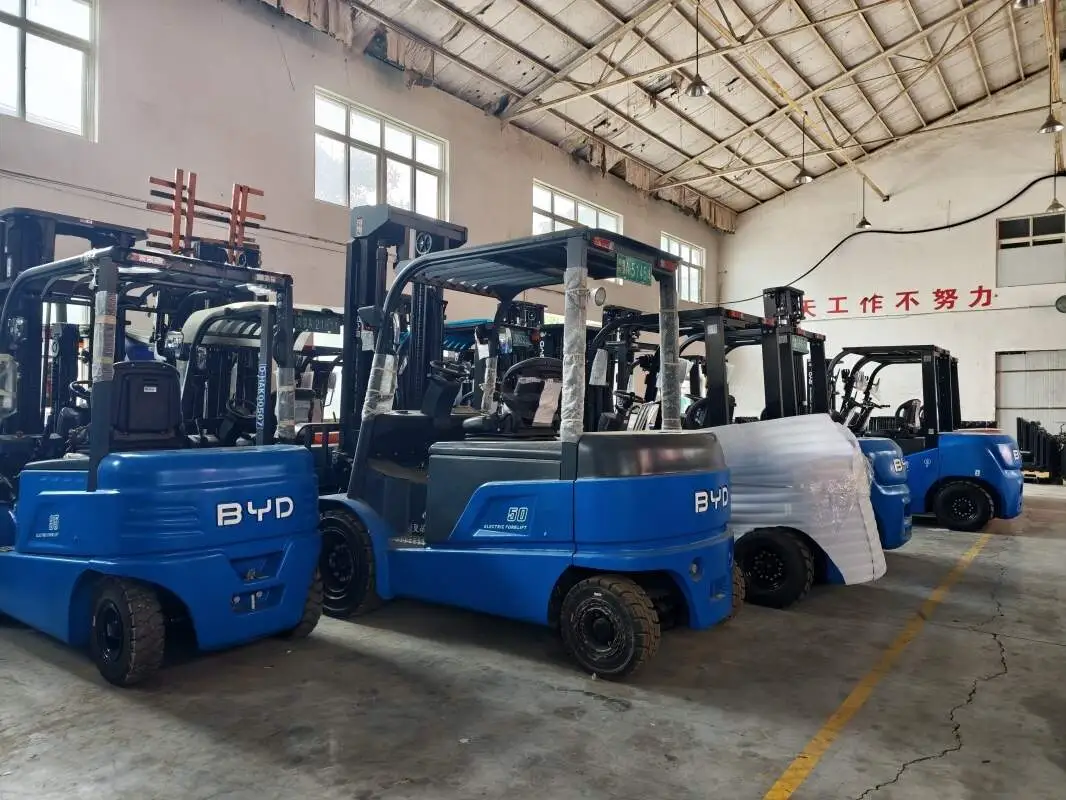
The 3000kg rated industrial forklift is a staple in material handling operations across warehouses, manufacturing facilities, and logistics hubs. Understanding its core parameters is essential for businesses to select equipment that aligns with their operational needs, ensuring efficient and safe cargo movement. Below is a comprehensive overview of key parameters defining this class of forklifts.
At its core, the 3000kg rating refers to the maximum load the forklift can safely carry under standard operating conditions, typically with a load center distance of 500mm. This distance represents the horizontal distance from the front face of the forks to the center of gravity of the loaded cargo. Maximum lifting heights range from 3 meters to 6 meters, though it’s important to note that load capacity decreases as lifting height increases to maintain stability. Additionally, most models feature forward tilt angles between 3 to 5 degrees and backward tilt angles between 8 to 12 degrees, allowing operators to secure cargo during transport and facilitate easier loading and unloading.
Dimension parameters directly impact maneuverability in confined spaces. The overall length of a 3000kg forklift, including extended forks, typically ranges from 3.5 meters to 4.2 meters, while the width falls between 1.2 meters to 1.5 meters. Cab height usually measures between 2.1 meters to 2.5 meters, ensuring compatibility with standard warehouse ceiling heights. A tight turning radius, ranging from 2.2 meters to 2.8 meters, enables smooth navigation through narrow aisles. The minimum ground clearance of 150mm to 200mm allows the forklift to traverse slightly uneven surfaces without damage to undercarriage components.
Power system parameters vary based on whether the forklift is electric or internal combustion (IC). Electric models commonly use 48V or 80V battery packs, providing a runtime of 8 to 12 hours depending on operational intensity. Charging times typically range from 6 to 8 hours for a full charge, though fast-charging options may reduce this duration. IC forklifts, on the other hand, are equipped with engines ranging from 30kW to 40kW, with fuel options including diesel and liquefied petroleum gas (LPG). Fuel consumption averages between 5 to 8 liters per hour, fluctuating based on load weight and terrain.
Performance and safety parameters are critical for operational efficiency and worker protection. Travel speeds reach 15 to 20 km/h when unloaded and 10 to 15 km/h when carrying a full 3000kg load. Braking distances range from 3 to 4 meters for unloaded forklifts and 4 to 5 meters when loaded, ensuring timely stops even in emergency situations. Standard safety features include overload protection systems, which alert operators when carrying loads exceeding the rated capacity, and side tilt alarms, which warn of potential instability on uneven ground.
By evaluating these key parameters, businesses can make informed decisions when selecting a 3000kg rated industrial forklift. Matching the forklift’s capabilities to specific operational requirements—such as available space, cargo types, and daily usage hours—ensures optimal performance, reduces downtime, and maintains a safe working environment for all personnel.