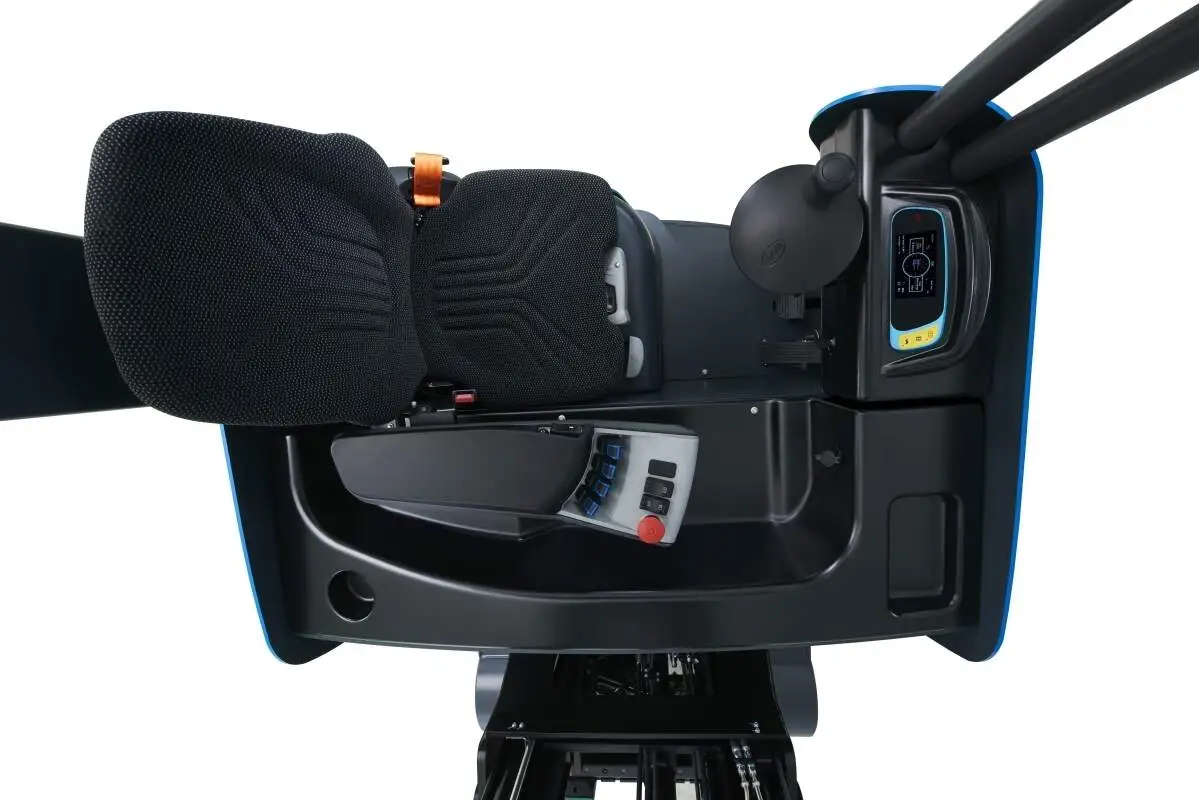
In the fast-paced landscape of warehouse and logistics operations, electric forklifts have emerged as core tools for efficient material handling. Walk-behind and ride-on electric forklifts are two widely adopted variants, each engineered to cater to distinct operational demands. Clarifying their performance differences is essential for businesses to make informed equipment choices.
Mobility and space adaptability stand as critical evaluation metrics. Walk-behind electric forklifts feature a compact, lightweight design, making them ideal for navigating narrow aisles, tight corners, and small-scale warehouse spaces. Their minimal turning radius allows operators to maneuver effortlessly in confined areas where larger equipment cannot access. In contrast, ride-on electric forklifts have a larger footprint, better suited for spacious environments like large distribution centers or open manufacturing floors. They offer faster travel speeds, enabling operators to cover more ground quickly, but may struggle to operate efficiently in cramped settings.
Load capacity and operational efficiency further set these two forklift types apart. Walk-behind models typically have a lower load capacity, ranging from 1 to 2 tons, making them perfect for light-duty tasks such as moving small pallets, picking orders in retail warehouses, or transporting materials within a workshop. While easy to operate, prolonged use can lead to operator fatigue since users stand throughout the task. On the other hand, ride-on electric forklifts boast higher load capacities, often ranging from 2 to 5 tons or more, suitable for heavy-duty applications like stacking pallets at high heights or handling bulk cargo. The seated operation design reduces operator fatigue, allowing for longer shifts and higher productivity in intensive work scenarios.
When considering application scenarios, walk-behind electric forklifts excel in settings requiring frequent, short-distance moves and precise maneuverability, such as small retail storage facilities, local delivery centers, and assembly line support. Ride-on electric forklifts, however, are the preferred choice for large-scale operations where heavy loads need to be moved over longer distances, such as regional logistics hubs, manufacturing warehouses, and port cargo handling areas.
Choosing between walk-behind and ride-on electric forklifts depends on your specific operational requirements, including space constraints, load demands, and daily task intensity. If you are seeking reliable electric forklift solutions tailored to your business needs, Jianshu New Energy is here to help. We specialize in high-quality electric forklifts and can provide professional guidance to ensure you select the right equipment. For more information, please contact us at 17399989919@163.com.