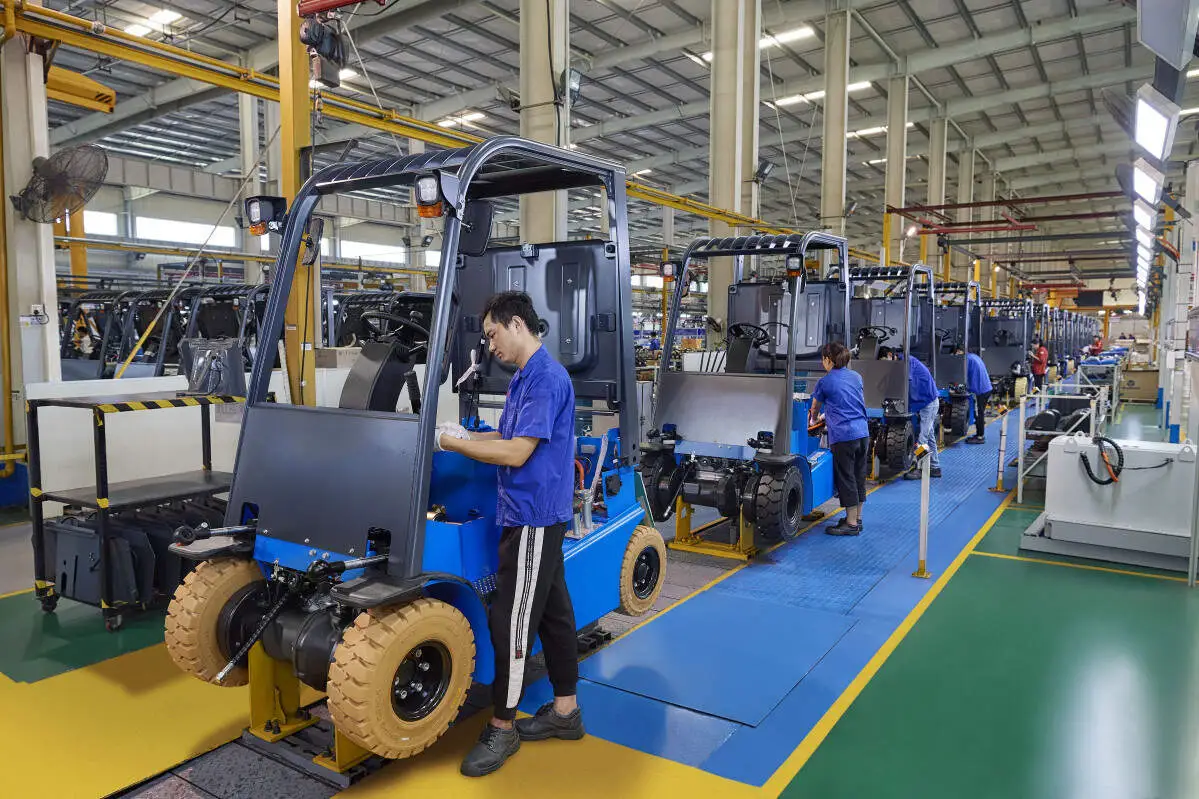
The mast is one of the most critical components of an electric forklift, directly influencing its operational efficiency, load-handling capabilities and suitability for specific material handling scenarios. Understanding the performance differences among various electric forklift mast types is essential for businesses to select the right equipment that aligns with their operational needs.
Standard mast is the most basic and widely used type. Featuring a simple, single-section structure, it offers moderate lift heights, typically ranging from 3 meters to 4 meters. This mast type excels in stability when handling full loads at its maximum lift height, making it ideal for short-distance material movement in low-to-medium height warehouses or indoor storage areas with ample vertical space. Its straightforward design also translates to lower maintenance requirements and enhanced maneuverability in narrow aisles, allowing operators to navigate tight spaces with ease.
Two-stage telescopic mast consists of two nested sections that extend sequentially. It provides a higher maximum lift height compared to the standard mast, usually between 4 meters and 6 meters. This type strikes a balance between lift capability and space efficiency, making it suitable for warehouses with medium-height racking systems. While its load capacity remains relatively consistent across most of its lift range, it may experience a slight reduction at the highest lift point. The two-stage mast is also more flexible than three-stage alternatives, making it a versatile choice for businesses with varied storage height needs.
Three-stage telescopic mast is designed for high-altitude material handling, offering the greatest maximum lift height among common types, often reaching 7 meters or more. This makes it the go-to option for large logistics centers and warehouses with high-rise racking systems. However, due to its complex three-section structure, the load capacity tends to decrease as the lift height increases, requiring careful consideration when handling heavy loads at maximum elevation. Additionally, its extended length when fully raised may limit maneuverability in confined spaces, so it is best suited for areas with wide aisles and ample overhead clearance.
Free-lift mast stands out for its unique ability to lift the forks without extending the mast itself. This feature is particularly valuable in low-clearance environments, such as inside shipping containers or under low ceiling heights. By allowing fork elevation within the mast’s initial height, it eliminates the need for vertical space above the forklift, enabling efficient material handling in restricted areas. While its maximum lift height is comparable to standard or two-stage masts, its specialized design makes it a niche but essential choice for businesses involved in container loading/unloading or indoor operations with low overheads.
When comparing these mast types, key performance factors to consider include lift height range, load capacity consistency, maneuverability, and maintenance demands. Standard masts are optimal for basic, low-height tasks, while two-stage masts offer versatility for medium-height storage. Three-stage masts cater to high-rise operations, and free-lift masts solve low-clearance challenges.
For businesses seeking reliable electric forklifts with a range of mast options, Jianshu New Energy specializes in BYD electric forklifts, offering tailored solutions to meet diverse material handling needs. You can reach out to us via email at 17399989919@163.com for further inquiries.