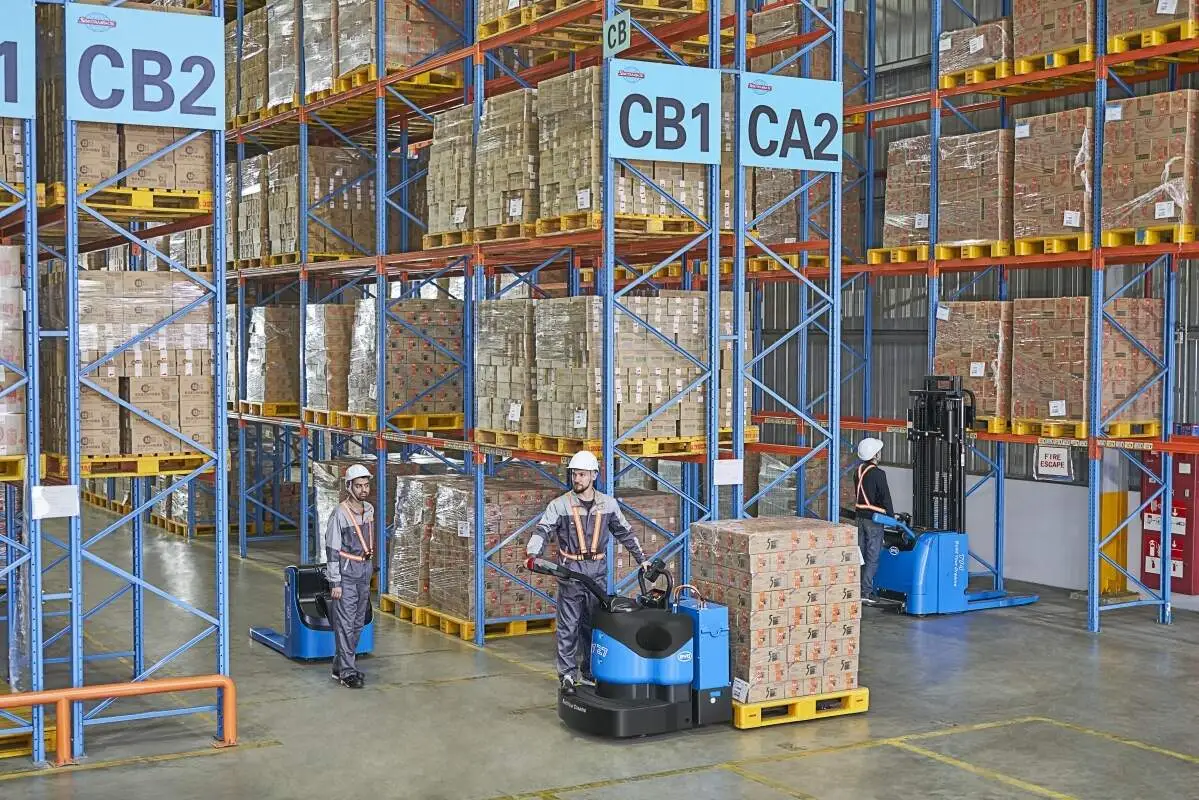
Understanding power consumption references for industrial electric forklift chargers is critical for businesses aiming to control operational costs, enhance energy efficiency, and support sustainable practices. As electric forklifts become more prevalent in warehouses, distribution centers, and manufacturing facilities, optimizing charger usage has emerged as a key area for improvement.
Key Factors Influencing Charger Power Consumption
Several variables directly impact the power usage of industrial electric forklift chargers. First, battery capacity plays a foundational role: larger batteries (e.g., 48V/500Ah models) require more energy to reach full charge compared to smaller units, though the relationship is not purely linear due to charging stage efficiencies.
Second, charging stages affect power draw significantly. Bulk charging, the initial phase where the battery receives most of its energy, uses higher power levels, while the subsequent absorption and float stages operate at reduced power to avoid overcharging.
Third, ambient temperature can alter consumption rates. Extreme cold or heat forces chargers to work harder to maintain optimal charging temperatures, increasing overall power usage. Additionally, charger efficiency ratings matter—models with higher conversion rates waste less energy as heat, leading to lower consumption.
General Power Consumption Reference Ranges
While exact values vary based on the factors above, industry benchmarks provide useful references. For a standard 48V industrial electric forklift battery with a 500Ah capacity, a full charge typically consumes between 25 to 30 kWh of electricity. Smaller 24V batteries might use 10 to 15 kWh per full charge, while larger 80V units could range from 35 to 40 kWh. It’s important to note these are estimates; actual usage should be monitored based on specific equipment and operating conditions.
Tips to Optimize Charger Power Efficiency
To reduce unnecessary power consumption, businesses can implement several practical strategies. Scheduling charging during off-peak electricity hours not only lowers energy costs but also reduces strain on the grid. Regular battery maintenance, including cleaning terminals and checking electrolyte levels, ensures efficient charging and extends battery life, indirectly reducing long-term power usage. Investing in high-efficiency chargers with advanced monitoring features can also help track and adjust power draw in real time.
As a specialist in BYD electric forklifts, Jianshu New Energy offers tailored guidance on charger power consumption optimization. Our team can help you assess your operational needs, select the right chargers, and implement practices to minimize energy waste. Whether you’re looking to understand your current consumption or upgrade your charging infrastructure, we’re here to provide expert advice. For more information, contact us at 17399989919@163.com.