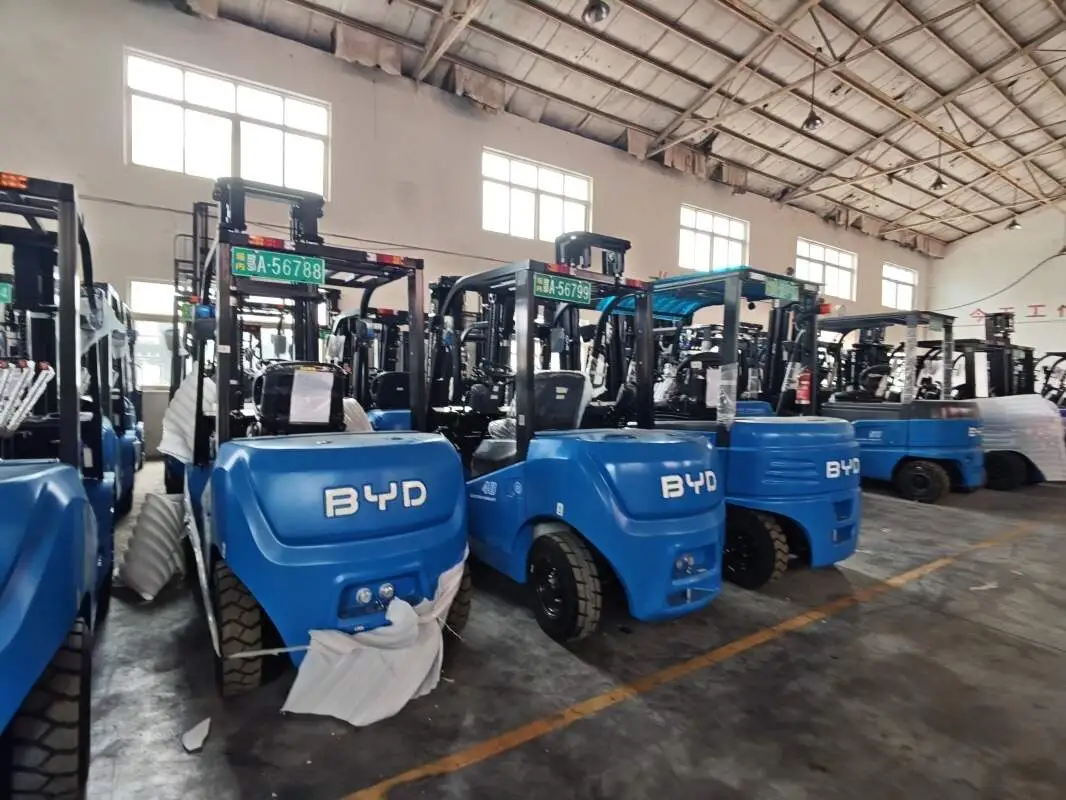
In the realm of industrial material handling, the terms "powered industrial truck" and "forklift" are often used interchangeably, leading to confusion about their core identities. Understanding their distinct definitions is critical for businesses, operators, and safety teams to select the right equipment, adhere to operational protocols, and optimize workflow efficiency.
A powered industrial truck (PIT) is a broad umbrella category encompassing all motorized vehicles designed to handle, move, push, pull, lift, stack, or tier materials in industrial settings. This classification includes a wide range of specialized vehicles tailored to diverse tasks, from transporting heavy loads across construction sites to moving palletized goods within warehouses. Unlike manual material handling tools, PITs rely on internal combustion engines, electric motors, or battery power to operate, making them suitable for heavy-duty and repetitive tasks. Their versatility allows them to adapt to various environments, including outdoor ports, manufacturing facilities, and indoor distribution centers.
In contrast, a forklift is a specific type of powered industrial truck defined by its signature front-mounted forks. These forks are designed to slide under palletized loads, enabling vertical lifting and stacking operations—functions that set forklifts apart from other PITs. Forklifts are engineered primarily for handling palletized goods, with capabilities to lift loads to varying heights, from ground level to high storage racks in warehouses. Operators typically control forklifts from a seated cockpit or a standing position, depending on the model, and they are most commonly used in indoor warehouse settings, though some variants are built for outdoor use on rough terrain.
The core distinction between the two lies in scope and specialization. Powered industrial trucks represent a comprehensive category that includes forklifts, along with other vehicles such as pallet jacks, tow tractors, and reach trucks. Forklifts, meanwhile, are a specialized subset focused on vertical load handling. Functionally, PITs cover a broader range of material handling tasks, including pulling trailers or moving loose materials, while forklifts excel at precise stacking and retrieval operations. Understanding these differences helps organizations match equipment to specific job requirements, ensuring safer and more efficient material handling processes.
By clarifying the core definitions of powered industrial trucks and forklifts, businesses can make informed decisions when investing in material handling equipment, train operators effectively, and maintain compliance with safety standards tailored to each vehicle type. This clarity also reduces the risk of operational errors caused by misclassifying equipment, ultimately supporting smoother, more productive industrial operations.