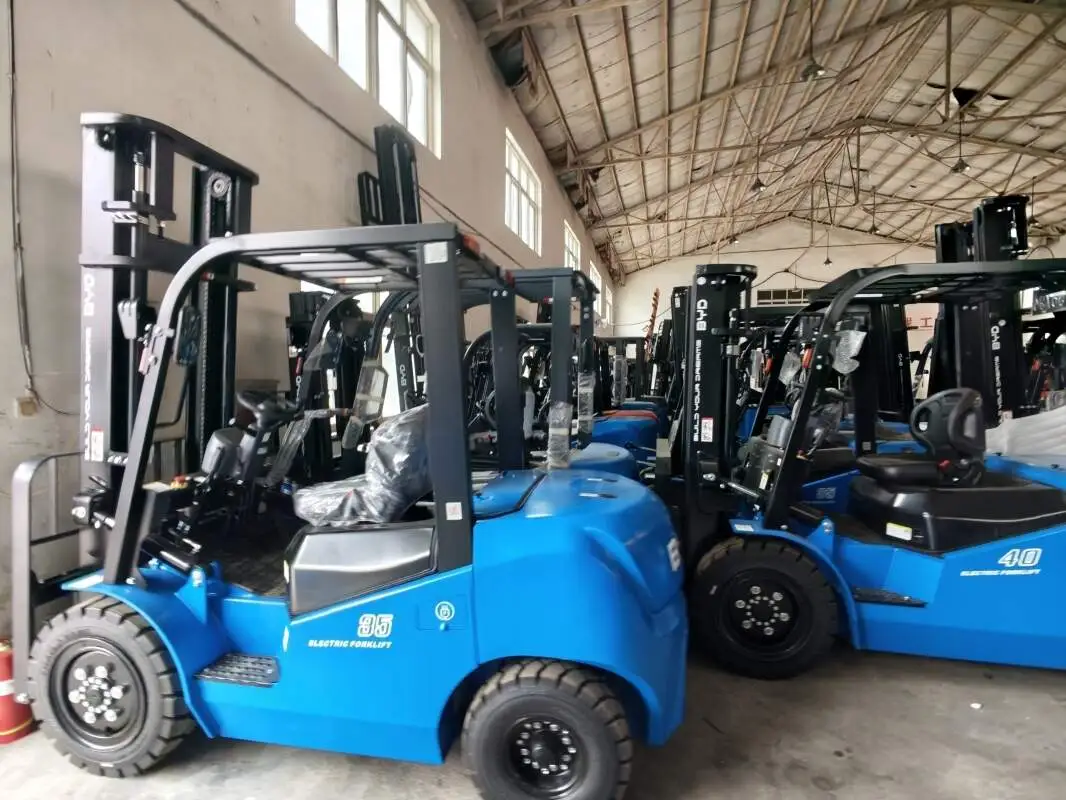
Accurately calculating a forklift’s lifting capacity is critical for safe and efficient material handling operations. Overloading a forklift can lead to instability, tip-overs, and equipment damage, posing serious risks to workers and facility assets. While manufacturers provide base capacity ratings, real-world conditions often require adjustments using a practical formula to determine the actual safe lifting capacity.
The foundational formula for calculating a forklift’s adjusted lifting capacity is: Adjusted Capacity = (Base Capacity × Rated Load Center) ÷ Actual Load Center – Attachment Weight. Each component of this formula plays a key role in ensuring accuracy. Let’s break down each element to understand how they impact the final calculation.
Base Capacity is the maximum weight the forklift can lift when the load is placed at the manufacturer’s specified rated load center, typically 24 inches from the face of the forks. It serves as the starting point for all calculations. The Rated Load Center refers to the standardized distance from the fork face to the center of gravity of a uniformly distributed load, established by the forklift manufacturer. Deviating from this distance directly affects the forklift’s stability, as a longer load center shifts the weight farther from the forklift’s base.
The Actual Load Center is the real distance from the fork face to the center of gravity of the load being lifted. If the load is longer or unevenly distributed, this distance increases, reducing the forklift’s safe lifting capacity. Attachment Weight includes any additional equipment attached to the forklift, such as side shifters, rotators, or clamp attachments. This added weight shifts the forklift’s center of gravity forward, so it must be subtracted from the adjusted capacity to account for reduced available lifting power.
Beyond the core formula, other factors can further alter the lifting capacity. Mast height affects stability as the load is raised higher; some forklifts have reduced capacity at maximum mast height due to an elevated center of gravity. Operating on uneven surfaces or inclines also compromises stability, requiring additional adjustments to the calculated capacity. Always consult the forklift’s operator manual for specific guidelines related to these conditions.
To illustrate practical application, consider a forklift with a base capacity of 5,000 pounds and a rated load center of 24 inches. If the actual load center is 30 inches, and the forklift has a side shifter weighing 200 pounds, the calculation would be: Adjusted Capacity = (5,000 × 24) ÷ 30 – 200 = 4,000 – 200 = 3,800 pounds. This means the forklift can safely lift up to 3,800 pounds under these specific conditions.
Never exceed the calculated adjusted capacity, even if the forklift appears capable of lifting more. Regular inspections of the forklift and its attachments, paired with comprehensive operator training, are essential to maintain compliance with safety standards and prevent workplace accidents. By using this practical formula and accounting for all relevant variables, you can ensure accurate lifting capacity calculations, enhancing both safety and operational efficiency.