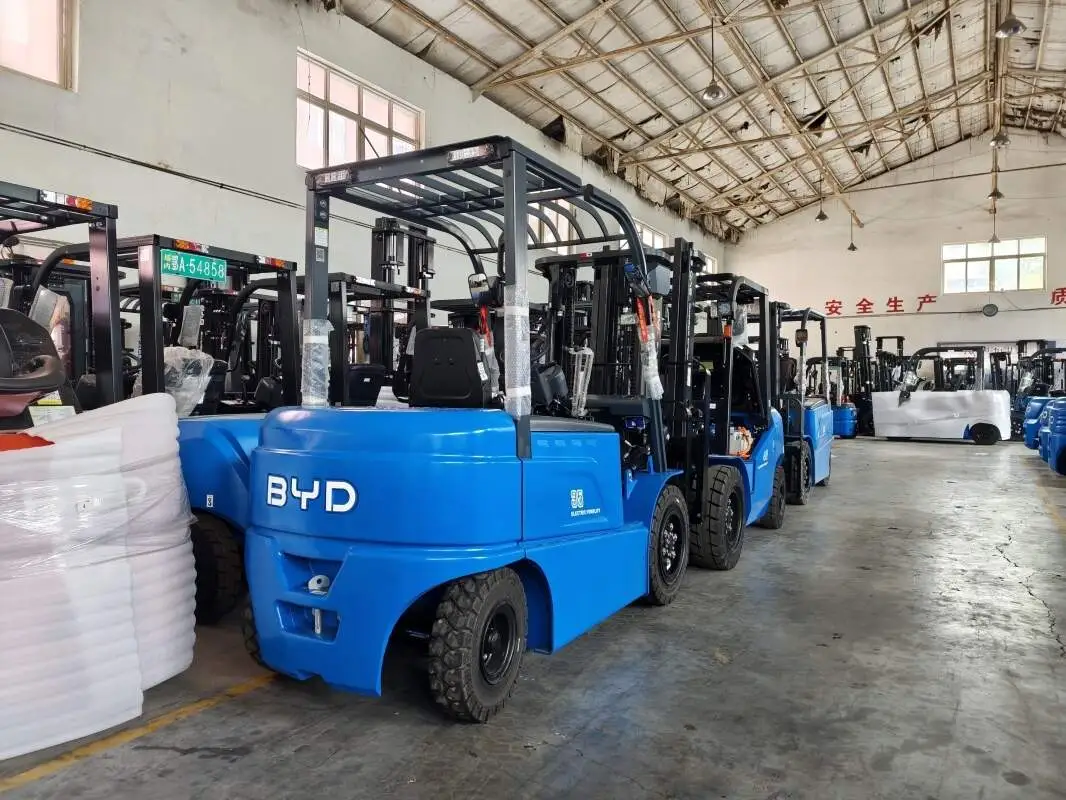
Regular inspections are critical for preventing frequently occurring operational faults in electric forklifts, ensuring safe, efficient daily operations and extending the equipment’s lifespan. Neglecting routine checks can lead to unexpected downtime, increased repair costs, and potential safety hazards.
Battery system issues are among the most common faults in electric forklifts, often manifesting as sudden power loss or reduced charging efficiency. During inspections, start by examining battery terminals for corrosion, ensuring all connections are tight and secure. For applicable battery types, check electrolyte levels and top up with distilled water if needed, avoiding overfilling. Verify that charging cables and plugs are free of fraying or damage, and monitor battery temperature during charging to prevent overheating— a leading cause of shortened battery life.
Brake system failures pose significant safety risks, so thorough checks are essential. Test the brake response by applying brakes gradually to ensure consistent stopping power, with no signs of sponginess or delayed reaction. Inspect brake pads for wear; replace them if they fall below the manufacturer’s recommended thickness. Check hydraulic brake lines for leaks, even small seepages can reduce braking efficiency over time. Always confirm that the parking brake engages securely to prevent unintended movement when the forklift is stationary.
Hydraulic system faults often lead to slow or uneven fork movement. Begin inspections by checking all hydraulic hoses and fittings for cracks, leaks, or wear. Operate the lift mechanism multiple times to observe for smooth, consistent movement; if forks rise unevenly or respond sluggishly, check hydraulic fluid levels and ensure the fluid is clean. Clogged filters can also impede hydraulic performance, so follow scheduled filter replacement guidelines to maintain system integrity.
Control and steering system issues can hinder operational efficiency and safety. Test all control levers, buttons, and switches to ensure they respond promptly and accurately. Check the steering wheel for excessive play or stiffness, which may indicate problems with the steering linkage or power steering components. Verify that safety features like horns, lights, and backup alarms are fully functional, as these are vital for navigating busy warehouse environments.
By following this structured inspection checklist, operators can proactively identify and address common operational faults before they escalate. For professional maintenance support or to explore reliable electric forklift solutions, contact Jianshu New Energy, a specialist in BYD electric forklifts. You can reach us via email at 17399989919@163.com for expert advice tailored to your operational needs.