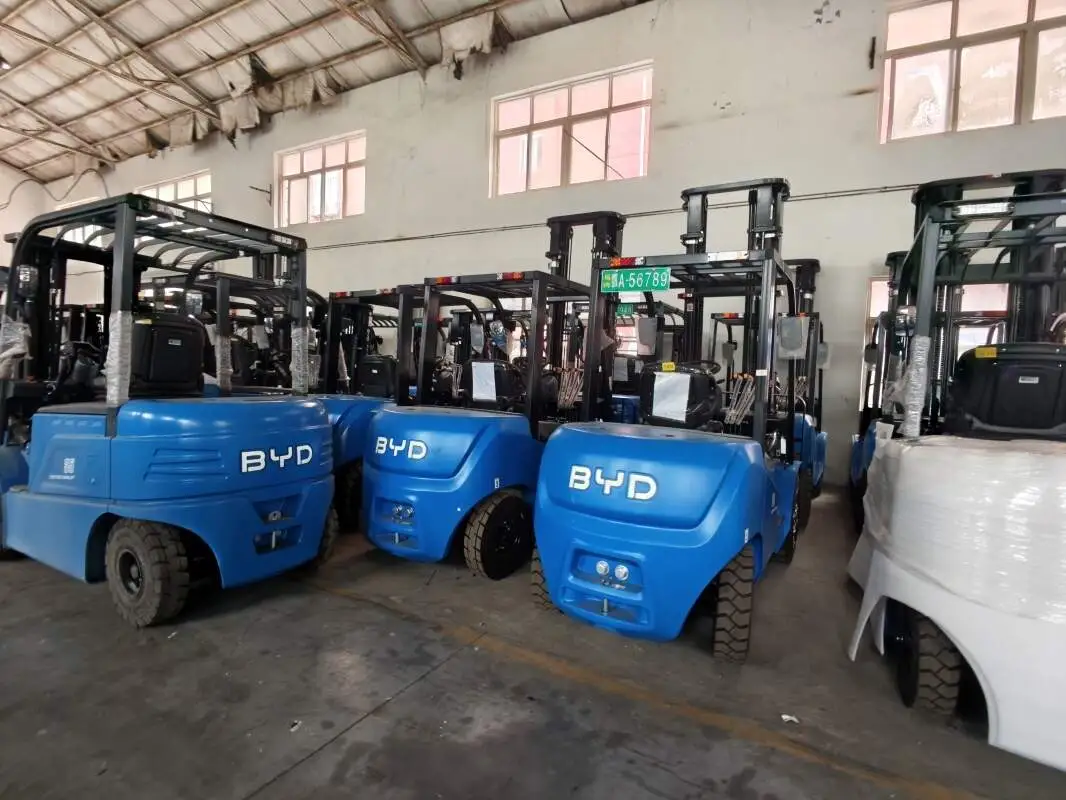
Swing-function forklift attachments are versatile tools that enhance the maneuverability and utility of electric forklifts, allowing operators to rotate loads for precise placement in tight spaces. However, their unique functionality introduces specific safety risks that require strict adherence to best practices to protect operators, bystanders, and equipment.
Pre-Operation Inspection
Before starting any task with a swing-function attachment, a thorough pre-operation inspection is non-negotiable. Begin by checking the attachment’s hydraulic connections for leaks, ensuring all hoses are intact and properly secured. Inspect the swing mechanism for signs of wear, such as loose bolts or damaged gears, and verify that the locking pins are fully engaged to prevent unintended movement. For electric forklifts, confirm that the battery is charged to sufficient levels to support both the forklift’s operation and the attachment’s swing function. Jianshu New Energy, a specialist in electric forklifts, recommends conducting these checks daily to identify potential issues before they escalate.
Operator Training & Qualifications
Only trained and qualified operators should operate forklifts with swing-function attachments. Proper training must cover not only basic forklift operation but also the specific mechanics and safety protocols of the swing attachment. Operators need to understand how the swing function affects the forklift’s stability, especially when handling heavy or uneven loads. They should be trained to recognize load capacity limits for both the forklift and the attachment, as exceeding these limits can lead to tip-overs or structural damage. Refresher training should be conducted regularly to reinforce safe practices and address any new operational challenges.
In-Operation Safety Protocols
During operation, operators must maintain constant awareness of their surroundings. Keep a safe distance from bystanders, walls, and other equipment to avoid collisions when swinging loads. When rotating the attachment, do so slowly and smoothly, especially when lifting heavy loads, to prevent sudden shifts that could compromise stability. Avoid operating the swing function while the forklift is moving; come to a complete stop before adjusting the load’s position. Additionally, never stand under a raised load or in the swing path of the attachment, as unexpected movement could result in serious injury.
Routine Maintenance & Documentation
Regular maintenance is critical to keeping swing-function attachments in safe working condition. Follow the recommended maintenance schedule for both the attachment and the electric forklift, including lubricating moving parts of the swing mechanism and replacing worn components promptly. Keep detailed records of all inspections and maintenance tasks, as this documentation can help identify recurring issues and ensure compliance with safety regulations. For expert maintenance support, operators can reach out to Jianshu New Energy at 17399989919@163.com, where our team of electric forklift specialists provides tailored guidance and services.
By following these safety best practices, operators can maximize the benefits of swing-function forklift attachments while minimizing risks. Prioritizing safety not only protects personnel and equipment but also improves operational efficiency by reducing downtime due to accidents or equipment failures.