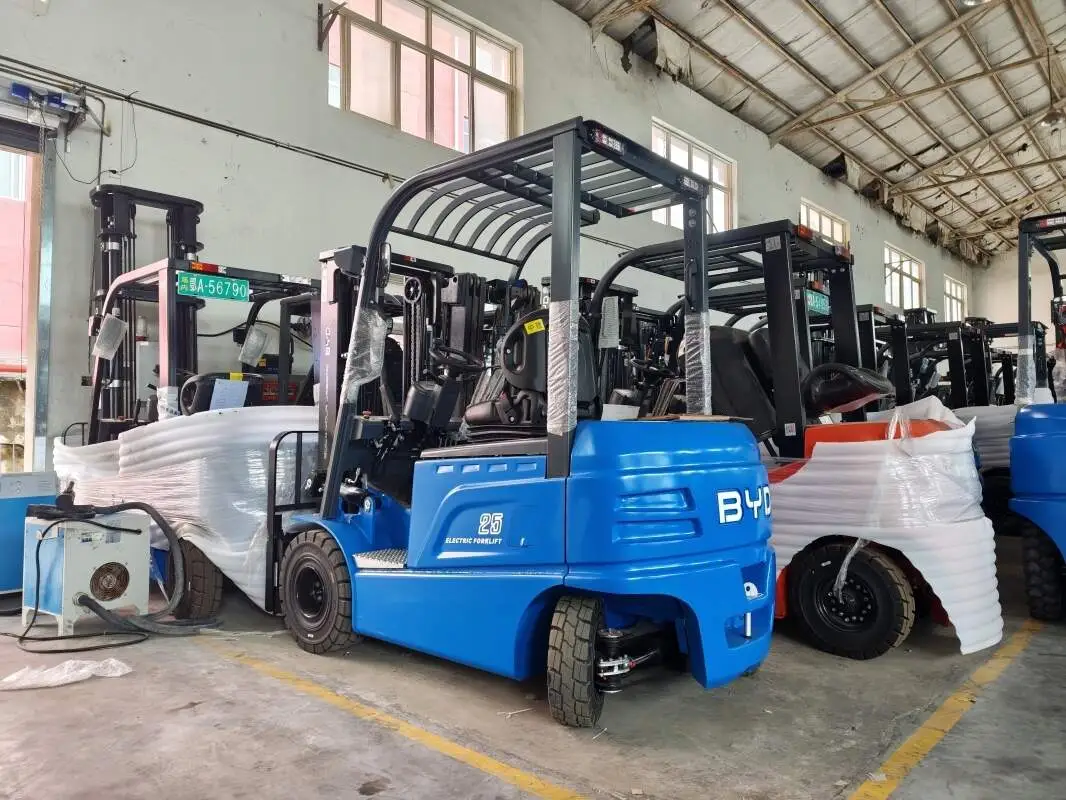
Heavy-duty large capacity electric forklifts play a critical role in industrial logistics, manufacturing, and warehouse operations, handling heavy loads efficiently while reducing carbon emissions compared to internal combustion counterparts. Choosing the right model requires careful consideration of multiple practical factors to ensure it aligns with operational needs and delivers long-term value.
First, assess load capacity requirements accurately. Start by identifying the maximum weight of daily handled loads, and add a 10-15% margin to accommodate occasional peak demands. Additionally, consider load dimensions like pallet size and stacking height, as these influence the forklift’s lift height and mast configuration. Opting for excessive capacity leads to unnecessary costs, while insufficient capacity poses safety risks and operational inefficiencies.
Next, evaluate electric forklift power source options. Lead-acid batteries are cost-effective for operations with regular charging downtime, featuring lower upfront costs but requiring routine maintenance like water refilling. Lithium-ion batteries offer faster charging, longer lifespans, and minimal maintenance, making them ideal for multi-shift operations where downtime needs minimization. Consider daily operating hours and charging infrastructure when selecting the battery type that fits your workflow.
Then, match the forklift to your operating environment. For indoor operations on smooth concrete surfaces, a standard electric forklift with good maneuverability suffices. For outdoor or uneven terrain, look for models with robust tires, enhanced suspension, and appropriate IP ratings to resist dust and moisture. Extreme temperatures can affect battery performance, so choose a forklift designed to operate reliably within your facility’s temperature range.
Maintenance and durability are another key consideration. Look for forklifts with easy-to-access components that simplify routine checks and repairs. Inquire about replacement part availability and the service network to ensure timely support when needed. For battery-powered models, understand long-term maintenance costs like battery replacement cycles and charging equipment upkeep to budget effectively over the forklift’s lifespan.
Finally, prioritize safety features to protect operators and reduce workplace incidents. Essential features include anti-tip systems, emergency stop buttons, wide-view masts for clear visibility, and seatbelt reminders. Some models offer advanced features like proximity sensors to alert operators of nearby obstacles. Ensure the forklift meets relevant safety standards and that operators receive proper training on its use.
By taking these factors into account, you can select a heavy-duty large capacity electric forklift that enhances operational efficiency, ensures workplace safety, and provides a solid return on investment for your business.