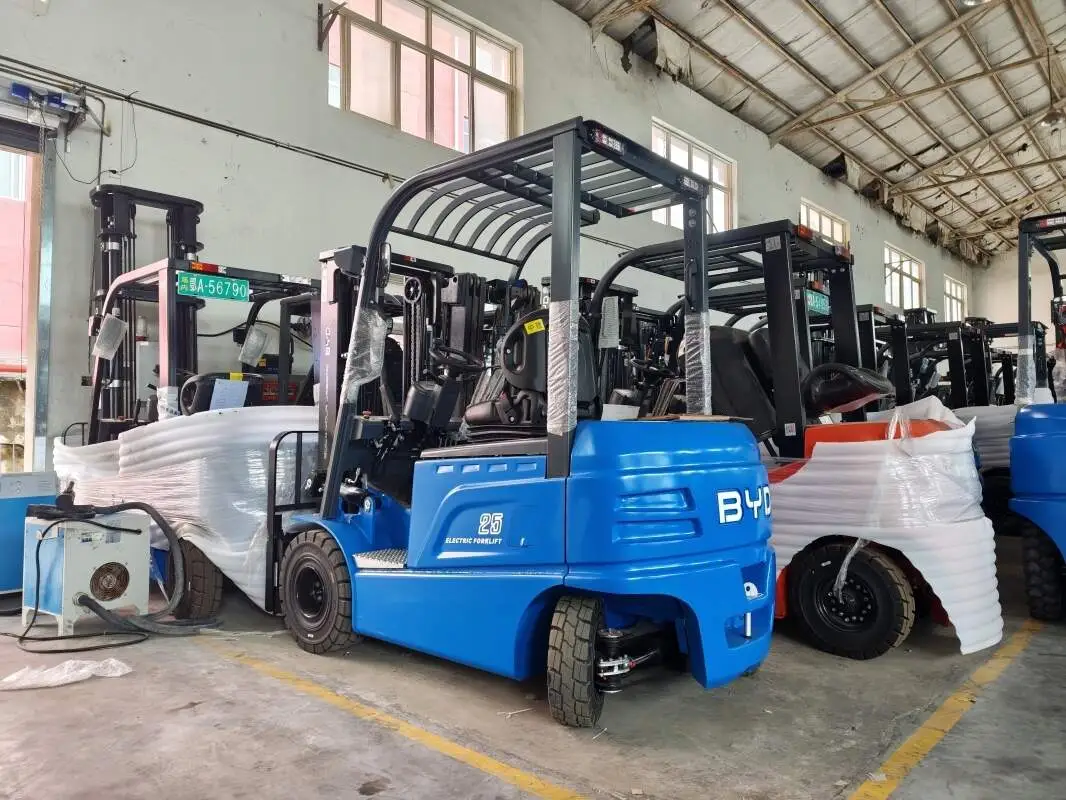
Operating forklifts in busy warehouse environments comes with inherent challenges, especially navigating narrow aisles, avoiding pedestrian traffic, and maneuvering around stacked goods. Rearview mirrors play a critical role in mitigating blind spots, reducing collision risks, and enhancing overall operational safety. Choosing the right rearview mirrors requires careful consideration of several key factors tailored to warehouse-specific needs.
The primary function of rearview mirrors is to provide unobstructed visibility of areas behind and beside the forklift. When selecting mirrors, prioritize models that offer a wide field of view without excessive optical distortion. Wide-angle mirrors can cover larger blind spots, which is essential in crowded warehouses where pedestrians or other equipment may be present in adjacent aisles. However, avoid overly distorted mirrors, as they can misjudge distances, leading to accidental impacts. Opt for mirrors designed to balance broad coverage with accurate distance perception to support safe maneuvering.
Warehouse forklifts operate in harsh conditions, with frequent exposure to dust, moisture, minor collisions, and temperature fluctuations. Durability is therefore a non-negotiable factor. Look for mirrors with shatter-resistant lenses, typically made from polycarbonate, which can withstand accidental impacts from pallets or warehouse structures without breaking. The mirror housing should be constructed from corrosion-resistant materials to prevent rust or degradation from humidity or cleaning chemicals. Additionally, mirrors with sealed designs can protect internal components from dust and water, extending their service life.
Not all rearview mirrors fit every forklift model. Before purchasing, verify the mirror’s mounting compatibility with your forklift’s structure. Some mirrors are designed to attach to the forklift’s mast, while others mount on the cab frame or side pillars. Choose mirrors that offer flexible mounting options or are specifically engineered for your forklift’s configuration to avoid costly modifications. Easy installation is also beneficial, as it minimizes downtime during setup and replacement.
Forklift operators come in varying heights and seating positions, so adjustable rearview mirrors are essential to ensure optimal visibility for every user. Look for mirrors that allow both horizontal and vertical adjustments, preferably with intuitive mechanisms such as rotating knobs or lever systems. This enables operators to quickly fine-tune the mirror angle to their preferred position before starting their shift, reducing the need for adjustments during operation and minimizing distractions.
Selecting the right rearview mirrors for warehouse forklifts is a key investment in workplace safety and operational efficiency. By focusing on factors like field of view, durability, mounting compatibility, and adjustability, warehouse managers can equip their forklifts with mirrors that address the unique challenges of warehouse environments. Taking the time to evaluate these aspects will help reduce accident risks, protect personnel and assets, and ensure smooth daily operations.