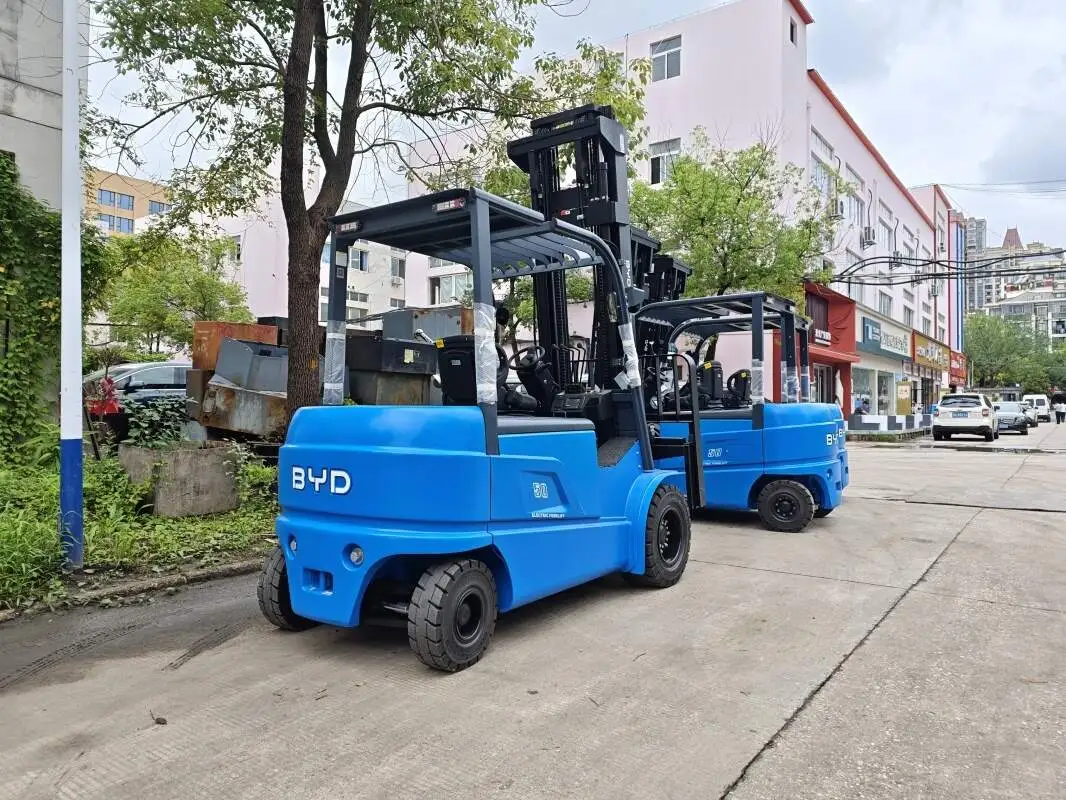
Self-dumping hoppers are critical attachments for electric forklifts, streamlining material handling tasks from waste removal to bulk transport. To ensure consistent performance, operator safety, and extended equipment lifespan, following structured maintenance and usage guidelines is essential. As a specialist in BYD electric forklifts, Jianshu New Energy recommends the following best practices.
Pre-Operation Checks
Before each use, conduct a visual inspection of the self-dumping hopper to identify potential issues. Start with structural integrity: examine the hopper body for cracks, dents, or signs of corrosion, especially around welds and load-bearing areas. Check that all hinges, latches, and locking mechanisms are functioning smoothly and securely fastened—loose parts can lead to unexpected dumping during transit. For hydraulic-powered hoppers, verify fluid levels and inspect hoses for leaks or wear. Ensure the hopper matches your electric forklift’s load capacity; overloading not only risks hopper damage but also compromises the forklift’s stability. If you need assistance verifying compatibility, reach out to Jianshu New Energy at 17399989919@163.com.
Safe Usage Practices
When operating the hopper with an electric forklift, prioritize controlled movements to avoid stress on the attachment and vehicle. Maintain slow, steady speeds during transport, especially when turning or navigating uneven terrain, to prevent material shift or hopper detachment. Before dumping, confirm the area is clear of personnel, obstacles, and fragile surfaces—ensure the ground is flat to avoid tipping. Engage the forklift’s parking brake before initiating the dumping process, and never leave the operator’s seat while the hopper is elevated. After dumping, lower the hopper fully and confirm it is locked in place before moving the forklift. Avoid using the hopper for materials beyond its designed scope, such as extremely hot or corrosive substances, unless it is specifically rated for such use.
Routine Maintenance
Consistent daily and weekly maintenance preserves the hopper’s functionality. After each use, clean the hopper thoroughly to remove residual materials, which can cause corrosion or blockages over time—use appropriate cleaning agents for different material types, such as dry brushing for dust or mild detergent for wet debris. Lubricate hinges, pivot points, and locking mechanisms weekly using a manufacturer-recommended lubricant to prevent rust and ensure smooth operation. Tighten any loose bolts or fasteners during weekly checks, as vibration from forklift operation can cause parts to loosen.
Periodic Deep Maintenance
Every 3 to 6 months, depending on usage frequency, conduct a comprehensive deep inspection. Have a qualified technician examine welds for signs of fatigue or cracking, and repair any damage promptly to prevent structural failure. For hydraulic hoppers, replace old hydraulic fluid and inspect seals for leaks or degradation. Check the hopper’s weight-bearing components for wear, and replace any worn parts to maintain load capacity. Jianshu New Energy offers professional maintenance services for BYD electric forklifts and their attachments, ensuring your equipment meets safety and performance standards.
By adhering to these maintenance and usage best practices, you can minimize downtime, reduce repair costs, and create a safer work environment. For more guidance on electric forklift attachments or BYD forklift support, contact Jianshu New Energy at 17399989919@163.com.