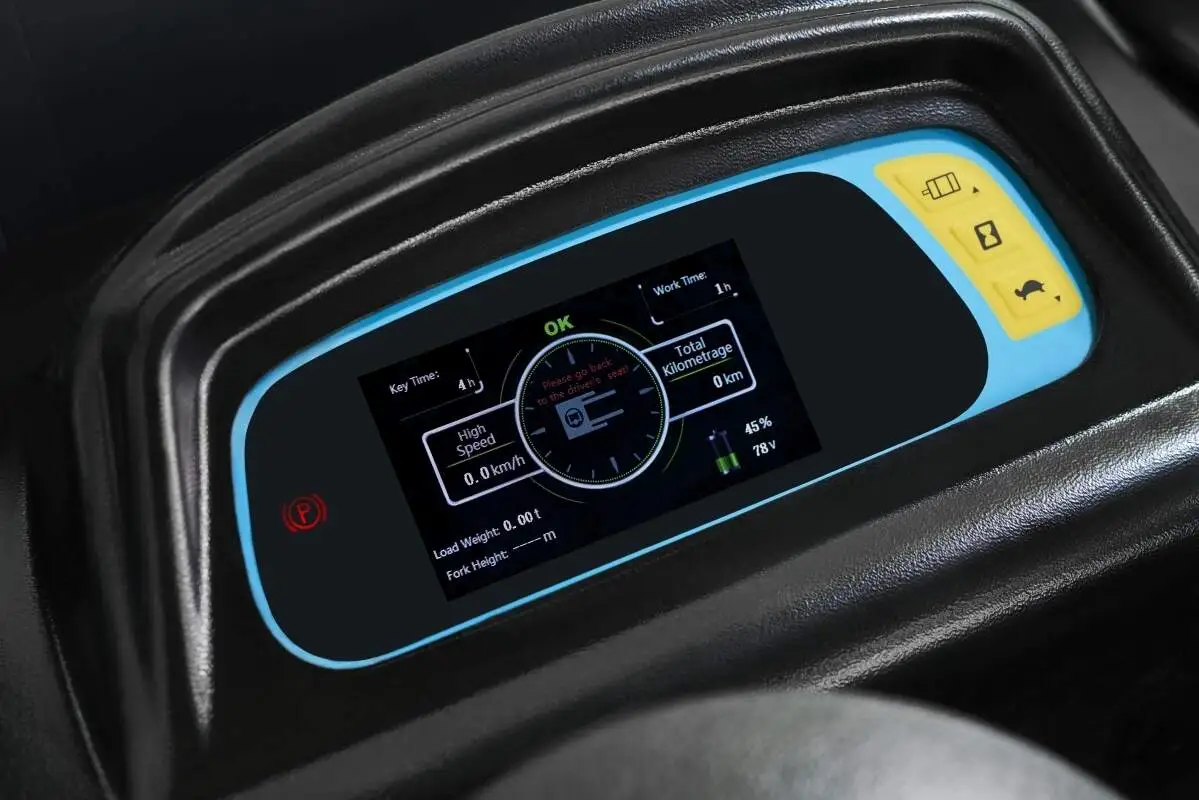
Speed adjustment is a critical aspect of operating electric warehouse forklifts, directly impacting workplace safety, material handling efficiency, and equipment longevity. Unlike internal combustion forklifts, electric models offer precise speed control features tailored to diverse warehouse environments, making proper adjustment essential for every operator.
Assessing operational scenarios is the first step to effective speed setting. Warehouse environments vary widely, and speed adjustments should align with specific conditions. In narrow aisles or areas with limited visibility, reducing speed to 2-3 mph minimizes collision risks with racks, inventory, or pedestrians. For open, clear zones with light loads, operators can safely increase speed to 5-7 mph to enhance throughput. When handling heavy or fragile loads, slower speeds (1-2 mph) ensure load stability and prevent damage to goods. High-traffic areas with frequent pedestrian movement require consistent low speeds, paired with audible alerts to maintain awareness.
Following proper speed adjustment procedures ensures safe and reliable operation. Most electric warehouse forklifts feature user-friendly speed control interfaces, typically located on the dashboard or control lever. Begin by ensuring the forklift is parked on a flat, stable surface with the parking brake engaged. Access the speed adjustment menu through the onboard display, selecting the appropriate mode based on the intended operation. For novice operators or high-risk zones, activate the restricted speed mode to cap maximum velocity. After adjusting, test the speed in a designated training area before proceeding to active work zones. Always refer to the equipment’s operation manual for model-specific instructions, as interface designs may vary.
Regular maintenance and calibration are key to consistent speed control. Over time, wear and tear on components like speed sensors or throttle mechanisms can affect speed accuracy. Monthly maintenance checks, including inspecting sensor connections and calibrating throttle response, ensure reliable speed performance. Keep the control interface clean and free of debris to prevent accidental adjustments. Proper battery maintenance is also critical, as low battery levels can lead to inconsistent speed output.
Compliance with safety standards is non-negotiable. Speed adjustment practices must adhere to local occupational safety regulations, which often mandate maximum speed limits in specific warehouse areas. Operators should complete mandatory training on speed control protocols, including recognizing hazard zones and adjusting speed accordingly. Employers should post clear speed limit signs in high-risk areas and conduct regular audits to ensure compliance. Violations of speed regulations not only increase accident risks but may also result in regulatory penalties.
By prioritizing scenario-based speed adjustments, following proper procedures, maintaining equipment, and complying with safety standards, operators can maximize the benefits of electric warehouse forklifts. Balancing efficiency with safety ensures a productive and secure workplace, reducing downtime and protecting both personnel and inventory.