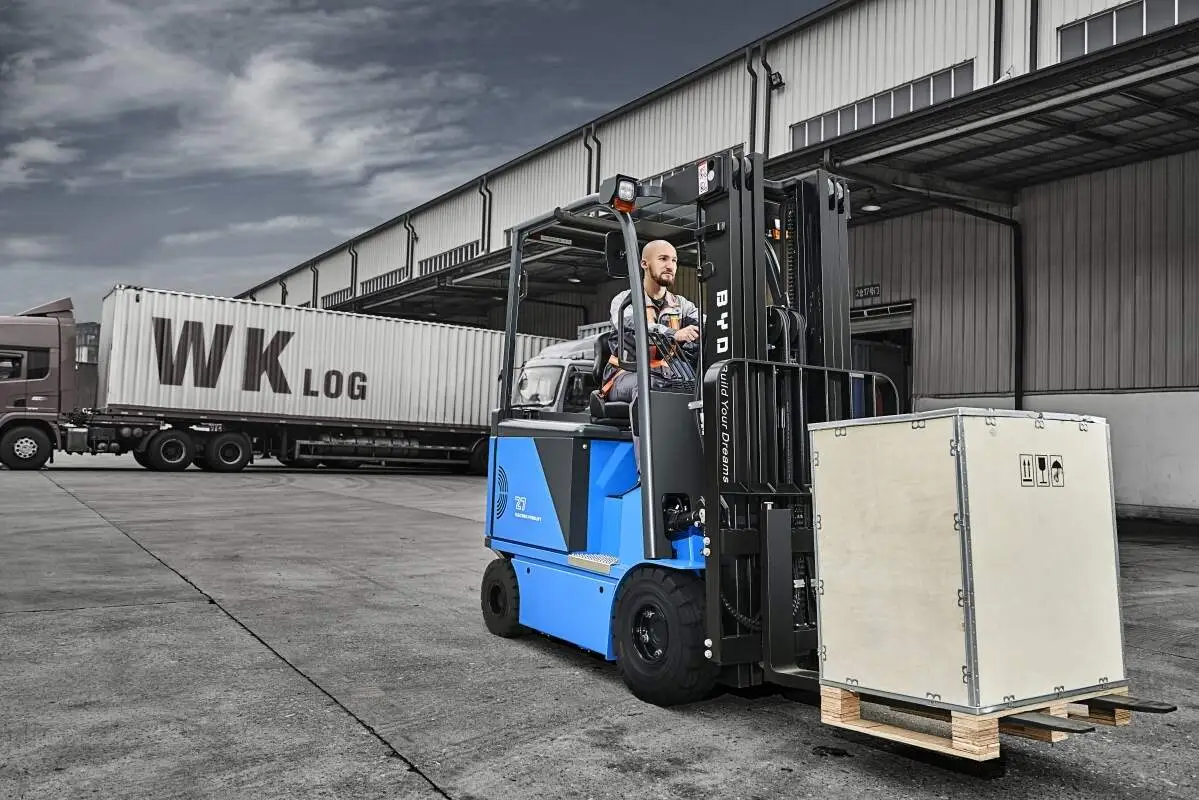
forklift forks are critical components that directly impact a forklift’s load-handling capabilities, operational safety, and overall efficiency. Understanding standard dimension references for forklift fork lengths is essential for operators, warehouse managers, and procurement teams to make informed decisions that align with operational needs and safety standards.
First, several key factors determine the appropriate fork length for a forklift. The primary consideration is the forklift’s rated load capacity. Forks must be sturdy enough to support the maximum weight the forklift is designed to carry, and longer forks may require a higher load capacity to maintain stability. Additionally, the size of pallets or loads being handled plays a significant role. Most standard pallets have consistent dimensions, so fork lengths are often tailored to match these to ensure secure load handling. Operational environment is another factor; in narrow warehouse aisles or confined spaces, shorter forks are more maneuverable, while longer forks may be necessary for handling oversized loads in open areas.
Common standard fork lengths vary based on forklift capacity and industry practices. For light-duty forklifts with a 1 to 2-ton capacity, typical fork lengths range from 1200mm to 1500mm. These lengths are suitable for handling standard pallets in small to medium-sized warehouses. For medium-duty forklifts (2 to 3 tons), lengths between 1500mm and 1800mm are common, offering a balance between maneuverability and load-handling range. Heavy-duty forklifts with capacities over 3 tons may use forks ranging from 1800mm to 2400mm or longer, designed to handle large, bulky loads in industrial settings. It’s important to note that these are general references, and specific applications may require custom lengths that adhere to safety regulations.
When selecting fork lengths, practical safety and operational tips should be followed. Always ensure that the fork length matches the load size—ideally, forks should extend at least two-thirds of the length of the pallet to prevent the load from slipping. Avoid using forks that are too long for the forklift’s capacity, as this can lead to instability and increase the risk of tip-overs. Regularly inspect forks for wear, bending, or damage, as compromised forks can affect load stability and pose safety hazards. Additionally, consider the height of storage racks; longer forks may be needed to reach higher shelves, but they must be compatible with the forklift’s lifting mechanism.
In conclusion, understanding standard dimension references for forklift fork lengths is vital for safe and efficient material handling. By considering factors like load capacity, pallet size, and operational environment, and adhering to common industry standards, businesses can select the right fork lengths to optimize their forklift operations, reduce safety risks, and improve overall productivity.