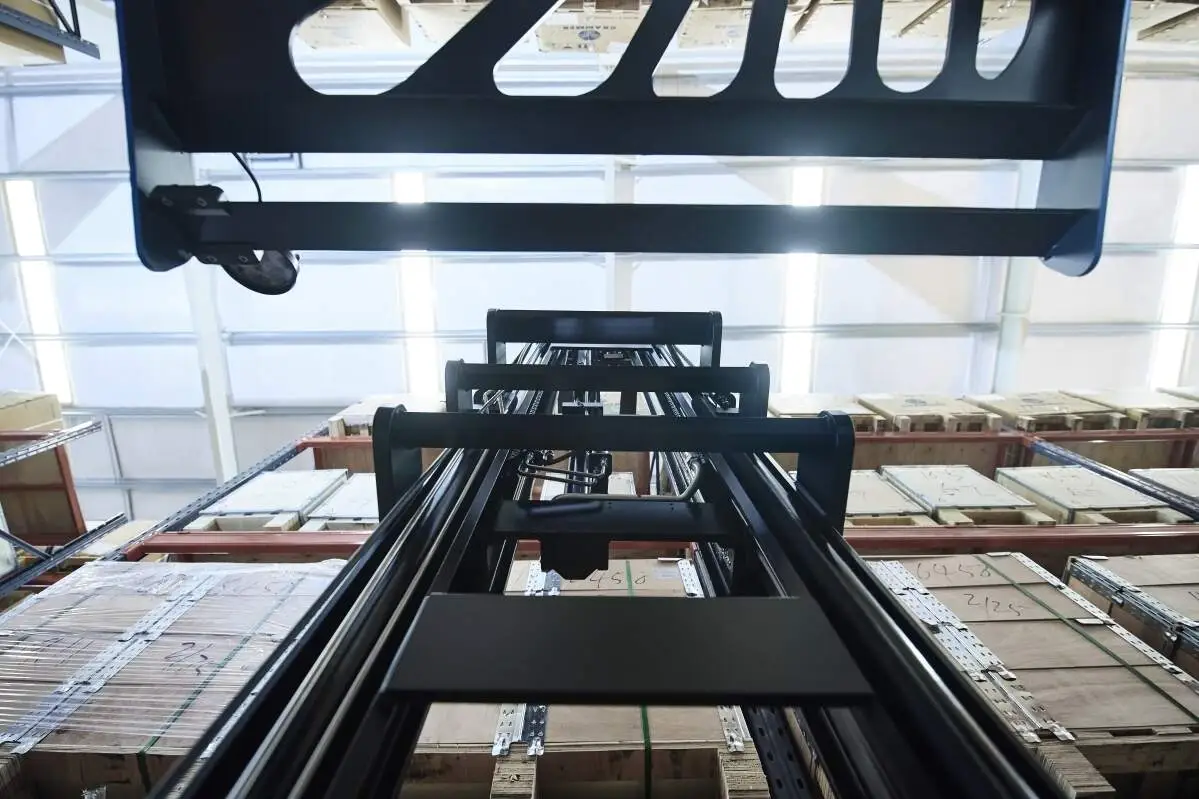
Choosing the right forklift fork length is critical for ensuring safe, efficient material handling operations. Using forks that are too short or too long can lead to instability, increased risk of load damage, and compromised operator safety. This guide provides a standard reference for forklift fork lengths, helping operators and fleet managers make informed decisions based on common forklift types and operational needs.
The correct fork length directly impacts load stability. Forks that are too short may not extend far enough under a load, causing it to shift or tip during transport. Conversely, excessively long forks can make maneuvering in tight spaces difficult, increasing the risk of collisions with racks, walls, or other equipment. Adhering to standard length references helps balance stability and maneuverability, reducing workplace accidents and improving productivity.
Standard Fork Lengths for Common Forklift Types
Electric Counterbalance Forklifts
These are the most widely used forklifts in warehouses and distribution centers. Standard fork lengths typically range from 48 inches (122 cm) to 72 inches (183 cm). For handling standard 48x40-inch pallets, a 48-inch fork length is often sufficient, as it matches the pallet’s width. For longer loads or double-stacked pallets, 60-inch or 72-inch forks may be preferred to provide better support.
Narrow Aisle Forklifts
Designed for tight spaces like narrow warehouse aisles, these forklifts require shorter forks to maintain maneuverability. Standard lengths here usually fall between 36 inches (91 cm) and 48 inches (122 cm). Shorter forks allow operators to navigate narrow aisles without scraping racks, while still providing enough support for standard pallet sizes commonly used in these environments.
Pallet Jacks (Electric and Manual)
Pallet jacks are used for moving pallets over short distances. Their standard fork lengths often align with standard pallet widths, typically 48 inches (122 cm) for full-size pallets. Some compact models may have 36-inch forks for smaller pallets or confined spaces where maneuverability is key.
Key Factors to Consider When Choosing Fork Length
Beyond standard references, several operational factors should influence your fork length choice. Load size and weight are primary considerations: heavier or longer loads require longer forks to distribute weight evenly and prevent tipping. Pallet dimensions also matter—forks should extend at least 2 inches (5 cm) beyond the edge of the pallet to ensure full support.
Operational environment is another crucial factor. In warehouses with narrow aisles, shorter forks are essential to avoid collisions. Outdoor operations with larger loads may benefit from longer forks that can handle oversized materials. Additionally, consider the forklift’s load capacity; longer forks can reduce the forklift’s maximum safe load capacity, so it’s important to check operational specifications to ensure compliance.
Maintenance and Inspection Tips
Regular inspection of forklift forks is essential to ensure they remain safe and functional. Check for signs of bending, cracking, or wear, as damaged forks can compromise load stability. Ensure forks are properly aligned and securely attached to the carriage. Over time, wear and tear can affect the fork’s length and structural integrity, so replacing worn forks with ones that meet standard length references is vital for ongoing safety.
By understanding standard forklift fork lengths and considering operational needs, operators and fleet managers can select the right forks to enhance safety, efficiency, and productivity. Always refer to operational manuals and relevant safety guidelines when choosing or replacing forks to ensure alignment with industry standards.