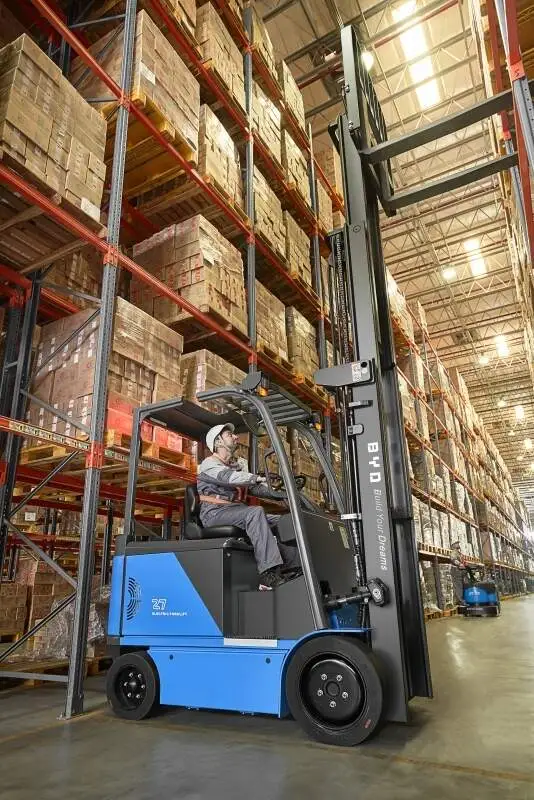
When operating a 5 ton rated electric forklift, selecting the right fork length is critical for ensuring safe, efficient, and reliable material handling. Forks serve as the primary load-bearing component, directly impacting the forklift’s stability, maneuverability, and ability to accommodate different load types.
Standard Fork Length Ranges for 5 Ton electric forklifts
In industrial settings, standard fork lengths for 5 ton rated electric forklifts typically fall within a well-defined range to align with common pallet sizes and operational needs. The most widely adopted lengths include 1220mm (48 inches), 1524mm (60 inches), and 1829mm (72 inches). These dimensions are designed to fit standard wooden and plastic pallets, which usually measure 1200mm x 1000mm or 1016mm x 1219mm in global markets.
Shorter forks, such as the 1220mm option, are ideal for confined spaces where maneuverability is a top priority. They allow the forklift to navigate narrow aisles and tight turns with greater ease, reducing the risk of collisions with racking or other equipment. Longer forks, like the 1829mm variant, are better suited for handling longer loads, such as pipes, lumber, or oversized pallets, distributing the weight more evenly across the forklift’s frame.
Key Factors Influencing Fork Length Selection
While standard lengths provide a starting point, several factors should guide your final choice. First, consider the size and weight distribution of the loads you regularly handle. Loads with extended lengths require longer forks to prevent tipping and ensure full support under the load base. Second, assess your operating environment. If your facility has narrow aisles or low ceiling heights, shorter forks will enhance maneuverability without compromising load capacity.
Safety is another critical factor. Overly long forks can shift the forklift’s center of gravity forward, increasing the risk of tipping during lifting or turning. Conversely, forks that are too short may not fully support the load, leading to unstable lifting and potential load damage. It’s essential to balance operational needs with stability requirements to maintain a safe working environment.
Guidelines for Choosing the Right Fork Length
To select the optimal fork length for your 5 ton electric forklift, start by reviewing the manufacturer’s recommendations. These guidelines are tailored to the forklift’s design and load capacity, ensuring compatibility and safety. Next, conduct a thorough assessment of your daily operations: measure the average size of your pallets and loads, map out your facility’s layout, and identify any space constraints.
Regular inspection and maintenance of forks are also vital. Over time, forks can wear down or bend, which affects their length and load-bearing capacity. Schedule routine checks to ensure forks remain within the standard length specifications and replace them if they show signs of damage or excessive wear.
In conclusion, understanding standard fork length specifications for 5 ton rated electric forklifts is essential for optimizing material handling operations. By selecting the right fork length based on load types, operational environment, and safety guidelines, you can enhance efficiency, reduce risks, and extend the lifespan of your forklift equipment.