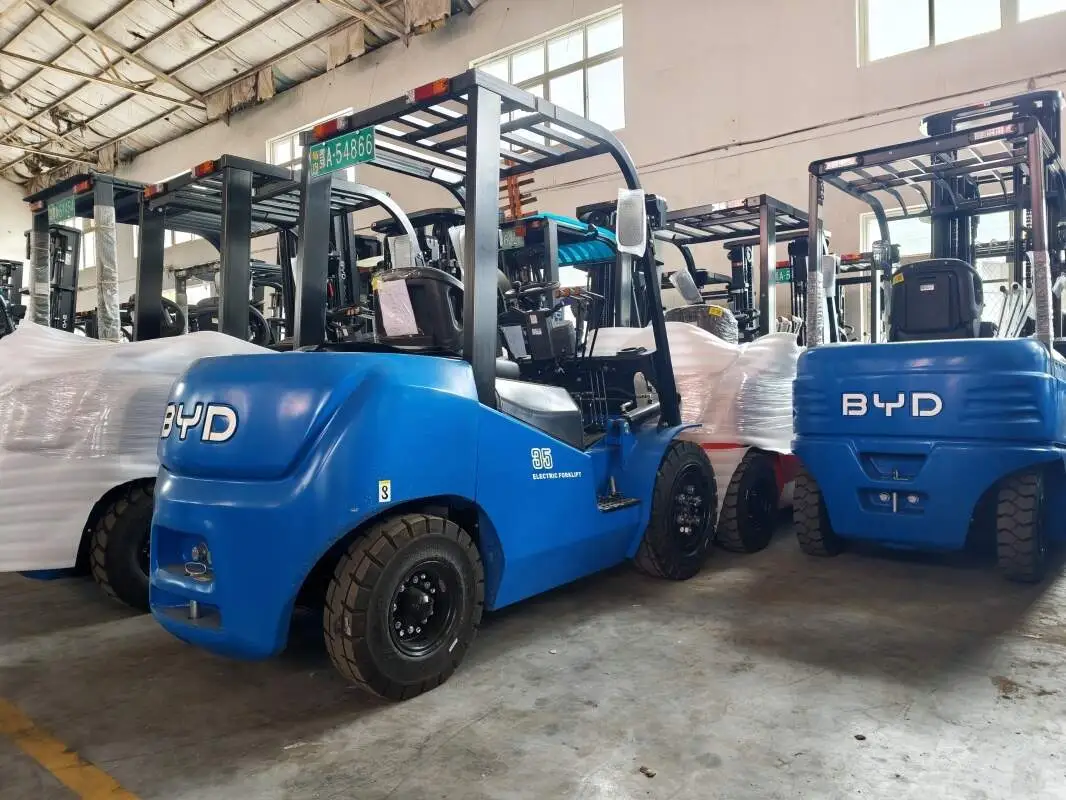
The forklift mast is a critical structural system that enables vertical cargo lifting and positioning, forming the core of a forklift’s material handling capabilities. Composed of several interconnected components, each part plays a specific role in ensuring stable, smooth, and safe operation during lifting tasks.
The outer mast serves as the foundational framework of the entire mast assembly. Typically constructed from heavy-duty steel profiles welded together, it is securely mounted to the forklift’s chassis. This fixed structure bears the majority of the load exerted by lifted cargo and provides a stable guide for the inner mast’s vertical movement. Its robust design is engineered to withstand constant stress and impact during daily operations.
Nestled within the outer mast, the inner mast is the movable component that directly supports the carriage and fork assembly. It slides vertically along the outer mast via a series of rollers, allowing for precise height adjustment when lifting or lowering loads. Constructed with high-strength steel to handle heavy weights, the inner mast’s design ensures minimal deflection under load, maintaining stability even when lifting to maximum heights.
Lifting chains and rollers are essential for facilitating smooth mast movement. Heavy-duty lifting chains connect the inner mast to the hydraulic cylinder, transferring the force needed to lift the inner mast and its attached cargo. These chains are designed to resist wear and tension, ensuring long-term reliability. Rollers, including side rollers and guide rollers, are positioned between the inner and outer masts to reduce friction during movement. They ensure that the inner mast glides evenly without binding, contributing to effortless operation and reduced component wear.
Hydraulic cylinders are the power source behind mast movement. Integrated into the mast assembly, these cylinders use pressurized hydraulic fluid to generate the force required to lift the inner mast. When the forklift operator activates the lifting control, hydraulic fluid is pumped into the cylinder, extending the piston and pushing the inner mast upward. For lowering, the fluid is released in a controlled manner, allowing the mast to descend smoothly under the weight of the cargo. Properly maintained hydraulic cylinders ensure consistent lifting performance and prevent sudden drops that could compromise safety.
Each component of the forklift mast works in synergy to enable efficient material handling. Regular inspection and maintenance of these parts, such as checking chain tension, lubricating rollers, and monitoring hydraulic fluid levels, are essential to prolong the mast’s lifespan and ensure safe operation throughout the forklift’s service life.