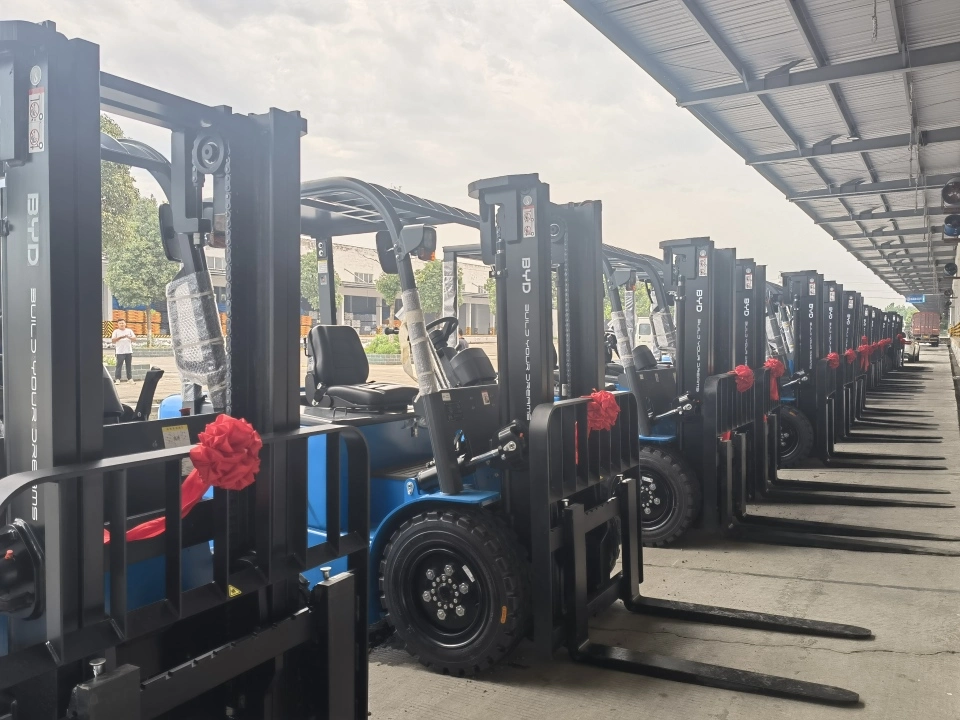
As a critical core component of electric forklifts, forklift carriage assemblies serve as the vital link between the lifting mast and the forks, directly influencing the efficiency and safety of material handling operations.
Structure of Forklift Carriage Assemblies
The assembly’s structure is engineered for long-term durability and reliable functionality. At its core is a robust steel main frame, typically fabricated from high-strength alloy steel to withstand repeated heavy load impacts without deformation, forming the foundational support for all attached components. Slide blocks, precision-mounted on the frame’s side rails, glide smoothly along the mast’s guide rails, enabling stable vertical movement during lifting and lowering operations. Lift cylinder attachment points are strategically integrated into the frame, providing secure, reinforced connections to the mast’s hydraulic cylinders to transfer lifting force efficiently and evenly. Fork mounting brackets are fixed on the front face of the frame, featuring adjustable slots that allow operators to install forks of varying widths, ensuring compatibility with diverse cargo types and sizes. Some advanced carriage assemblies include a side-shift mechanism—a secondary movable frame component that enables horizontal adjustment of the forks, enhancing precision in pallet alignment.
Core Functions of Forklift Carriage Assemblies
The primary function of the carriage assembly is load-bearing, supporting the full weight of cargo throughout lifting, horizontal transport, and vertical stacking operations. It acts as a force transfer medium, translating hydraulic power from the lift cylinders into controlled, smooth vertical movement, enabling operators to raise goods to different heights efficiently. The integrated side-shift function boosts operational flexibility, allowing operators to adjust fork positions horizontally without repositioning the entire forklift—a key advantage in narrow warehouse aisles or tight storage spaces. Additionally, the assembly contributes significantly to operational stability, with its symmetric structural design distributing load evenly across the mast and forklift body, reducing the risk of tipping during heavy lifts. Its adjustable fork mounts also enable quick adaptation to different cargo dimensions, supporting versatile material handling tasks from small boxes to large pallets.
To ensure consistent performance and safety, regular maintenance of carriage components is essential. Inspecting slide blocks for signs of wear and replacing them promptly prevents jerky movement and excessive wear on the mast’s guide rails. Checking the tightness of mounting bolts and hydraulic connection points regularly helps avoid unexpected failures during operation, extending the assembly’s service life and maintaining safe working conditions for operators.