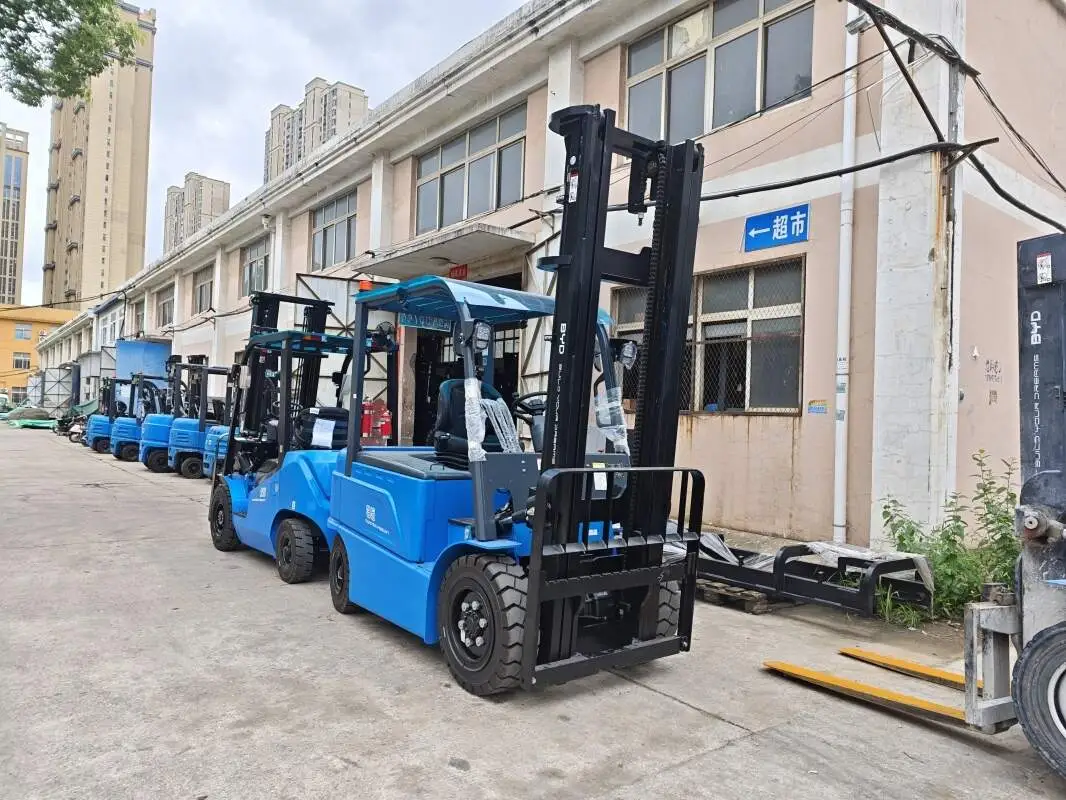
In daily industrial operations, the battery serves as the core power source of electric forklifts, directly influencing operational efficiency, cost control, and equipment reliability. Understanding its full life cycle is vital for fleet managers and operators to optimize performance and maximize long-term value. Jianshu New Energy, a specialist in BYD electric forklifts, shares professional insights into navigating each stage of the battery life cycle effectively.
Initial Break-In Period
The first stage of a forklift battery’s life is the break-in period, typically spanning the first 50 to 100 charge-discharge cycles. During this phase, internal chemical components adapt to regular operational loads. In daily work, operators should avoid extreme charge fluctuations—never discharge the battery beyond 80% of its capacity, and avoid prolonged overcharging. Gentle, consistent handling during this stage establishes a stable foundation, laying the groundwork for reliable performance in subsequent phases.
Stable Performance Phase
After the break-in period, the battery enters its longest and most productive stage: the stable performance phase. Here, it delivers consistent power for daily tasks like loading, unloading, and material transport across warehouses or manufacturing floors. To sustain this stability, daily maintenance is key. Operators should inspect battery terminals for corrosion, clean them with a neutral solution if needed, and ensure the battery is stored in a cool, dry area away from direct sunlight or extreme temperatures. Adhering to the manufacturer’s recommended charging schedule and regularly checking electrolyte levels (for lead-acid variants) also helps maintain optimal output.
Performance Decline Phase
Over time, the battery will transition into the performance decline phase, marked by reduced charge retention and shorter operational hours per charge. In daily operations, this may mean needing to adjust task schedules to accommodate more frequent recharges. During this stage, avoiding deep discharges is critical, as they accelerate internal degradation. Implementing scheduled equalizing charges every few weeks can slow down the decline, while fleet managers should begin planning for battery replacement to avoid unexpected downtime.
End-of-Life Retirement
Eventually, the battery will reach the end of its usable life, where it can no longer hold sufficient charge to meet operational demands. At this point, proper disposal or recycling is essential to comply with environmental regulations. Jianshu New Energy can provide guidance on eco-friendly battery recycling processes. Transitioning to a new battery, such as those integrated into BYD electric forklifts, can also bring improved efficiency and longer lifespans, supported by our team’s tailored advice.
Daily Maintenance Tips for Extended Lifespan
Across all life cycle stages, consistent daily care helps prolong battery life. Key tips include: charging only when the battery reaches the recommended discharge level, keeping the battery and surrounding area clean to prevent short circuits, avoiding exposure to extreme temperatures, and training operators on proper handling procedures.
For more personalized guidance on managing your industrial electric forklift battery life cycle, contact Jianshu New Energy at 17399989919@163.com. Our expertise in BYD electric forklifts ensures you receive solutions tailored to optimize your fleet’s performance and reduce operational costs.