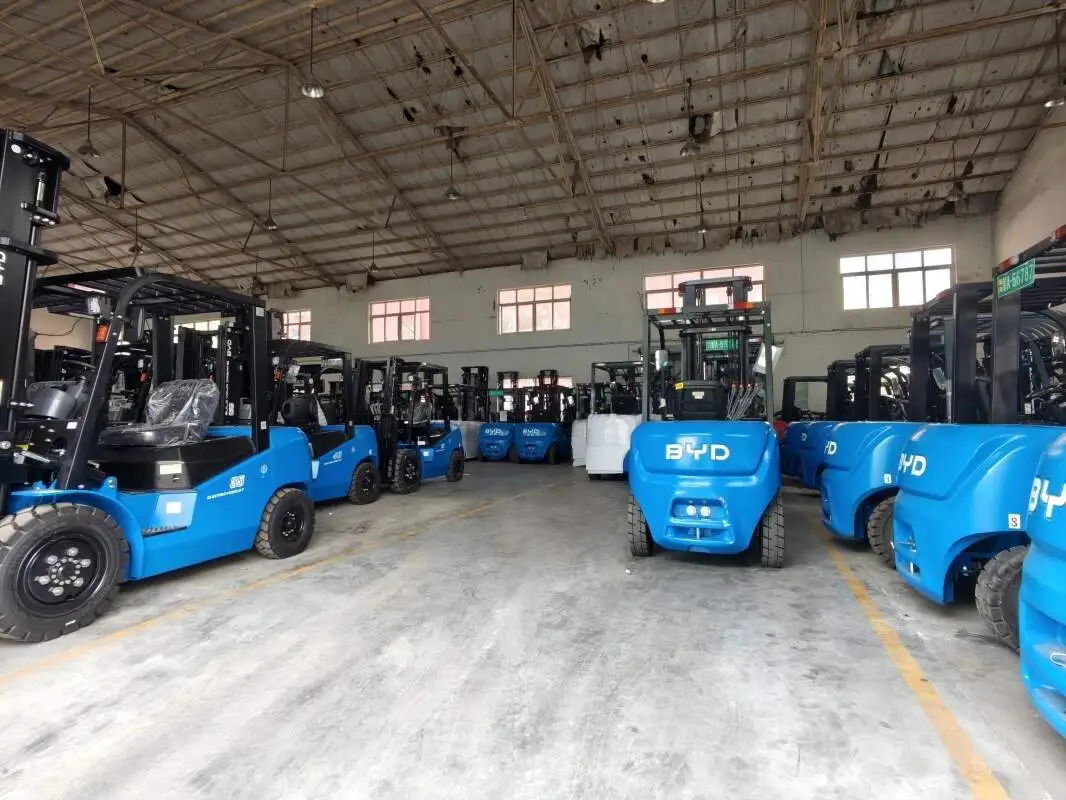
As electric forklifts age, one of the most critical safety concerns for operators and fleet managers is inconsistent braking performance. This issue not only endangers workplace safety but also disrupts daily operations, leading to potential downtime and increased maintenance costs. Understanding the root causes is essential for timely troubleshooting and effective preventive care.
Worn brake components are the most prevalent culprit. Over years of regular use, brake pads gradually wear down as they generate friction to slow the vehicle. When pads become overly thin, they fail to produce consistent friction, resulting in uneven braking force across wheels. Brake discs (rotors) can also develop grooves, warping, or surface corrosion from harsh warehouse environments and repeated stops. These imperfections cause uneven contact between pads and discs, leading to unpredictable braking responses that vary from one stop to the next.
Hydraulic system irregularities also contribute significantly to inconsistent braking. Many electric forklifts rely on hydraulic systems to transmit braking force, and aged equipment often suffers from deteriorating lines and seals that cause fluid leaks. Even small leaks reduce system pressure, making brakes feel spongy or unresponsive at times. Additionally, hydraulic fluid breaks down over time, losing viscosity and lubricating properties. Contaminated or aged fluid clogs valves and restricts flow, creating uneven pressure distribution to brake calipers. This imbalance means some brakes may engage more quickly or forcefully than others, posing a safety risk during operation.
Electronic sensor and control system malfunctions are another key factor in aged electric forklifts. Modern models use sensors and control modules to regulate braking, but these components can become misaligned, dirty, or damaged due to vibration, dust, or moisture. For example, wheel speed sensors may send inaccurate signals to the anti-lock braking system (ABS), causing it to engage unexpectedly or fail when needed. Brake pressure sensors can also malfunction, leading to incorrect force application. These electronic issues often manifest as intermittent inconsistencies, requiring specialized testing to diagnose.
Inadequate calibration and neglected maintenance further worsen braking performance. Over time, brake pedal travel may shift, or calipers may misalign due to regular use and minor impacts. Failing to adjust these during routine maintenance prevents uniform engagement across wheels. Neglecting to bleed hydraulic systems or replace worn components on schedule turns minor wear into major safety hazards.
For those managing aged electric forklifts, a proactive approach to maintenance is vital. Regular inspections, timely component replacement, and professional calibration help maintain safe, reliable braking. If you need support with your BYD electric forklifts, Jianshu New Energy specializes in servicing and maintaining these vehicles to keep them operating safely and efficiently. Reach out to us at 17399989919@163.com for tailored guidance on troubleshooting and preventive maintenance.