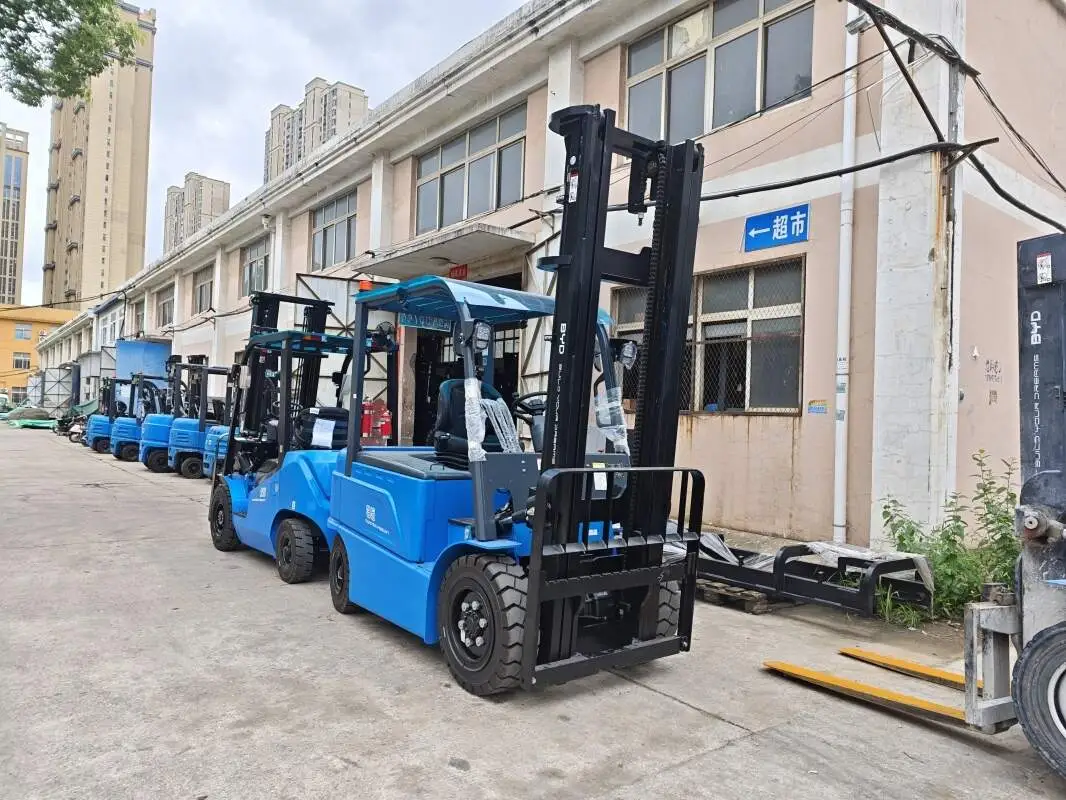
Indoor electric forklifts are essential workhorses in modern warehousing and logistics, where operational efficiency and cost control directly impact business performance. Tire wear is a major recurring expense for forklift operators, and driving speed is a critical yet often underestimated factor influencing this wear rate. Understanding the relationship between speed and tire longevity can help optimize operations, reduce maintenance costs, and enhance workplace safety.
Low-speed operation (typically below 5 km/h) is prevalent in tight indoor spaces with dense racking or frequent maneuvering needs. At this pace, tires maintain consistent, low-stress contact with the floor. Uniform load distribution and minimal centrifugal force during turns prevent uneven tread wear, while reduced frequency of sudden stops or accelerations minimizes shock to tire components. For tasks requiring precise positioning, low-speed driving not only boosts safety but also ensures tires wear evenly, extending their service life significantly.
Mid-speed driving (between 5-10 km/h) strikes a balance between operational efficiency and tire wear resistance. This is the most common speed range for routine indoor tasks, such as transporting goods between storage zones and loading docks. While mid-speed allows for reasonable productivity, operators must account for load weight and floor conditions. Heavier loads combined with mid-speed turns can increase lateral stress on tires, leading to faster wear on one side of the tread. Regular visual inspections of tire condition during mid-speed operations help detect early signs of uneven wear, enabling timely adjustments to driving habits.
High-speed operation (exceeding 10 km/h) in indoor environments poses substantial risks to tire integrity and workplace safety. Increased speed elevates friction between tires and the floor, generating excess heat that softens tire rubber and accelerates tread degradation. Sudden stops to avoid obstacles cause abrupt impact loads, which may result in punctures or sidewall damage. Additionally, high-speed turns create greater centrifugal force, shifting the forklift’s center of gravity and concentrating load on specific tire areas, leading to uneven wear patterns. Indoor spaces lack the open terrain needed for safe high-speed travel, making this practice both inefficient and costly in terms of tire replacement.
The physical mechanisms linking speed to tire wear are rooted in friction, heat buildup, and dynamic load changes. Friction between treads and flooring increases with speed, causing faster material loss. Heat generated from friction weakens tire rubber, making it more prone to cracking and wear. At higher speeds, acceleration and deceleration create dynamic load shifts that stress tire sidewalls and treads unevenly. Centrifugal force during turns further exacerbates this issue, concentrating weight on outer tire edges and distorting wear patterns.
To optimize tire lifespan while maintaining productivity, operators should follow key guidelines: match driving speed to task requirements, conduct weekly tire inspections to identify early wear signs, and train drivers on smooth acceleration and braking techniques. For businesses seeking reliable indoor electric forklift solutions, Jianshu New Energy specializes in BYD electric forklifts, offering expert advice on operation and maintenance to help reduce long-term costs. Reach out to us at 17399989919@163.com for tailored support.