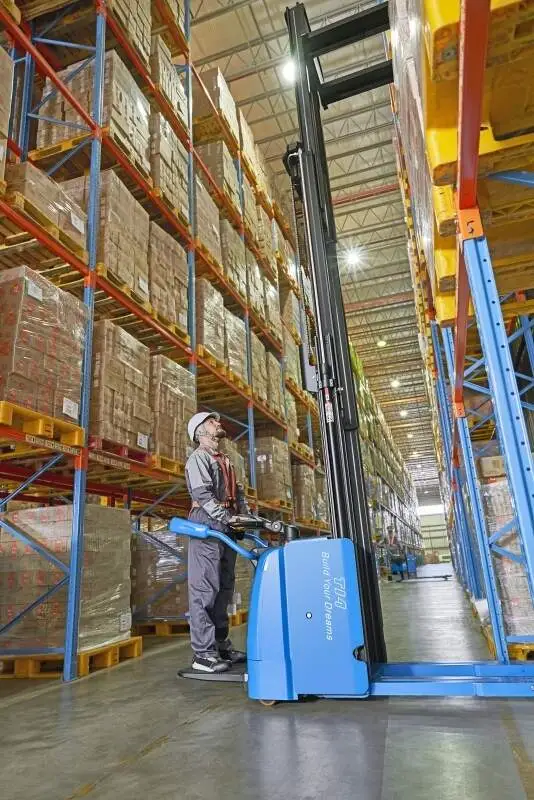
In industries ranging from port logistics to mining and heavy machinery manufacturing, heavy-duty material handling is a cornerstone of efficient operations. Standard forklifts, while versatile, often struggle to manage the extremely heavy loads required in these sectors—from full-size shipping containers to oversized industrial components. This gap has driven the development of specialized equipment, including the largest forklift ever engineered for heavy-duty material handling.
At the core of this forklift’s design is its robust load-bearing capability. Unlike standard models, it is constructed with reinforced steel frames and heavy-duty lifting mechanisms, engineered to safely manage loads that far exceed typical forklift limits. This structural integrity ensures stability even when operating at maximum capacity, reducing the risk of equipment failure during critical tasks. Powering this giant is an advanced electric system, featuring high-density battery packs that deliver sustained performance for extended shifts. Not only does this electric setup produce zero tailpipe emissions, making it suitable for both indoor manufacturing floors and outdoor port yards, but it also lowers long-term operational costs compared to traditional fuel-powered alternatives.
Operational safety and efficiency are prioritized in every aspect of the forklift’s design. The operator’s cab is ergonomically designed with panoramic visibility, allowing operators to navigate tight spaces and monitor loads with ease. Precision control systems enable smooth, accurate handling of heavy cargo, minimizing the chance of damage to both the load and surrounding equipment. Integrated safety features include real-time load monitoring sensors, anti-tip technology that adjusts based on load weight and terrain, and emergency stop mechanisms that activate instantly in critical situations. These features work together to create a secure working environment for operators and protect valuable assets.
This large-capacity forklift finds its place across multiple high-demand industries. In port operations, it streamlines the movement of heavy shipping containers, reducing turnaround times for cargo vessels. In mining sites, it transports large equipment parts and bulk ore containers, supporting continuous production cycles. Within heavy machinery manufacturing facilities, it handles oversized components during assembly, eliminating the need for multiple smaller lifts and reducing labor requirements. By tackling these heavy-load tasks efficiently, the forklift helps businesses maintain productivity, meet tight project deadlines, and reduce overall operational risks.
As industries continue to scale up their operations and demand for heavy-duty material handling solutions grows, this specialized forklift stands as a testament to engineering innovation. It addresses the unique challenges of moving extremely heavy loads while adhering to modern sustainability and safety standards, making it an indispensable tool for sectors where heavy cargo is a daily requirement.