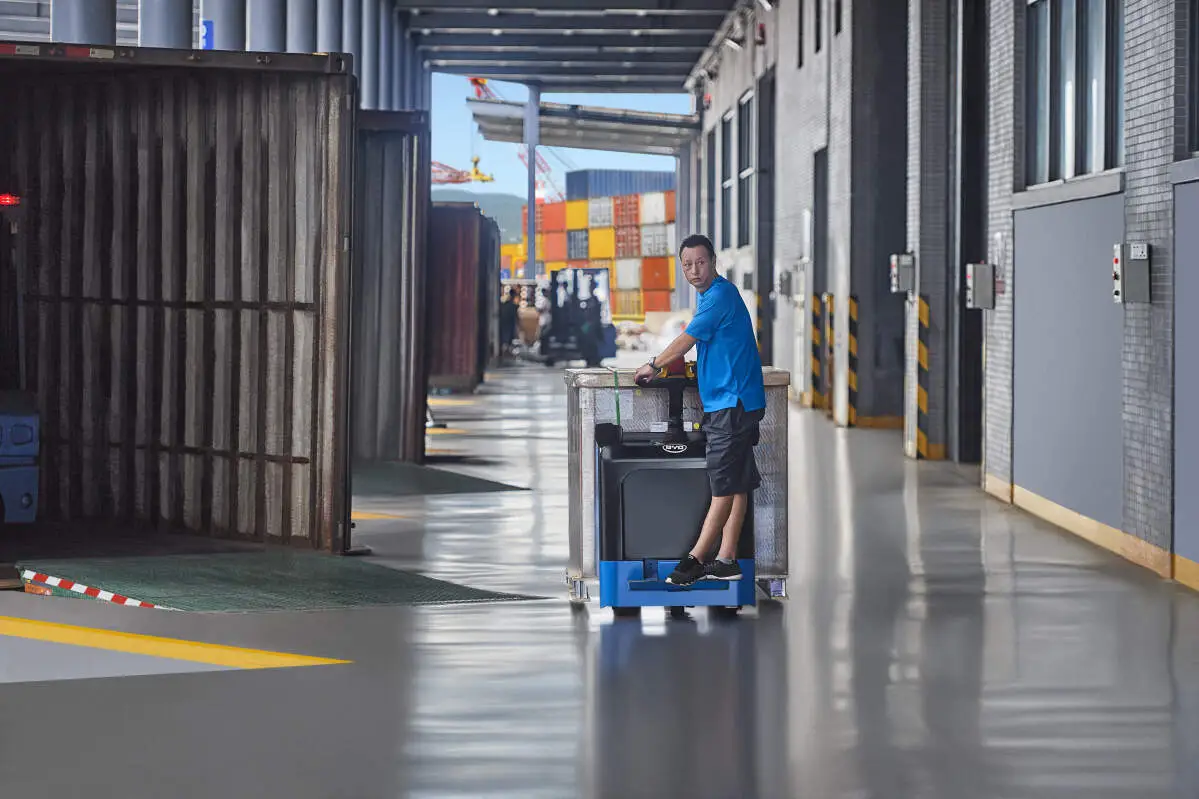
On construction and industrial sites, access to a forklift isn’t always feasible due to space limitations, equipment maintenance downtime, or small-scale targeted tasks. In such scenarios, mastering low-tech, manual methods to move heavy objects is essential for keeping operations on track and upholding workplace safety standards. Below are practical, compliant techniques tailored for on-site applications.
Hand trucks and four-wheel dollies are ideal for heavy, uniformly weighted objects with flat bases, such as wooden crates or compact machinery. Before use, inspect the wheels and frame for cracks or loose parts to prevent instability during movement. Tilt the object slightly to slide the dolly underneath, ensuring weight is evenly distributed across the frame. Push using your leg muscles rather than your back to minimize strain, and navigate ramps or uneven terrain at a slow, steady pace to maintain full control.
A block and tackle system uses pulleys and heavy-duty synthetic ropes to reduce the force required to lift or move heavy objects horizontally or vertically. First, secure the system to a stable anchor point, such as a reinforced steel beam or sturdy utility post. Thread the rope through the pulleys, attach the load hook to a secure lifting point on the object, and pull steadily on the free end of the rope. Always verify that the rope’s weight capacity matches the object’s load, and keep bystanders clear of the lift zone to avoid potential accidents.
For large, flat objects like steel beams or precast concrete slabs, skidding using cylindrical rollers is an effective low-effort method. Place the rollers under the object at evenly spaced intervals to ensure balanced support. Push or pull the object gently, and reposition the rollers from the rear to the front as the object advances to maintain continuous movement. Ensure the ground is cleared of debris to prevent rollers from getting stuck, and use temporary guide rails if needed to keep the object on its intended path.
Lever systems utilize basic physics to lift heavy objects short distances for repositioning. Select a sturdy metal or hardwood beam, position it under the object near its center of gravity, and place a stable support (such as a solid wooden block) as a fulcrum close to the object. Apply downward force on the opposite end of the lever to lift the object slightly, then slide a dolly or rollers underneath for further movement. Never use a cracked or weakened beam, and keep your hands clear of the fulcrum area to avoid pinching injuries.
For objects that fall within safe manual lifting limits (as defined by occupational safety regulations), coordinated team lifting is a viable option. Assign a designated leader to give clear, timed commands, ensuring all team members lift simultaneously using their leg muscles rather than their backs. Wear appropriate personal protective equipment, including slip-resistant gloves and steel-toe boots, and maintain continuous communication to avoid misalignment or sudden movements that could cause injury.
Choosing the right method depends on the object’s weight, size, and the site’s terrain. Always conduct a quick risk assessment before any lifting task, and ensure all personnel are trained in the specific technique being used. These low-tech alternatives can keep site operations running smoothly even when a forklift isn’t accessible.