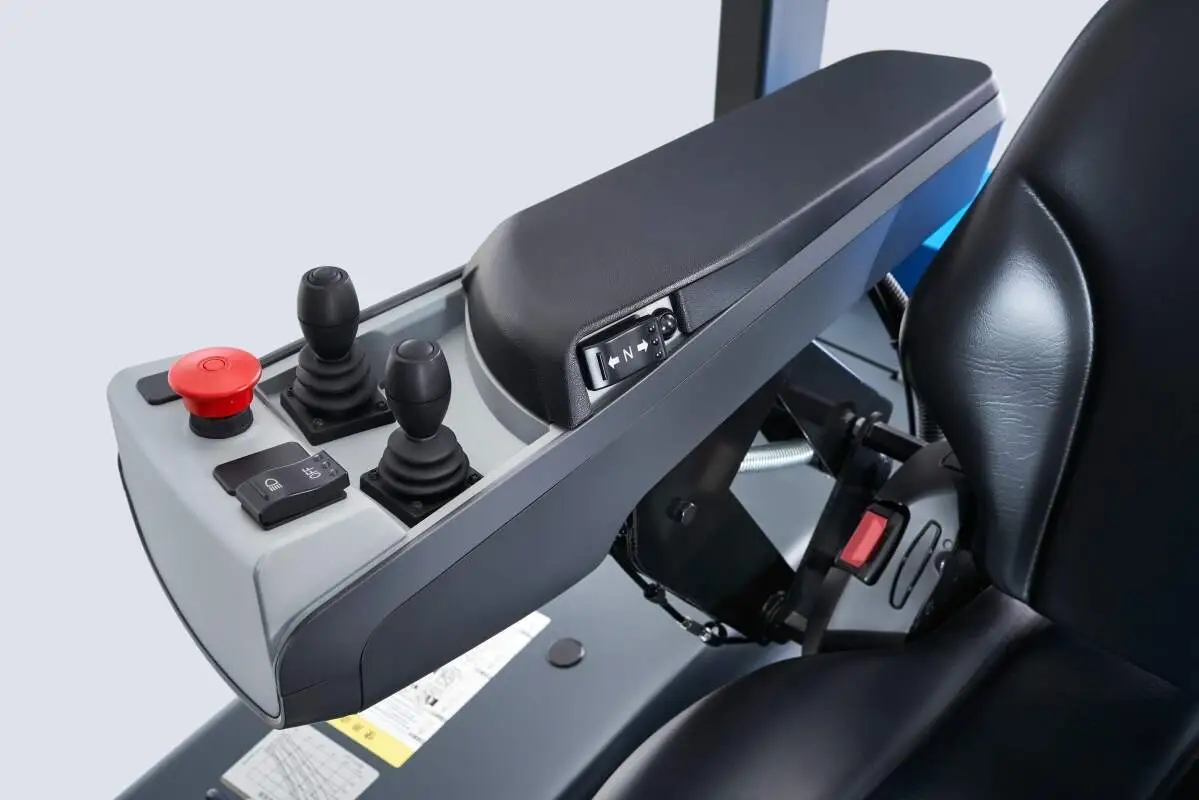
First, warehouse environments are dynamic spaces where forklifts, pedestrian staff, and inventory movements converge daily, making collision risks a top safety concern. According to industry safety data, a significant portion of warehouse incidents involve forklift-pedestrian interactions, often stemming from poor visibility or lack of clear warning signals. This is where forklift barrier lights emerge as a critical safety solution, designed to create visible zones around operating forklifts and alert nearby personnel to potential dangers.
Proper configuration of these lights starts with selecting the right type for different operational needs. Red zone warning lights, for example, project a bright, distinct red area on the floor ahead of and behind the forklift, indicating the immediate danger zone where pedestrians should not enter. Blue marker lights, on the other hand, are typically mounted on the sides of forklifts to signal the vehicle’s presence in blind spots or low-light areas. Understanding the purpose of each light type is key to deploying them effectively.
Next, placement and angle adjustment play a vital role in maximizing the lights’ effectiveness. Red zone lights should be positioned at a height that ensures the projected area covers the forklift’s stopping distance, accounting for load weight and speed. Side marker lights need to be aligned to illuminate the edges of the forklift’s path, making it visible to pedestrians coming from perpendicular aisles. It’s essential to avoid blocking the lights with cargo or equipment, as this can diminish their warning capabilities.
Regular maintenance and testing are also integral to maintaining a reliable safety system. Barrier lights can become dim, dirty, or damaged over time due to warehouse conditions like dust, debris, or accidental impacts. Establishing a routine inspection schedule—including checking bulb integrity, cleaning lens covers, and verifying electrical connections—ensures the lights function optimally whenever the forklift is in operation. Additionally, training both forklift operators and pedestrian staff to recognize and respond to the warning signals is crucial. Operators should understand how to adjust lights based on load and environment, while pedestrians need to know what each light color and projection means to avoid entering hazardous zones.
When implemented correctly, a well-configured forklift barrier light system delivers tangible safety benefits. It reduces the likelihood of unexpected collisions by providing clear, real-time warnings, enhances visibility in dimly lit warehouse sections, and fosters a culture of safety where all personnel are aware of their surroundings. Moreover, adhering to proper configuration guidelines helps warehouses comply with occupational safety standards, minimizing the risk of regulatory penalties and workplace incidents.
In conclusion, investing time and effort into proper forklift barrier light configuration is a proactive step toward reducing warehouse hazards. By selecting the right lights, placing them strategically, maintaining them regularly, and training staff effectively, warehouses can create a safer operational environment for everyone, mitigating risks and promoting efficient, accident-free workflows.