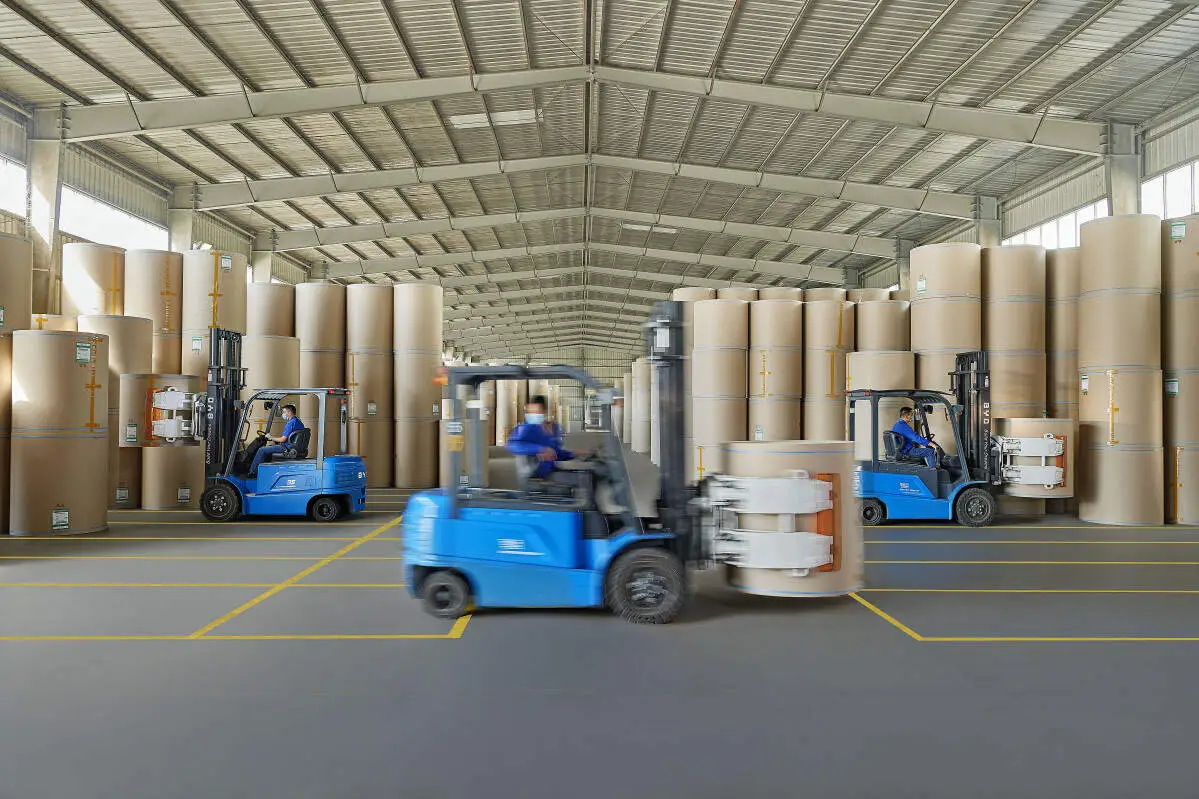
Understanding the weight reference data of a 7 ton electric forklift is critical for safe operation, facility planning, and transportation logistics. Unlike internal combustion forklifts, electric models have unique weight distributions tied to their battery systems and component configurations, making accurate weight data essential for avoiding operational risks.
The curb weight of a 7 ton electric forklift—its weight without any load, with a fully charged battery, and standard attachments—typically ranges from 4500 to 5500 kilograms. This variation stems from differences in battery technology: lead-acid batteries, which are heavier, can add 1500 to 2000 kilograms to the forklift’s base weight, while lithium-ion batteries, more compact and lightweight, contribute 1200 to 1600 kilograms. Other factors influencing curb weight include the frame material, with high-strength alloy frames weighing slightly less than traditional steel frames, and the type of operator cabin, with enclosed cabins adding an extra 100 to 200 kilograms compared to open-air designs.
When considering loaded weight, a 7 ton electric forklift’s total weight combines its curb weight with the maximum rated load of 7000 kilograms. This results in a total loaded weight ranging from 11500 to 12500 kilograms. It’s important to note that this figure assumes the load is positioned correctly within the forklift’s rated load center, usually 600 millimeters from the face of the forks. If the load is placed beyond this center, the effective weight on the forklift increases, potentially compromising stability and safety.
Breaking down individual component weights provides further context for operators and maintenance teams. The battery system is the heaviest single component, accounting for 25% to 35% of the total curb weight. The main frame, which supports the entire structure, typically weighs between 1200 and 1500 kilograms, while the fork assembly—including the carriage and forks—adds 200 to 300 kilograms. Additional attachments, such as side shifters, rotators, or clamp tools, can increase the overall weight by 50 to 200 kilograms, depending on the type and size of the attachment.
Several external factors can also alter the forklift’s effective weight during operation. For example, solid rubber tires, commonly used in industrial settings for durability, weigh 20 to 50 kilograms more per tire than pneumatic tires. Environmental conditions, such as wet or uneven surfaces, don’t change the forklift’s physical weight but can affect how its weight is distributed, requiring operators to adjust their handling to maintain stability.
Having access to accurate weight reference data helps facility managers ensure that warehouse floors and loading docks can support the forklift’s total weight, preventing structural damage. It also aids in selecting appropriate transportation trailers when moving the forklift between sites, as trailers must be rated to handle the curb weight plus any additional equipment. For operators, understanding weight distribution is key to avoiding tip-over incidents, especially when lifting heavy loads on inclines or uneven terrain.