Investing in a pre-owned stand-up forklift can be a cost-effective solution for businesses needing material handling equipment, but thorough inspection is critical to avoid unexpected repairs and ensure workplace safety. Below are key areas to focus on during your assessment.
First, examine core mechanical components. For electric models, start with the battery: check for corrosion, fluid leaks, or swollen casing, and request details about its charging history and remaining lifespan. Power on the motor and listen for unusual grinding or whirring noises, which may signal internal wear. Inspect the braking system by testing both the foot brake and parking brake—they should engage smoothly and hold the forklift securely on a slight incline. Check the steering mechanism for excessive play or stiffness, as these issues can hinder maneuverability. Don’t overlook the tires: assess for uneven wear, deep cuts, or punctures, as damaged tires compromise stability during operation.
Next, evaluate the electrical system. Turn on the forklift and monitor the dashboard for persistent warning lights, which could indicate unresolved issues. Test all control buttons and levers for lift, lower, tilt, and side-shift functions to ensure prompt, smooth responses. Verify that headlights, taillights, and warning beacons operate correctly, as proper visibility is essential for safe operation in busy workspaces. For electric units, inspect the charging port for damage and ask for records of recent charging system maintenance.
Then, assess operational controls and safety features. Step onto the standing platform and check for cracks, loose parts, or excessive wear that could cause discomfort or risk during prolonged use. Test the emergency stop button to confirm it immediately cuts power to the forklift. If equipped with a safety belt, inspect it for fraying or damage and ensure it latches securely. Evaluate the responsiveness of control levers—they should move without sticking or excessive resistance, allowing precise manipulation of the forks.
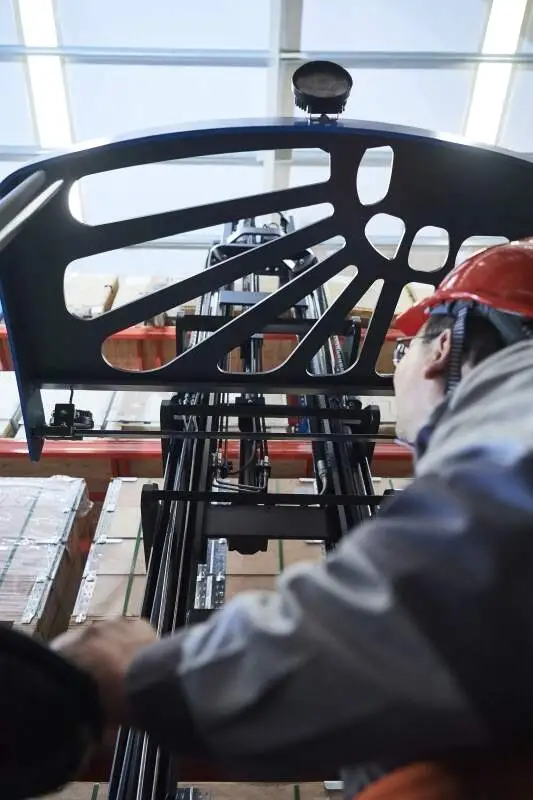
Inspect the forklift’s structural integrity. Check the main frame for bending, cracks, or rust, which may indicate previous accidents or heavy-duty use. Examine the forks for deformities, cracks, or excessive wear at the tips, as damaged forks can fail under load and pose safety hazards. If the model has an overhead guard, ensure it’s intact and free of dents or structural damage, as it provides critical protection for the operator from falling objects.
Finally, conduct a comprehensive test run. Operate the forklift in a clear, open area first without a load, testing lift, tilt, and movement functions to ensure smooth operation. If possible, add a moderate load and repeat the tests to observe how the forklift handles under weight. Listen for unusual noises during operation and check that the forklift travels straight without pulling to one side. Confirm the brakes stop the unit quickly and safely, even when carrying a load.
By thoroughly inspecting these key areas, you can make an informed decision when purchasing a pre-owned stand-up forklift, ensuring you acquire a reliable, safe piece of equipment that meets your business needs without unexpected repair costs.