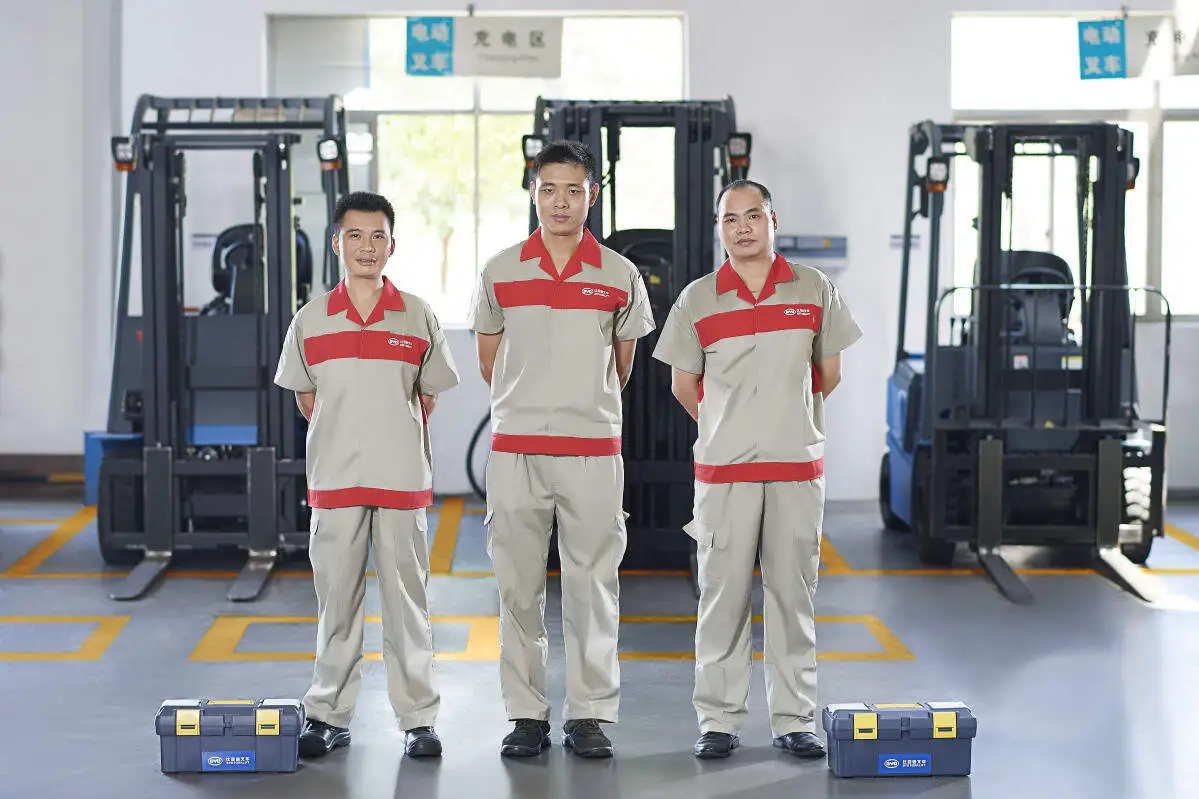
Sideshifter forklifts are a specialized type of material handling equipment designed to enhance flexibility and efficiency in warehouse operations. Unlike standard forklifts, they feature an attachment that allows the forks to move horizontally, eliminating the need to reposition the entire vehicle when adjusting fork alignment. This unique functionality makes them ideal for a range of warehouse tasks where precision and space optimization are critical.
The core working principle of a sideshifter forklift revolves around its hydraulic system and lateral shift attachment. The attachment is mounted between the forklift’s carriage and the forks, equipped with hydraulic cylinders that power the side-to-side movement. When the operator activates the control lever in the cabin, hydraulic fluid is directed into one of the cylinders, extending or retracting it to shift the forks left or right. This mechanism operates smoothly, allowing precise adjustments of up to several inches, depending on the model. The system is designed to handle typical warehouse load capacities, ensuring stability even when moving heavy pallets. By enabling fork movement without repositioning the entire forklift, the sideshifter reduces unnecessary maneuvering, cuts down on operation time, and minimizes the risk of collisions with racks or other equipment.
In narrow aisle storage environments, which are common in modern warehouses aiming to maximize space, sideshifter forklifts shine. Standard forklifts often struggle to align forks with pallet racks without risking damage, but sideshifter models let operators adjust fork position laterally while the vehicle stays in a fixed straight position. This eliminates the need for turning within tight aisles, optimizing space usage and enabling safer, faster pallet retrieval and storage.
When pallets are misaligned in racks or on delivery trucks, sideshifter forklifts simplify adjustments. Operators can shift the forks to match the pallet’s position without moving the entire vehicle, eliminating repetitive repositioning efforts, reducing the risk of pallet or goods damage, and streamlining loading and unloading workflows.
In multi-SKU storage zones with diverse products in adjacent racks, sideshifter forklifts allow quick access to neighboring pallets without repositioning the vehicle. This is especially valuable in high-density storage areas, enabling smooth transitions between different product locations and cutting down overall operation time.
At loading and unloading docks, slight misalignments between truck beds and warehouse docks are common. Sideshifter forklifts can adjust fork position to bridge this gap, letting operators safely handle pallets without requiring the truck to reposition. This speeds up supply chain-related loading and unloading tasks, minimizing delays.
Overall, sideshifter forklifts play a vital role in modern warehouse management, combining precise operation with space-saving functionality. Their ability to adjust fork position without repositioning the entire vehicle makes them a valuable asset for improving material handling efficiency, reducing operational risks, and optimizing storage space utilization.