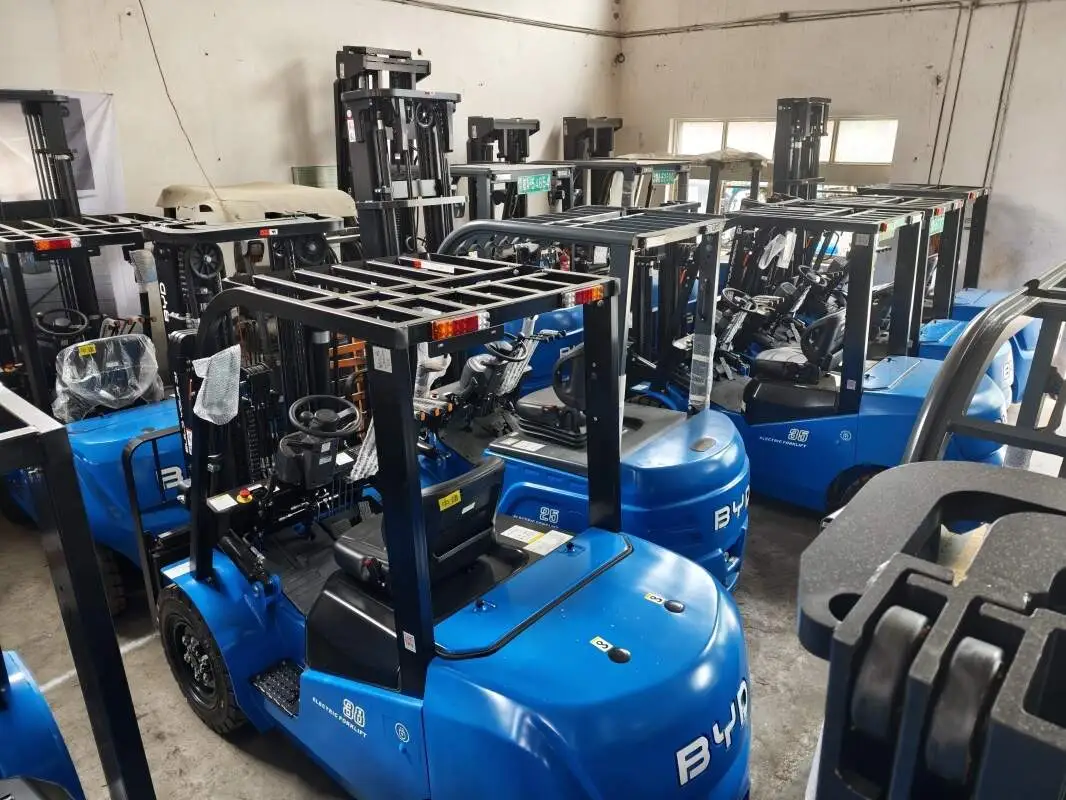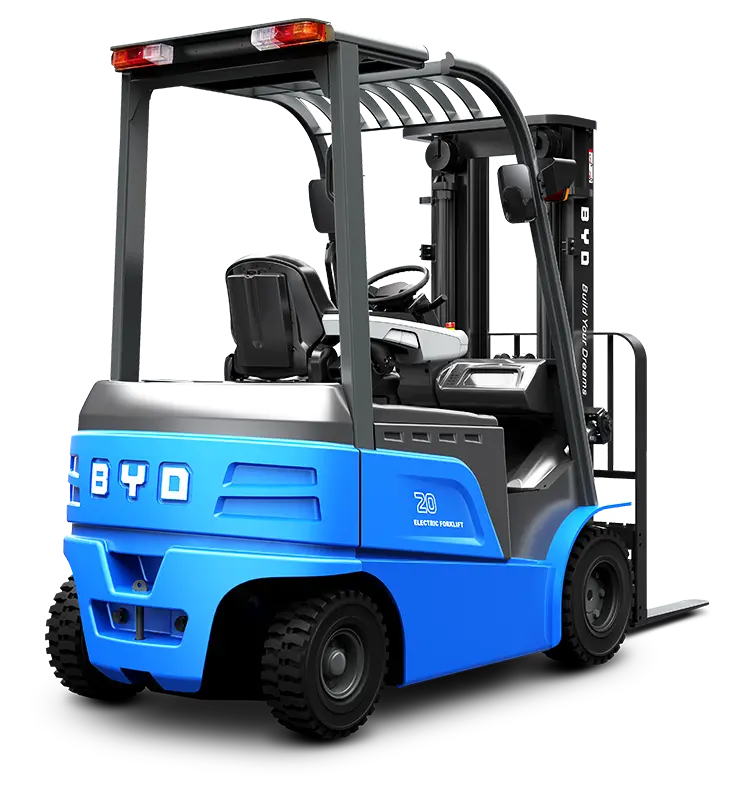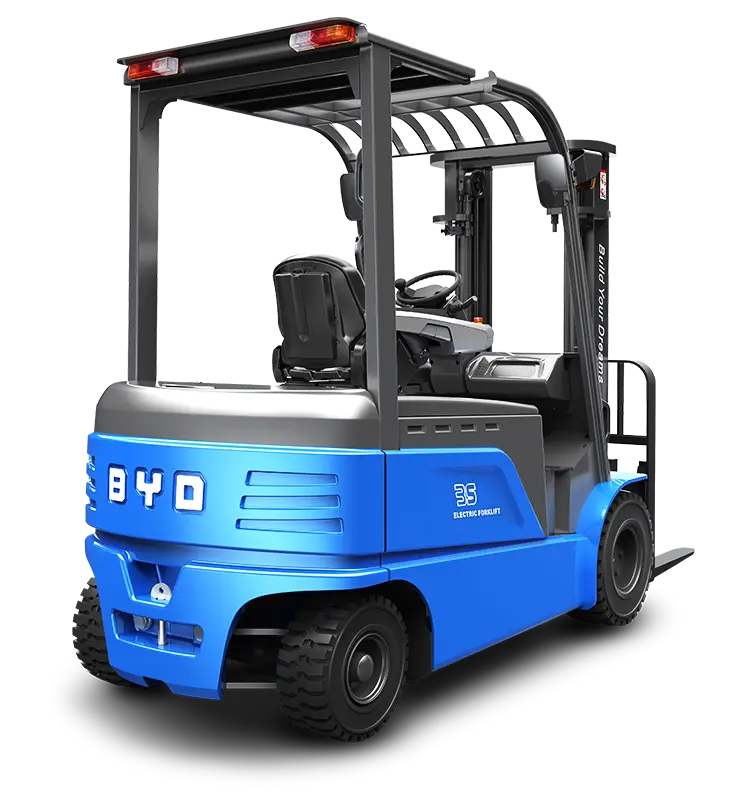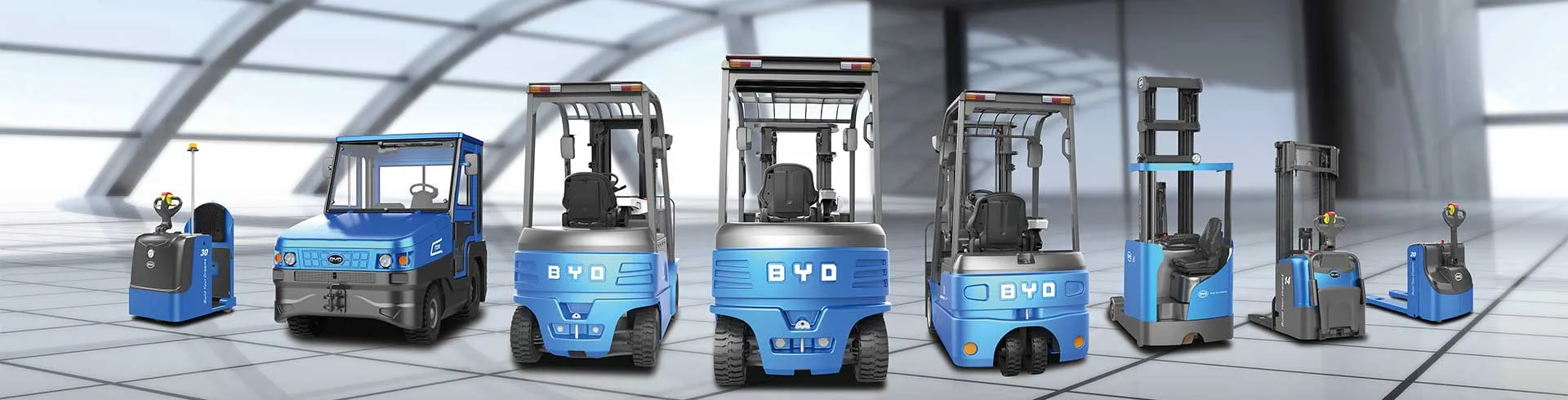
forklift tip-forward incidents are common hidden safety hazards in daily warehousing and logistics operations, which may cause unnecessary property loss and even potential personal injury if not noticed and addressed in time. As Xingshu New Energy, a professional supplier that specializes in BYD electric forklifts, we have compiled this practical checklist based on years of frontline operation and service feedback, to help operators and site management teams identify hidden risks in daily work.
The first core reason for forward tipping is overloading beyond the rated load capacity. Many operators try to carry extra goods without weighing in advance to improve short-term handling efficiency, once the actual load exceeds the rated load marked on the equipment nameplate, the overall center of gravity of the vehicle will move far beyond the stable fulcrum formed by the two front wheels, directly raising the risk of forward tipping. The corresponding check point is to confirm the actual weight of goods before lifting, and never attempt to carry loads that exceed the official rated parameters of the equipment.
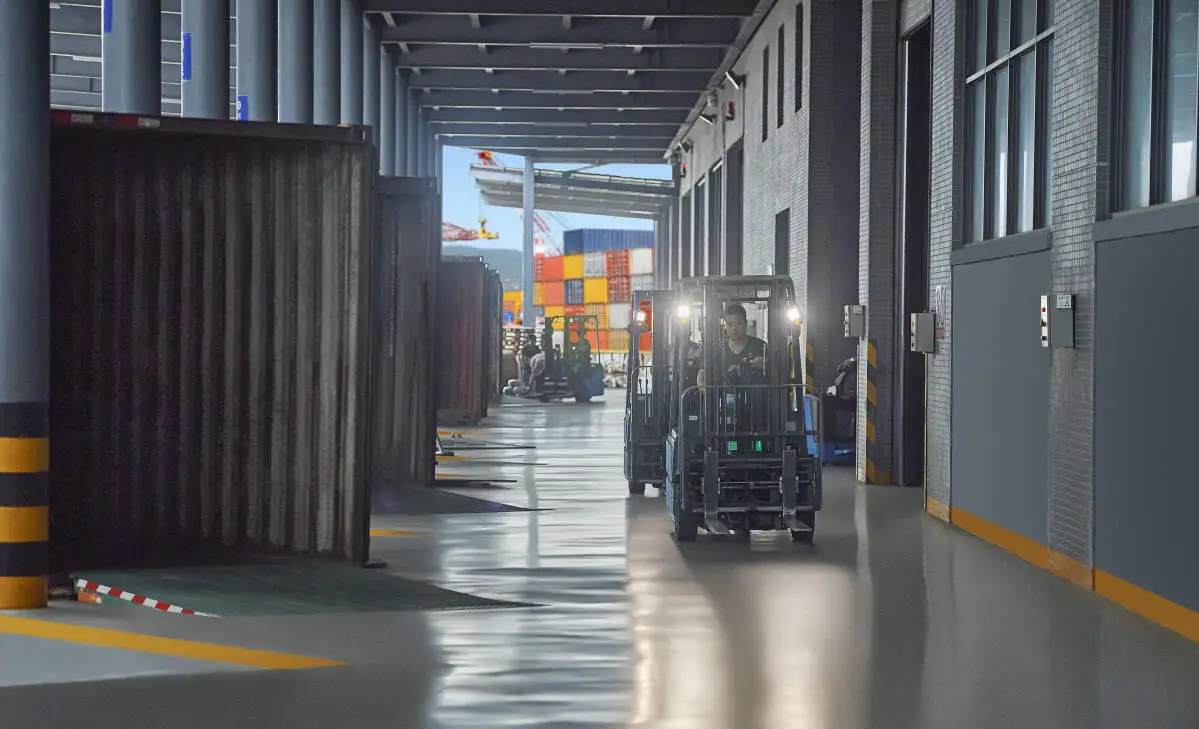
The second common reason is improper load lifting posture during driving. If operators lift the goods to an excessive height when the forklift is moving at a certain speed, the overall center of gravity of the whole vehicle will rise sharply, even a gentle emergency brake action will make the center of gravity lose balance and shift forward. The practical check suggestion here is to keep the load at a low position 10 to 15 cm above the ground during the whole driving process, and only lift the load to the required height when the vehicle is completely stationary and close to the target storage shelf.
The third hidden cause is non-standard operation on small slopes. Most warehousing sites are equipped with small ramps that connect different functional areas, if the operator chooses to drive forward downhill with loaded goods, the gravity component generated by the slope will push the whole vehicle to lean forward greatly, which is a typical high-risk operation scenario. The check rule to follow is to keep the load facing forward when driving uphill, and drive backwards when going downhill with loads, which can effectively avoid forward tipping risks.
The fourth overlooked cause is long-term lack of maintenance for key load-bearing components. If the tire pressure of front load-bearing wheels is seriously insufficient, or the wear of the mast lifting chain is uneven, the supporting structure of the vehicle will lose stability invisibly, which may lead to unexpected forward tipping even under normal rated load operation. The corresponding check items include checking the tire pressure and wear degree before each shift, and confirming the tension balance of the mast chain every week.
Sticking to this practical checklist in daily operation can effectively reduce the probability of forward tipping accidents. We also provide full-cycle safety operation training services for all users, to help every enterprise build a safer and more efficient warehousing handling system.